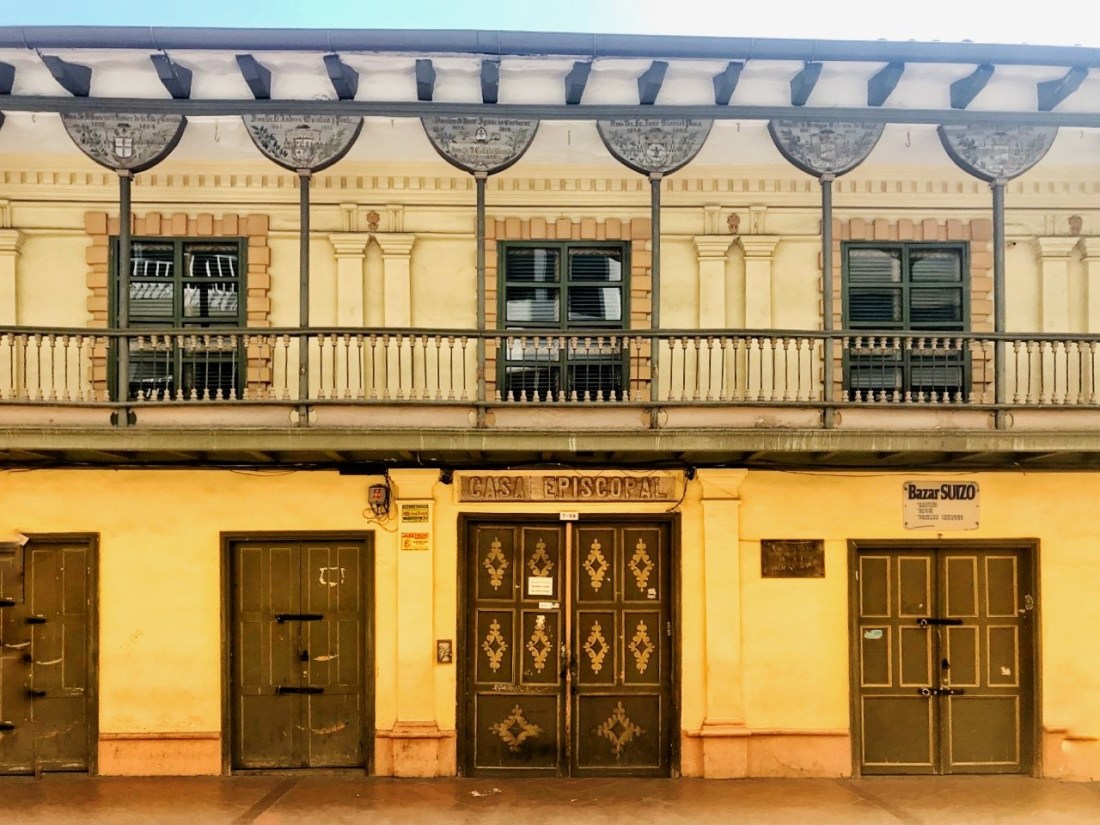
Casa Episcopal

#12 Simon Bolivar 7-64 y Luis Cordero.
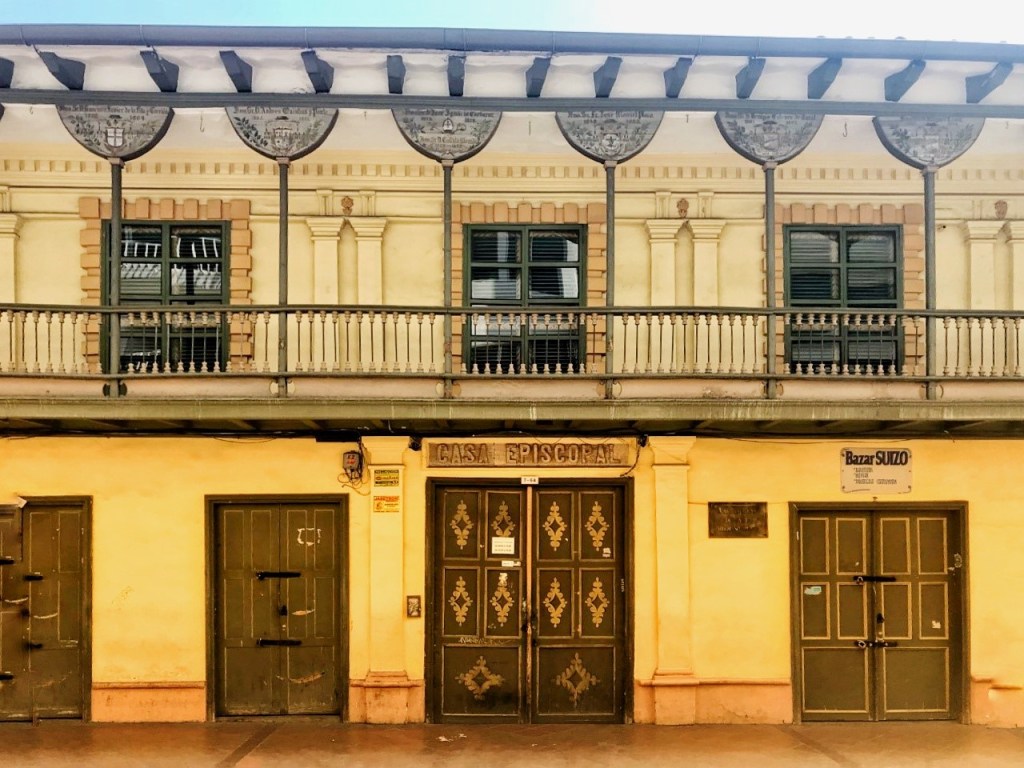
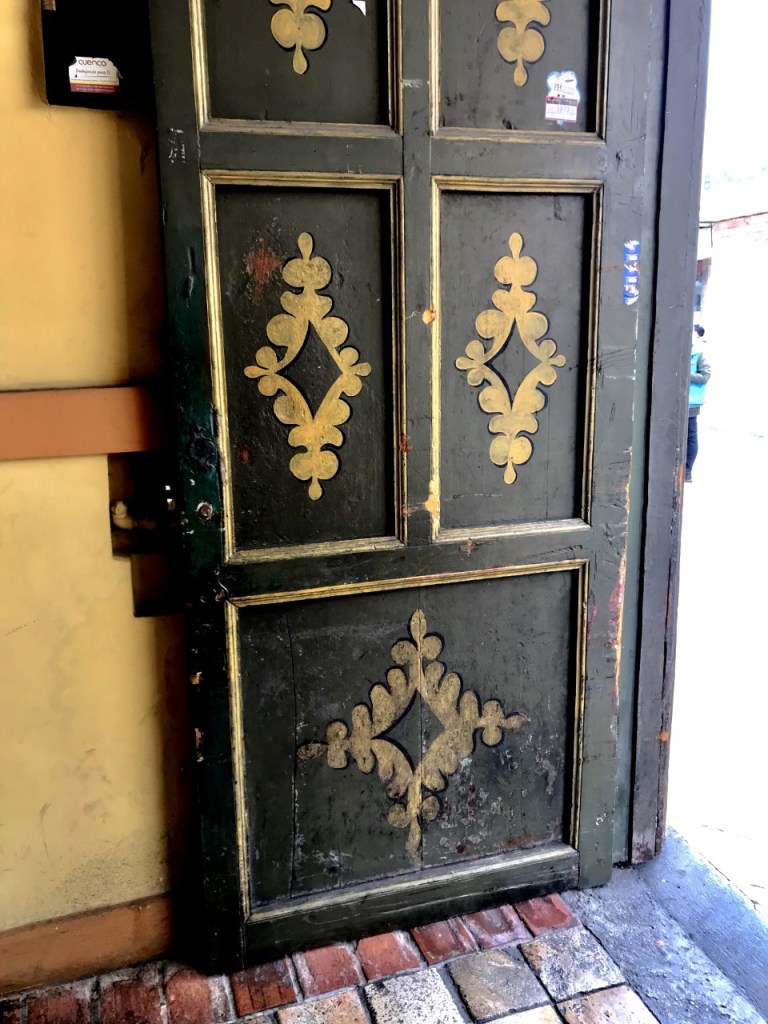
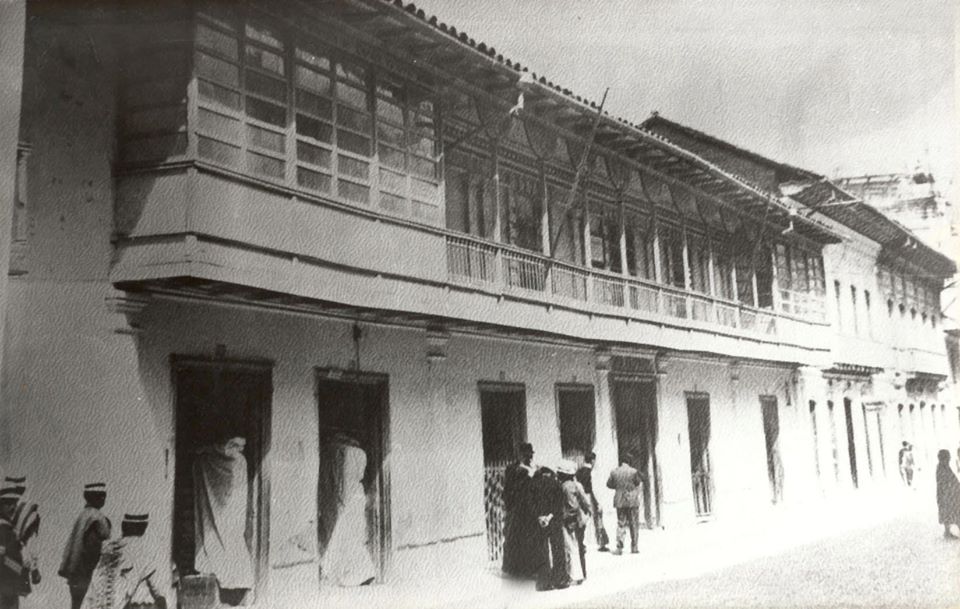
This property originally belonged to Francisco Nates and Tomasa Crespo, and was probably built at the end of the 17th century. The building eventually passed into the hands of the Muñoz family in the following century. It is the birthplace of the beloved “Hermano Miguel”. 
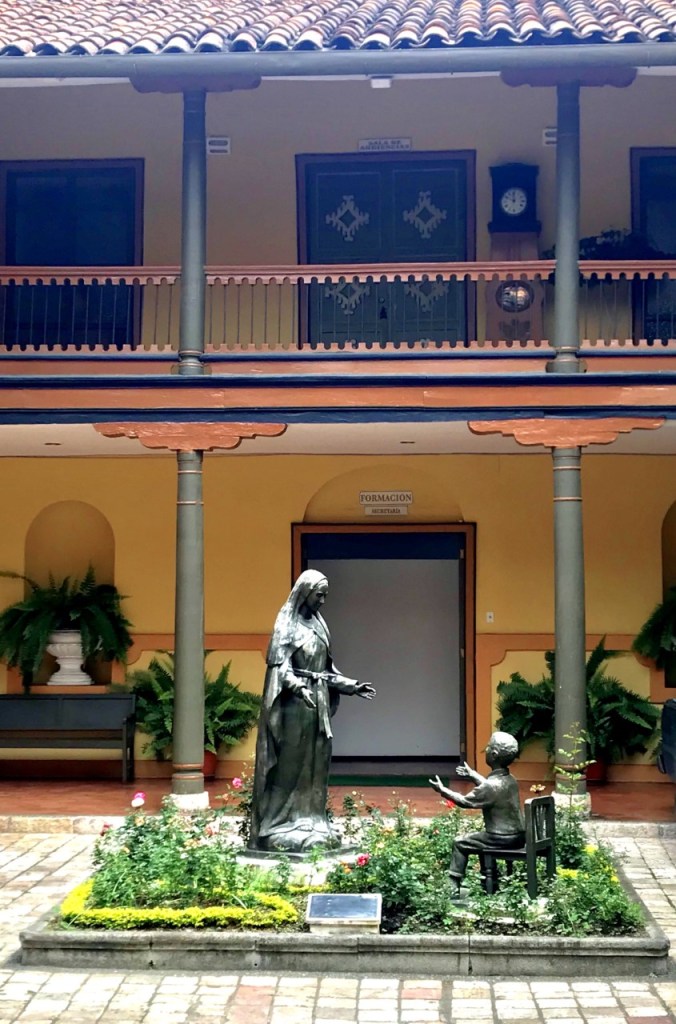
Francisco Febres Cordero was born with an extreme deformity in his foot which rendered him incapable of standing or walking. At the age of five he was playing in this courtyard when he saw a vision of a beautiful woman amidst some rose bushes. “Look how beautiful she is – wearing a white dress and blue cloak!” It was believed he received a vision of the Virgin Mary. From then on he could walk.

Francisco Febres Cordero y Muñoz was born in this house in 1854. Against his family’s wishes he became a member of the Brothers of the Christian Schools, and took the name “Miguel”. He devoted his life to teaching and educating children of all social classes, and was a prolific writer.

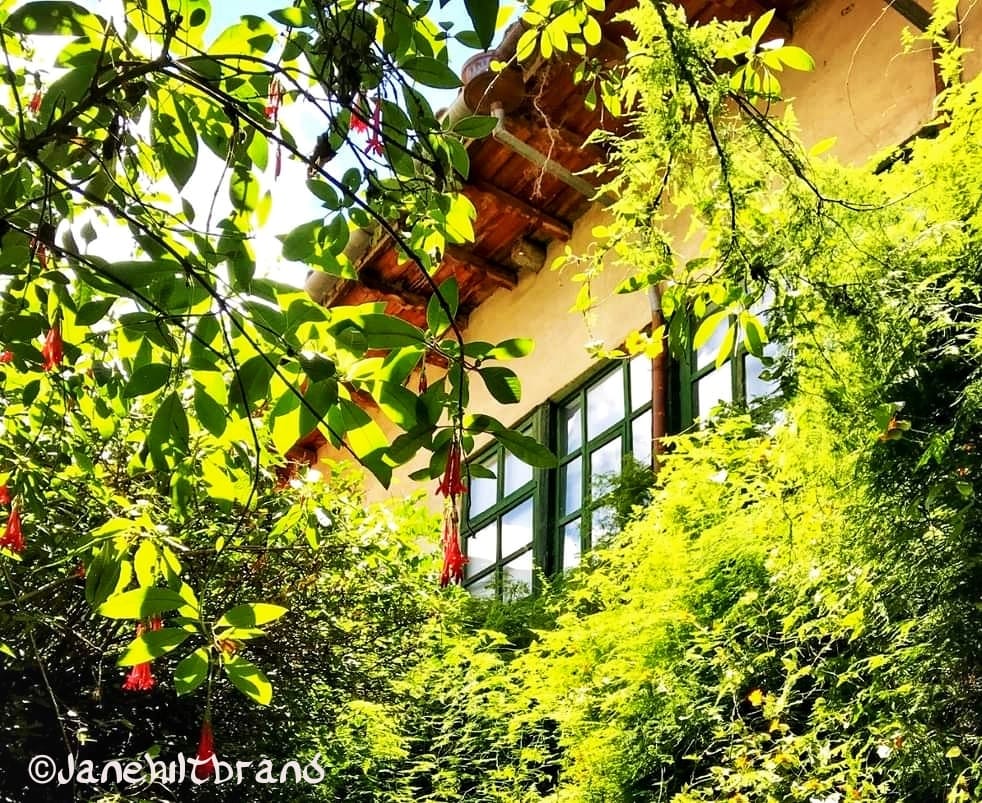
Second interior courtyard. In 2000 the architecture of the building was restored under the supervision of the architect Max Cabrera Rojas. In 2003 the building received the Fray José María Vargas award, granted by the City Council to the year’s best architectural restoration in the historic center. The restoration of the building included matching to the original color, and priority was given to the use of traditional construction systems and respect for the original materials such as adobe walls, tiled roofs, and wooden door and window frames.
Hermano Miguel was canonized by Pope John Paul II in 1984. When the Pope visited Ecuador, and Cuenca in 1985, he prayed in the chapel here on the second floor. There is a statue of Saint Hermano Miguel in the second courtyard.
Alcaldia – Cuenca City Hall

#11 ALCALDIA – CUENCA CITY HALL Corner of Simon Bolivar and Borrero. Built in 1922-1926.

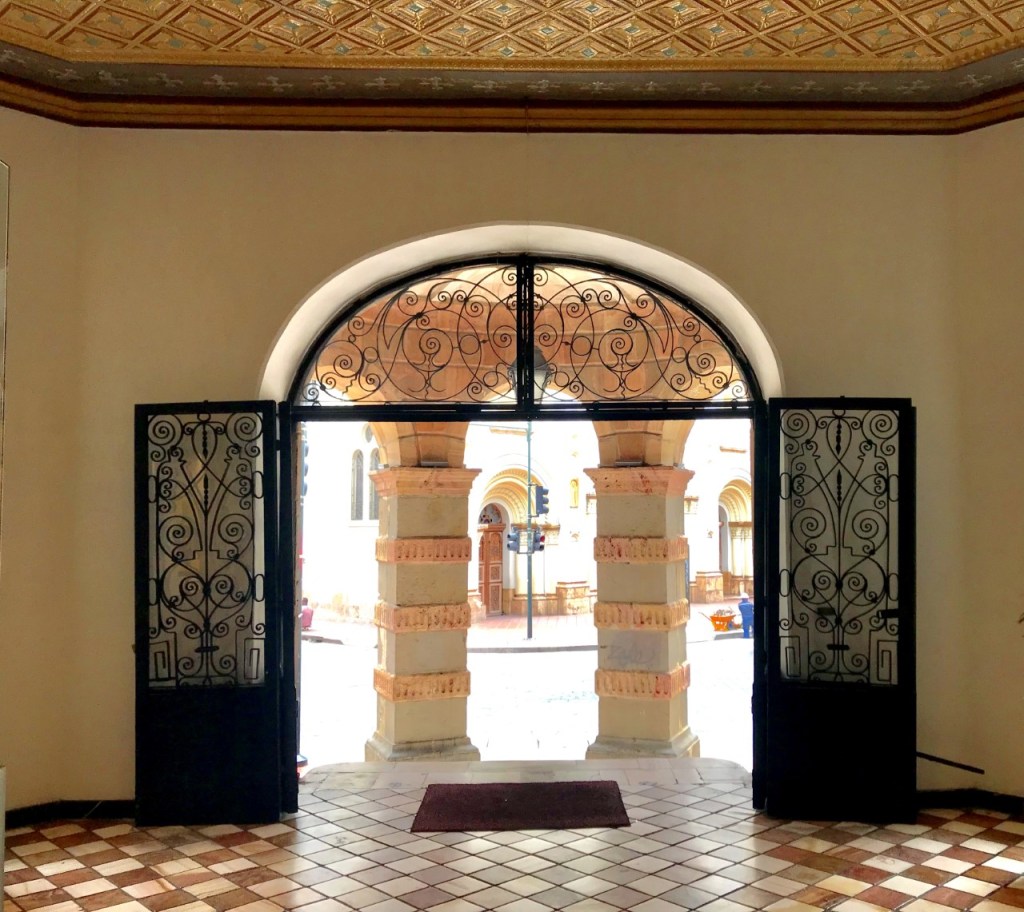
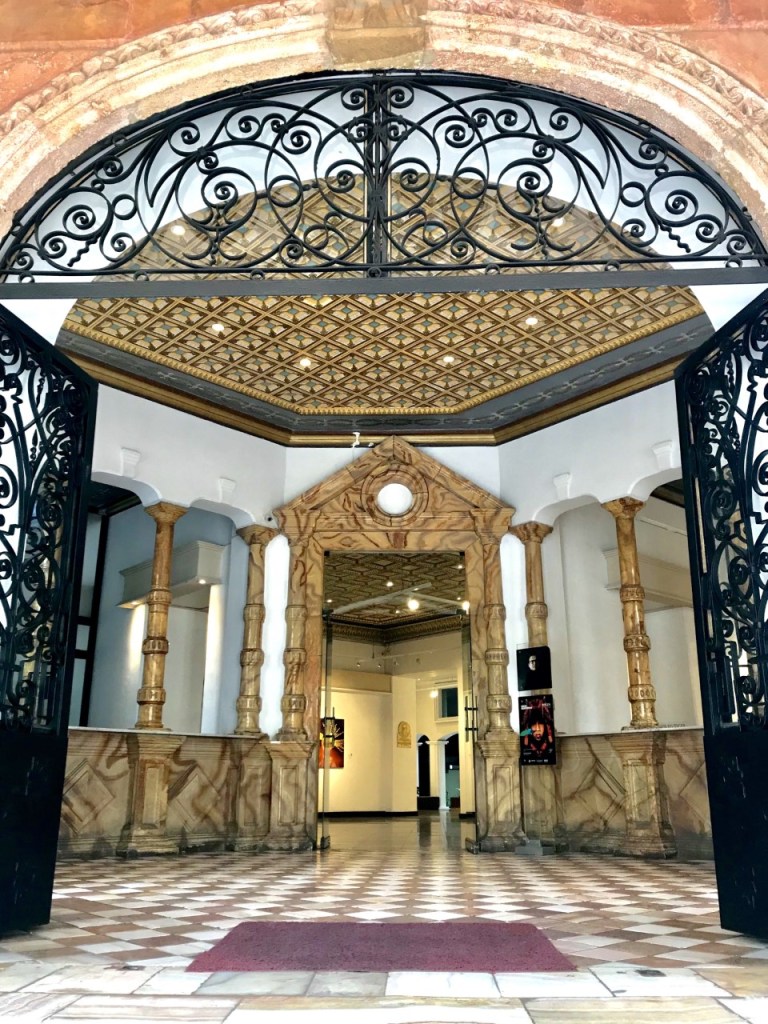
This building was designed by a Quito born architect, Luis Felipe Donoso Barba, who trained in Belgium. It is a good example of the French influence in Cuenca architecture. The building was commissioned to accommodate the headquarters of the Bank of Azuay. Regarded as one of the soundest banks in the country it even had European branches during it’s early years.

The ceilings are made of polychrome brass and were imported from France.

In 1950 the bank extended its premises and added the adjacent building, connected to the existing building on all three levels. Unfortunately as a result of the banking crisis that affected the country in 1999, the bank closed with serious economic consequences for the region.

Since November 2002 the building has accommodated the Cuenca City Hall, and several other local government offices.

Banco del Azuay en 1937.

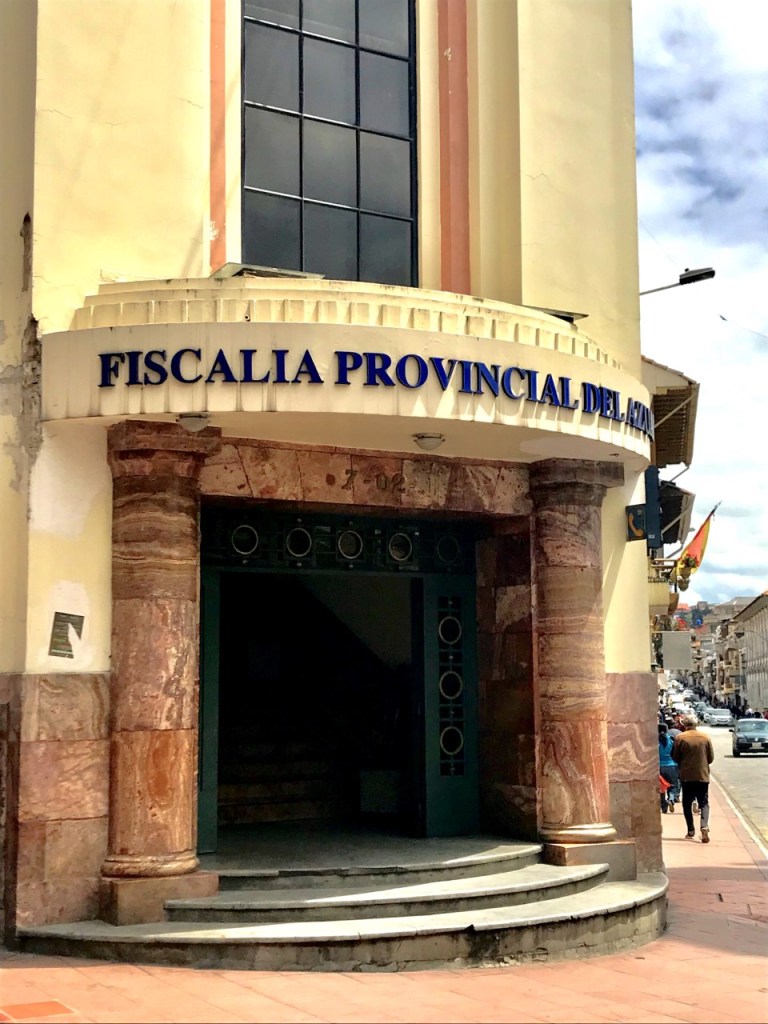
Azuay District Attorney Office

#10 Intersection Simon Bolivar and Antonio Borrero.

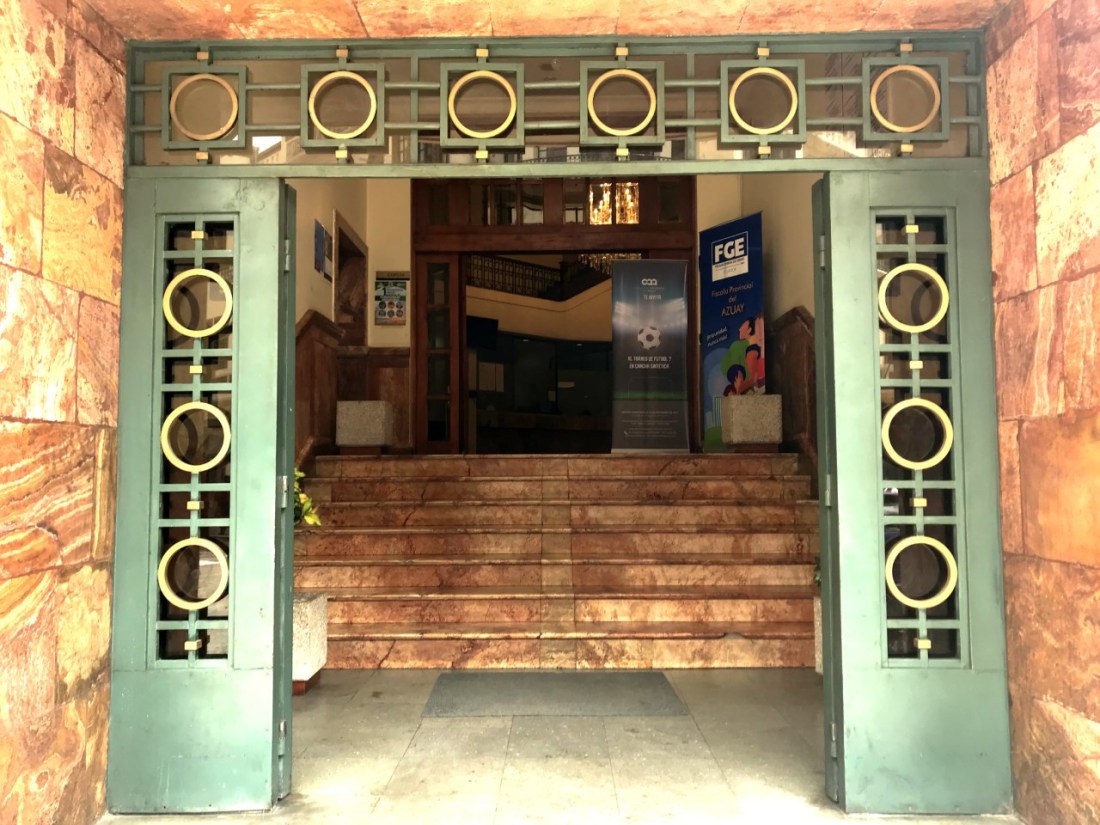
This Art Deco Palace was built in 1939 to house the Central Bank Of Ecuador. The District Attorney’s Office has occupied the building since 2003. It is perhaps the city’s best example of state architecture designed in the Art Deco Style. The long lateral facades are rhythmically defined by pairs of rectangular windows, framed by pilasters adorned with marble geometric motifs.

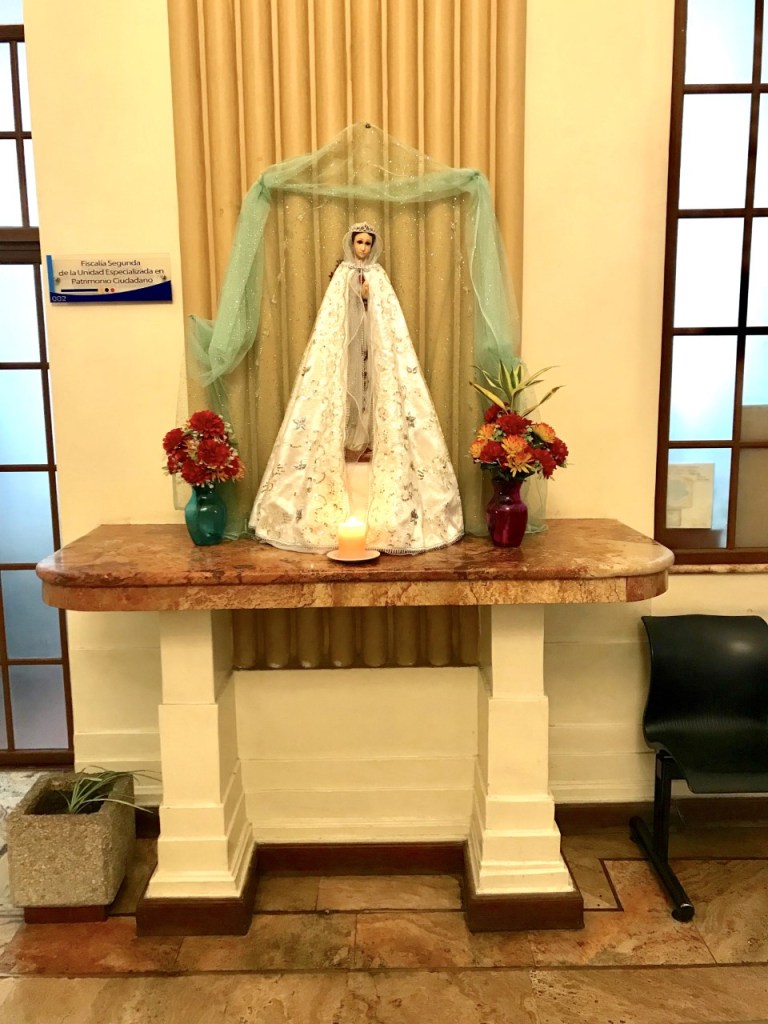
The main entrance on the corner is reinforced by a flight of steps in the fashion of a podium, and protected by a projecting ledge. Inside there is a large central hallway, double height, which recalls the courtyards of traditional Cuenca houses.

Caja del Seguro Social

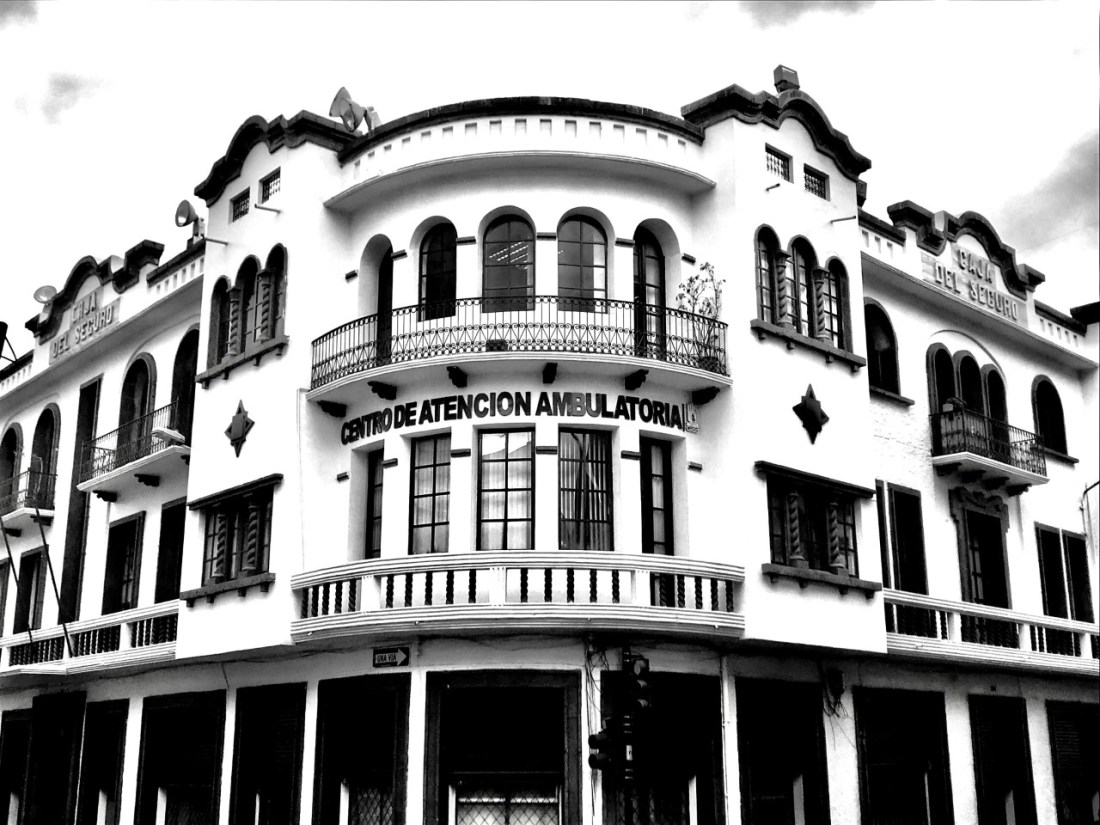
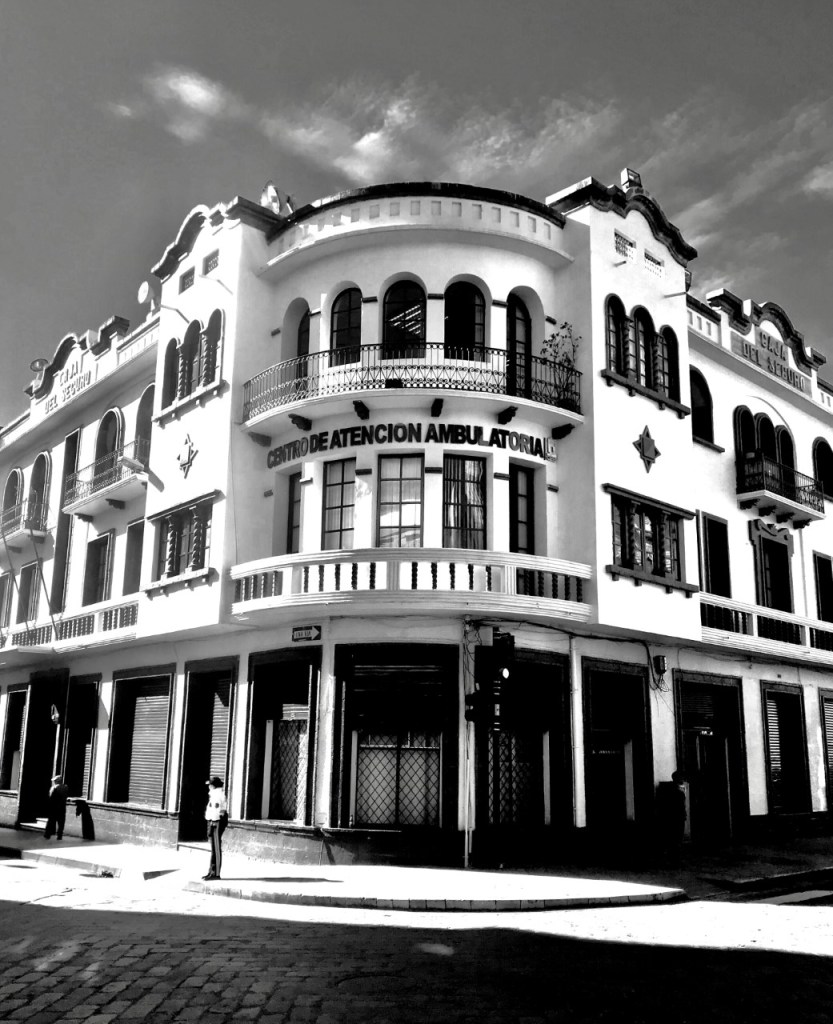
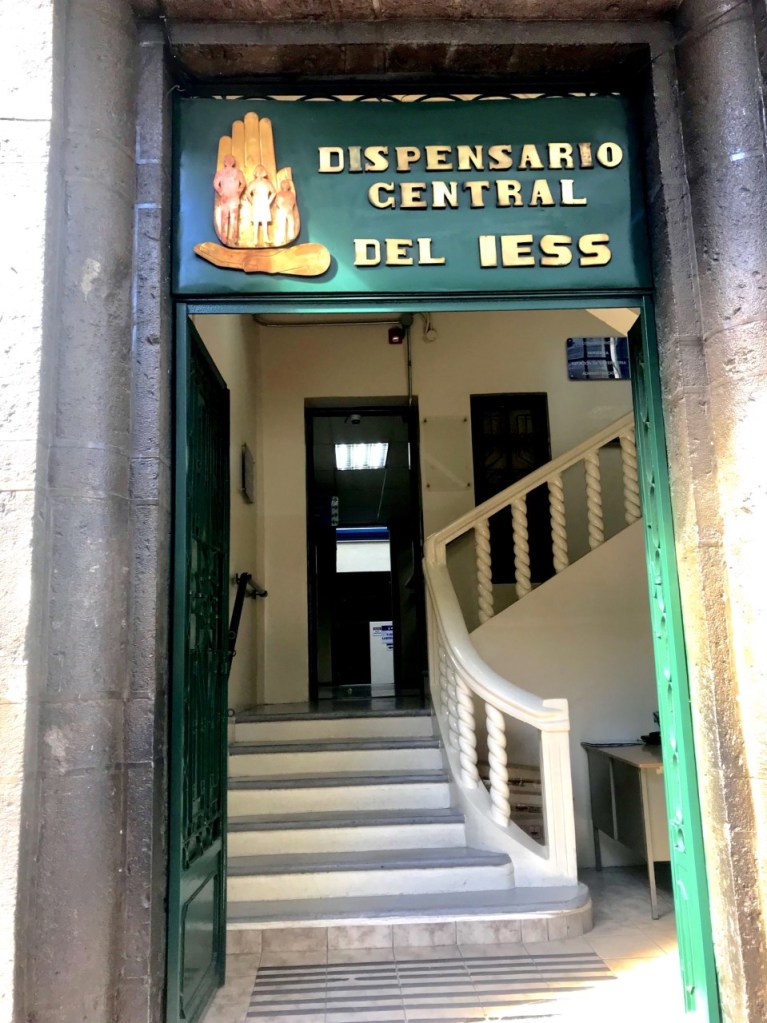
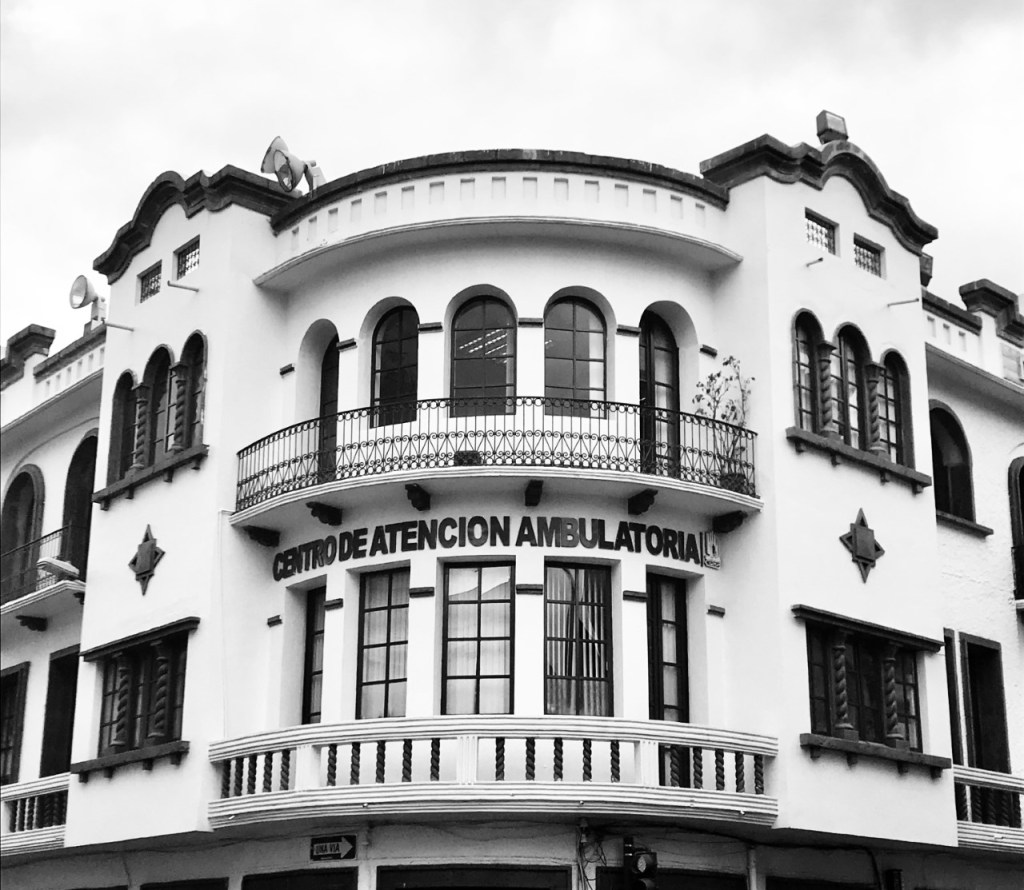
#8 Presently IESS National Health Center. Calles Simon Bolivar Y Borrerro.

This building was constructed by the Social Security Clinic during the 1940’s. A three story building, the style is reminiscent of the Spanish Neo-Colonial architecture that was fashionable in the city during the 1940’s and 1950’s.

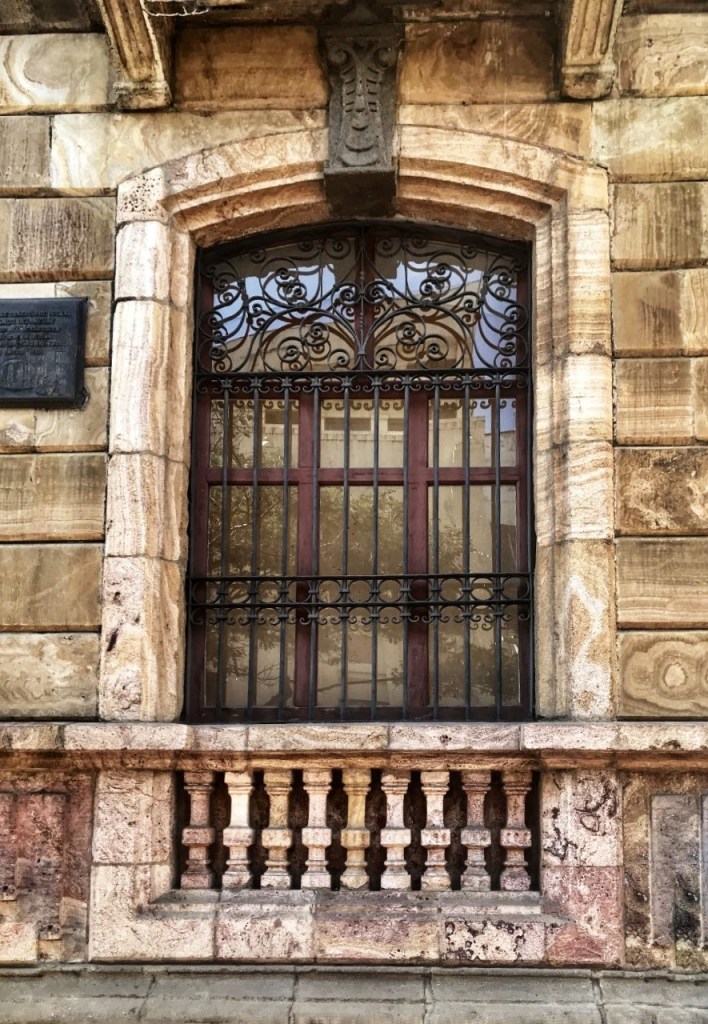
The facade is distinguished by the use of finely carved stone decorative elements. The lintels and window sills are also made of stone, and the mullions repeat the Solomonic colonnette motif. It is not known who designed or built the building, but it was awarded the Adornment Prize by Cuenca City Council as the best building in the city for 1947.

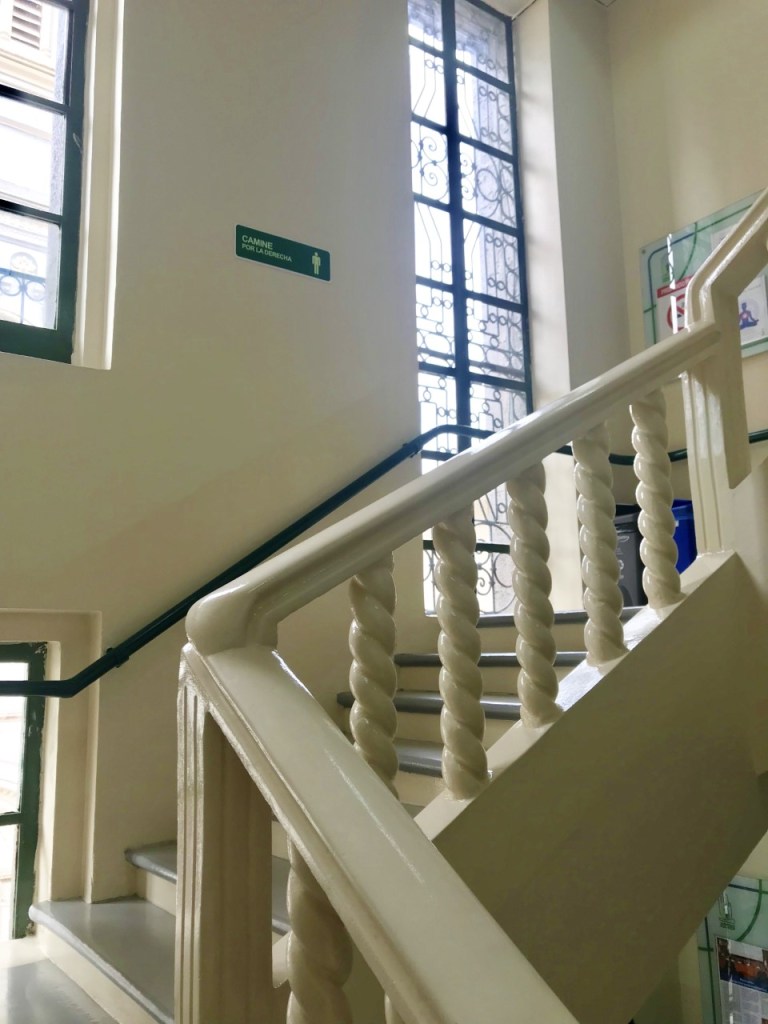
The carved stone balcony and staircase balustrades adopt the form of turned wood Solomonic colonnettes.

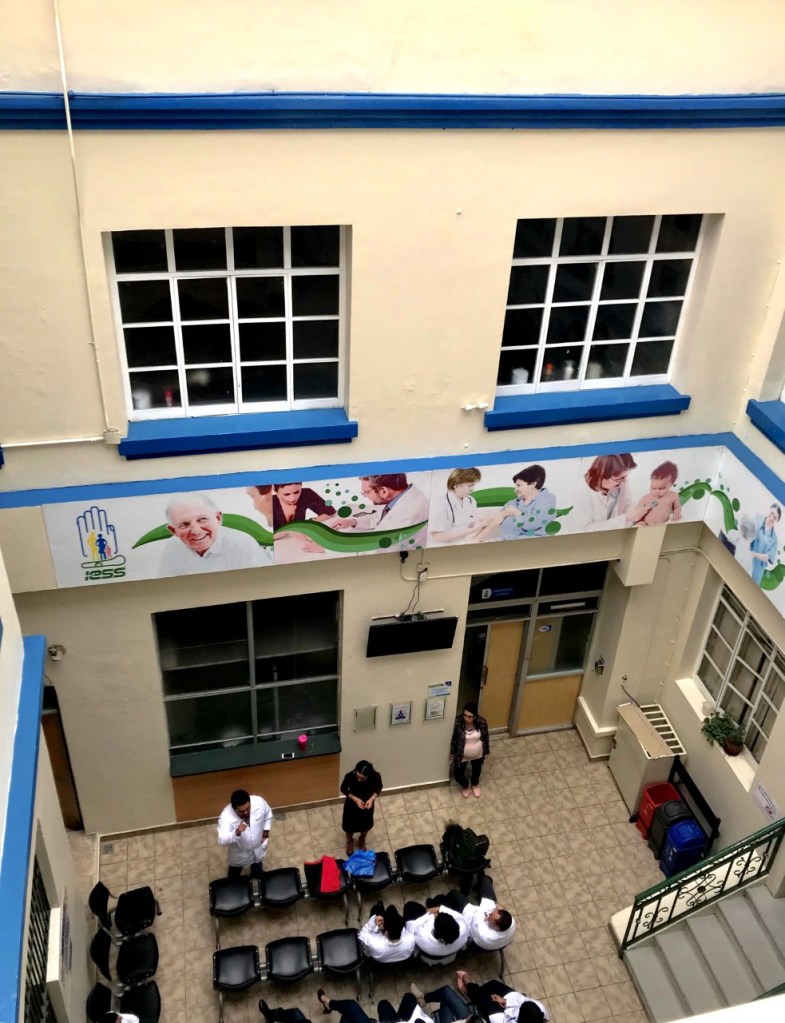
Doctors Offices are on the second and third floor, overlooking the courtyard. The courtyard is used for training sessions. and classes. Stone-carved four-pointed stars in haut-relief can be seen between the second and third floors.

Antiguo Edificio de la Communidad Salesiana

# 6 Corner of Mariscal Sucre y Borrerro. Built in 1949

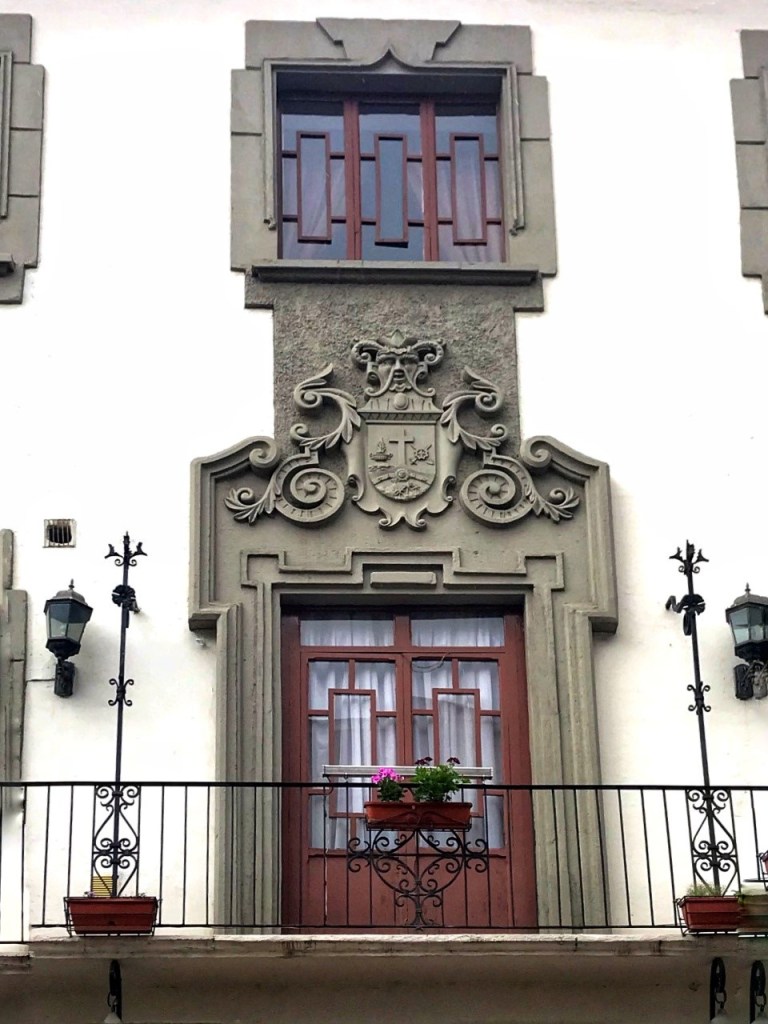
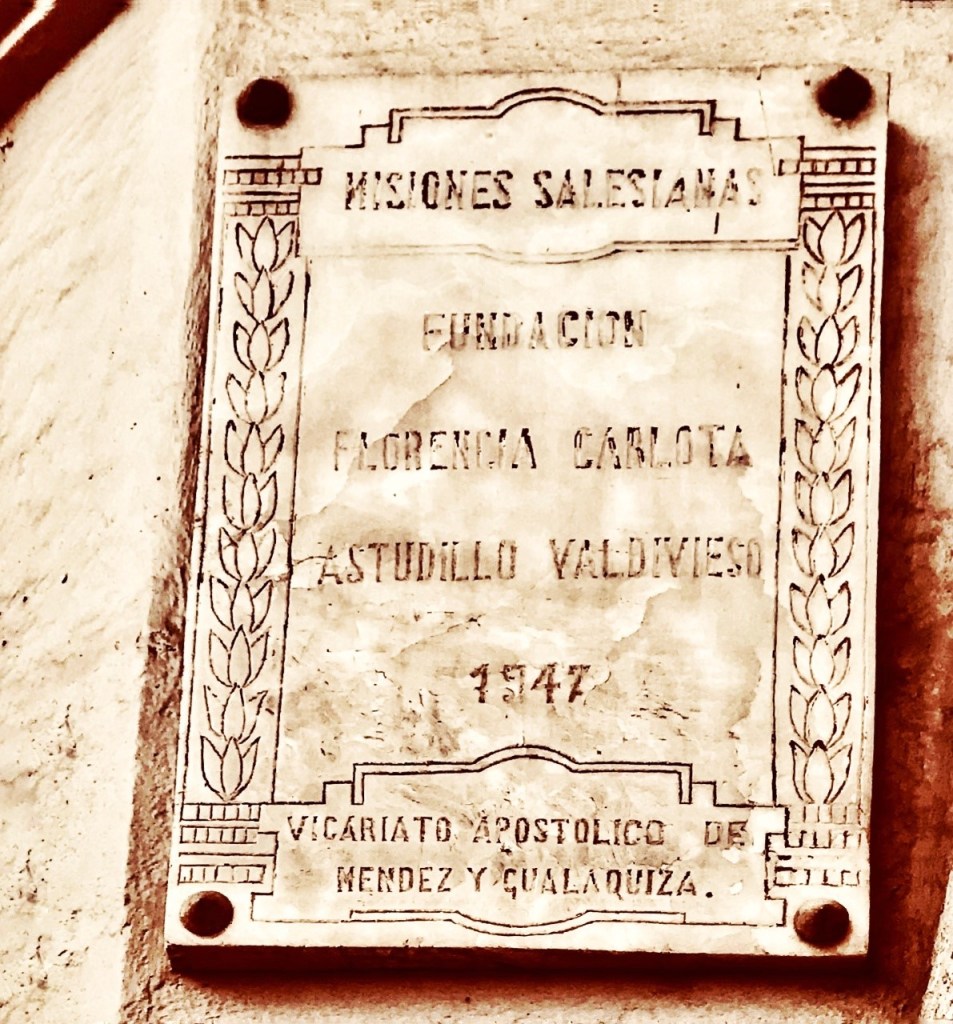
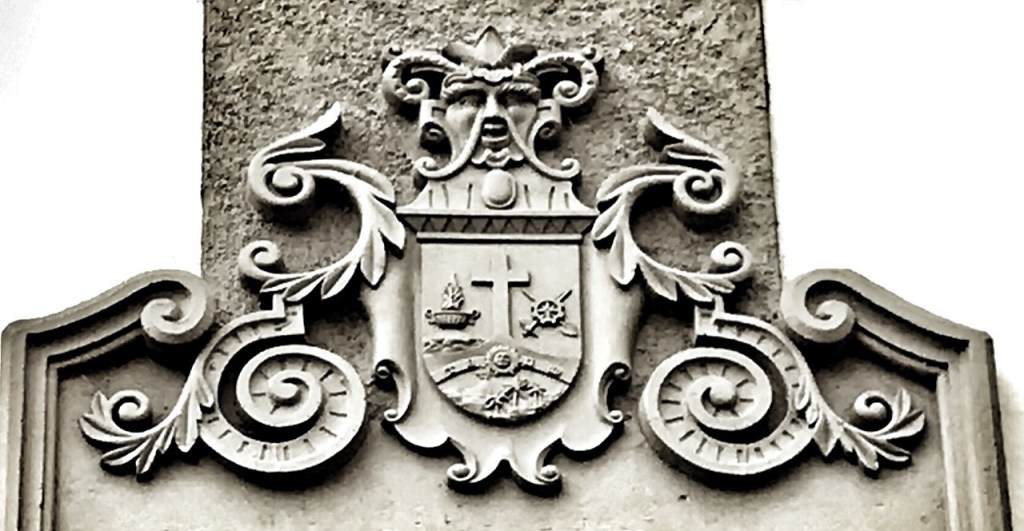
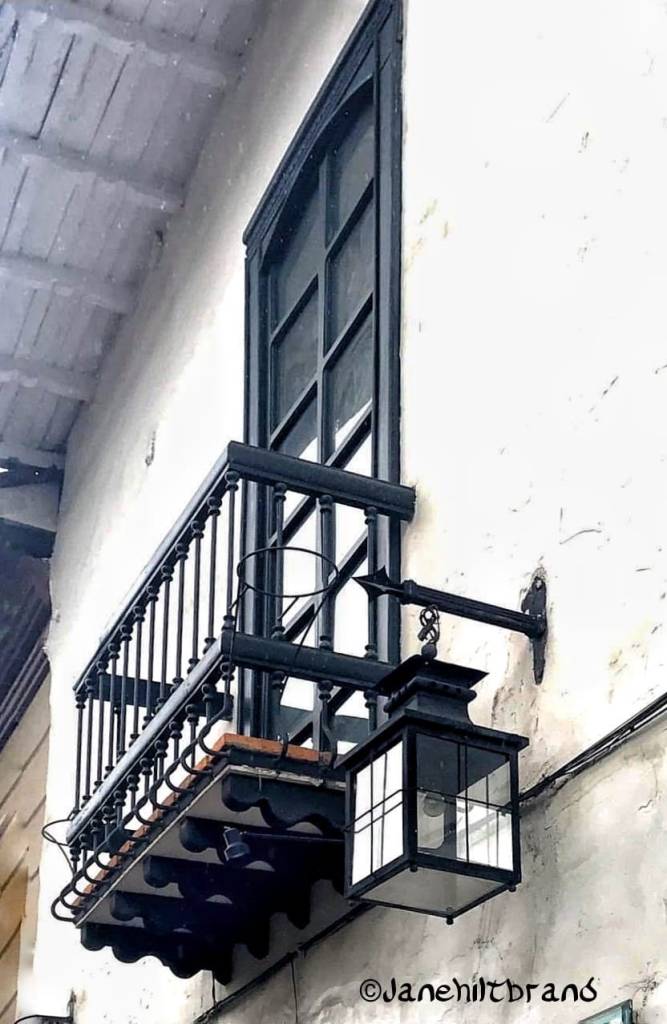
This building has a marked Italian influence and was constructed in 1949 by the Salesian Fathers to accommodate visiting monks of the same community. The land was donated in the 1920’s by Florencia Astudilo Valdivieso. The first floor windows display exposed brick and semicircular arches.The second floor is fronted by balconies with stone slabs and wrought-iron rails. The French windows are decorated with stone shields of the Salesian Order, adorned with human masks, plaster ribbons and wreaths. The corner is an outstanding feature of the building. Conceived as a tower with an oculus at the center, it has a hipped roof of corrugated zinc with spires rising at each corner to accentuate the verticality of the building. A wrought-iron cross on top of the roof provides the final touch. Now owned by Dr. Alberto Delgado, the building accommodates commercial establishments on the ground floor, and is currently a residence on the upper floors. 

Antigua Casa de Vintimilla Ordóñez

#4 ANTIGUA CASA DE VINTIMILLA ORDOÑEZ. Hermano Miguel 8-35 y Simon Bolivar. Currently Instituto de Arte Contemporaneo.

This large colonial house has an austere modest facade that combines white walls with dark green woodwork. Inside…..hidden Cuenca treasure!

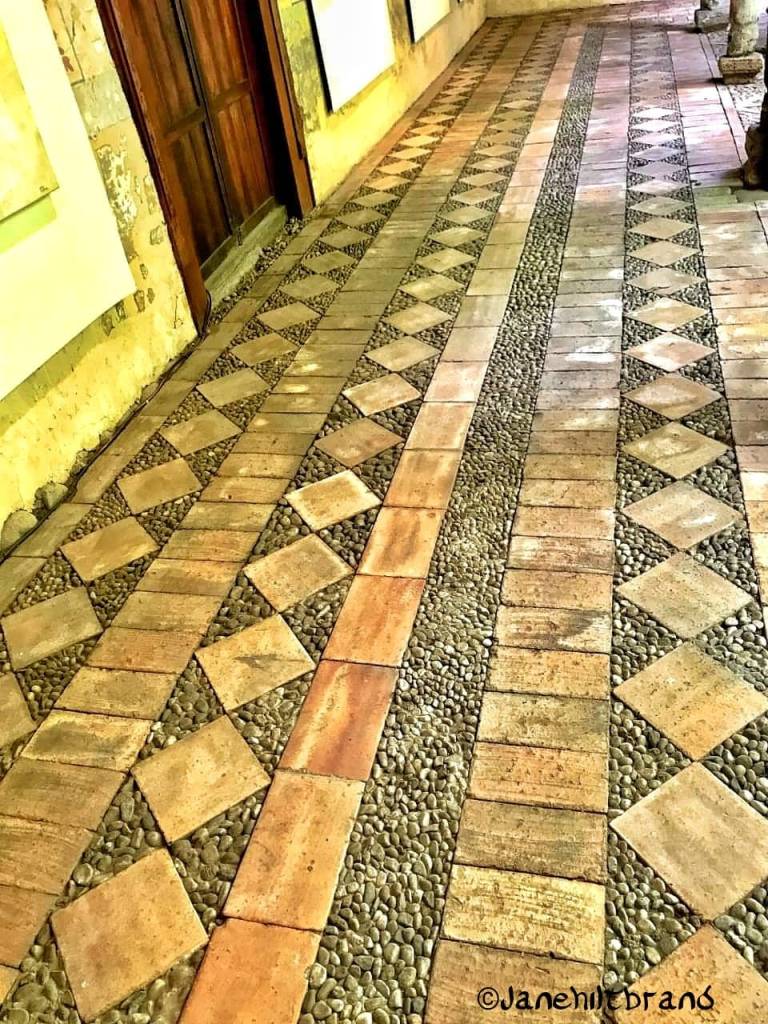
Records show that from 1915 to 1988 the building was home to the Ordóñez Vintimilla family, and that their heirs subsequently sold it to the current owner, Fernando Piedra Cardoso. The front of the building houses the contemporary art gallery. But when you enter the first courtyard, you absolutely are transported to another time…..


Most colonial houses had two, sometimes three courtyards. Typically the front courtyard was surrounded by rooms where the family lived and entertained. The second courtyard had a vegetable garden, and housed the servants. This house was very unusual in that there were no rooms coming off the front courtyard. Fernando said this courtyard and garden was designed purely as a place to sit and enjoy beauty!

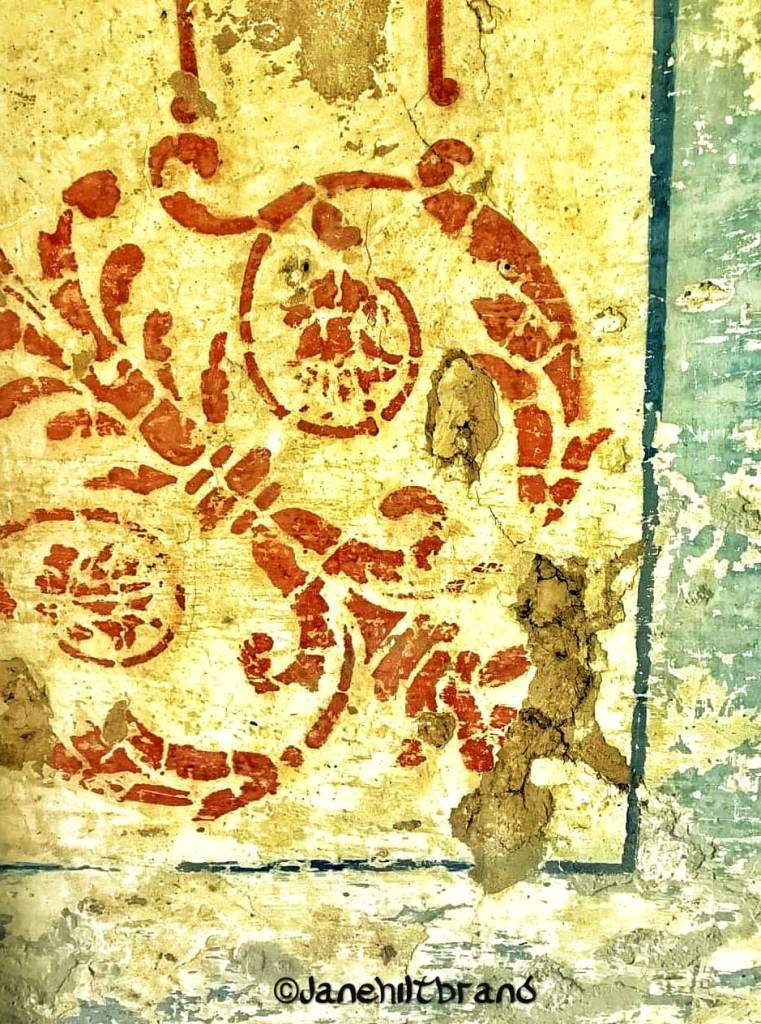
Exquisite hand painted murals….

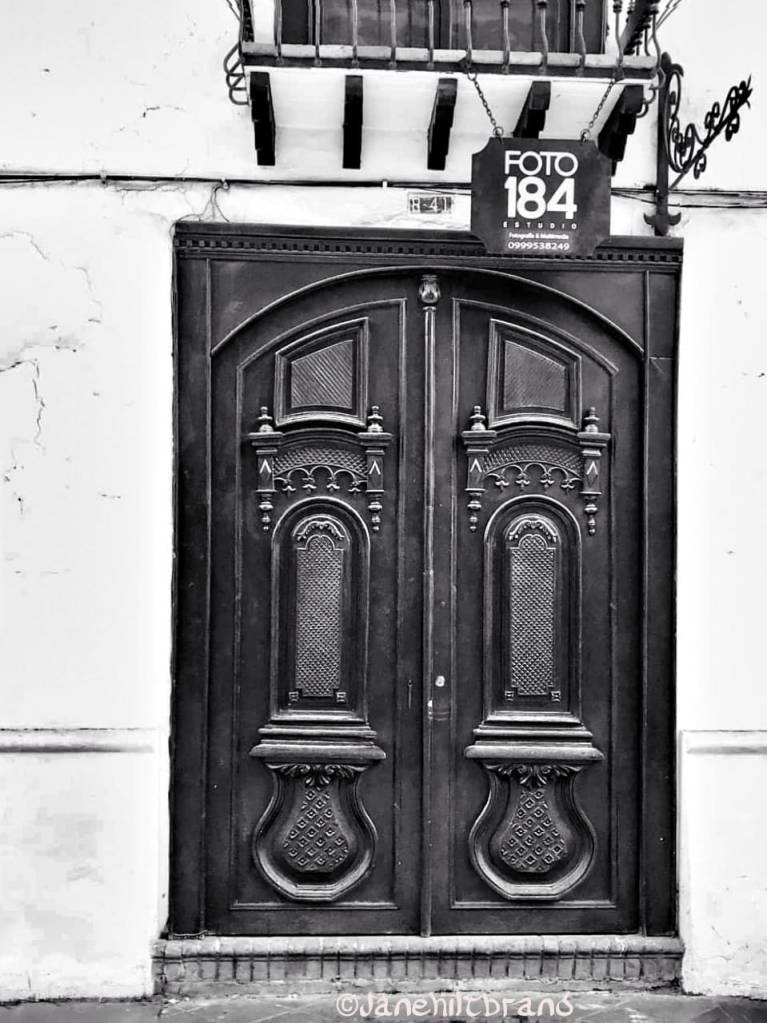
At the center the large entrance door is adorned with haut-relief wooden carvings.