Gran Colombia 17-44 y Baltazara de Calderón streets.
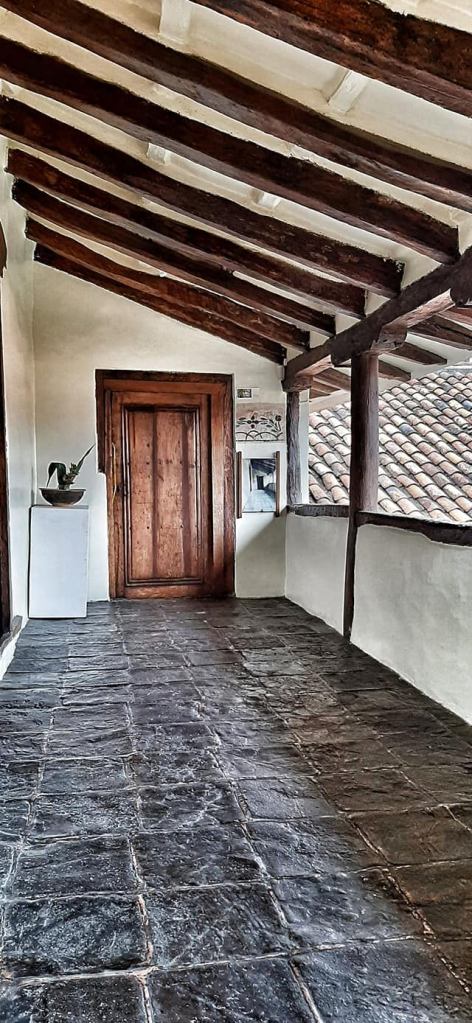
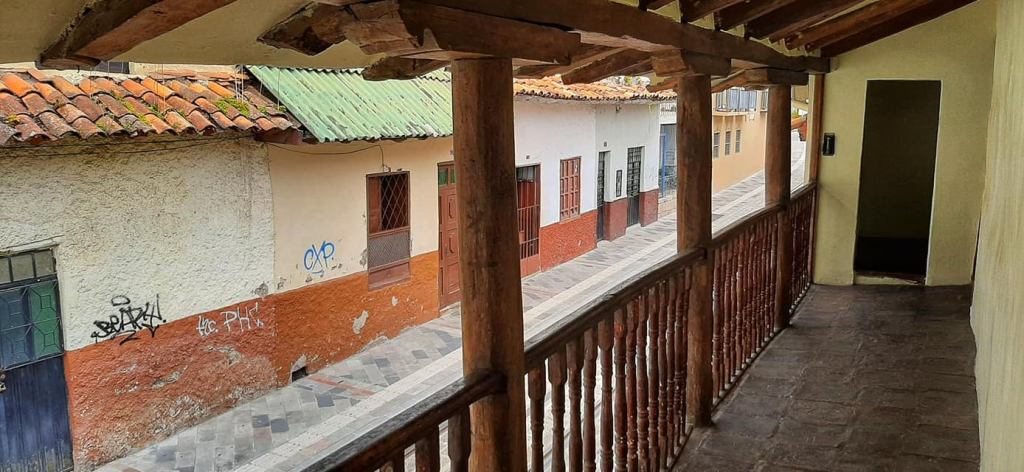
Built in the 1760’s this is a fine example of Cuenca’s colonial period architecture. The name is derived from it’s original purpose as an inn. Strategically located on what was then the entrance to the city on the coast road, it provided accomodation for the indigenous peoples and traders who brought their harvest and products to be exchanged or sold in the city markets.
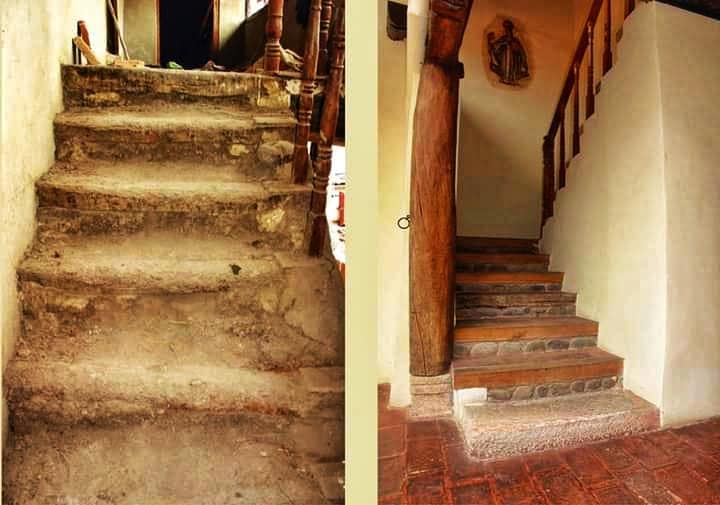
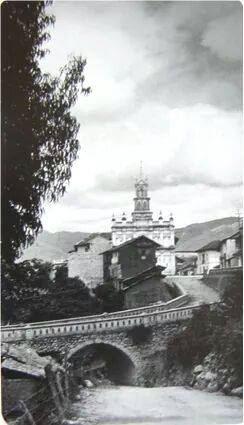
Before restoration….The structure gained national heritage status in 1982. The restoration was done in 2006.
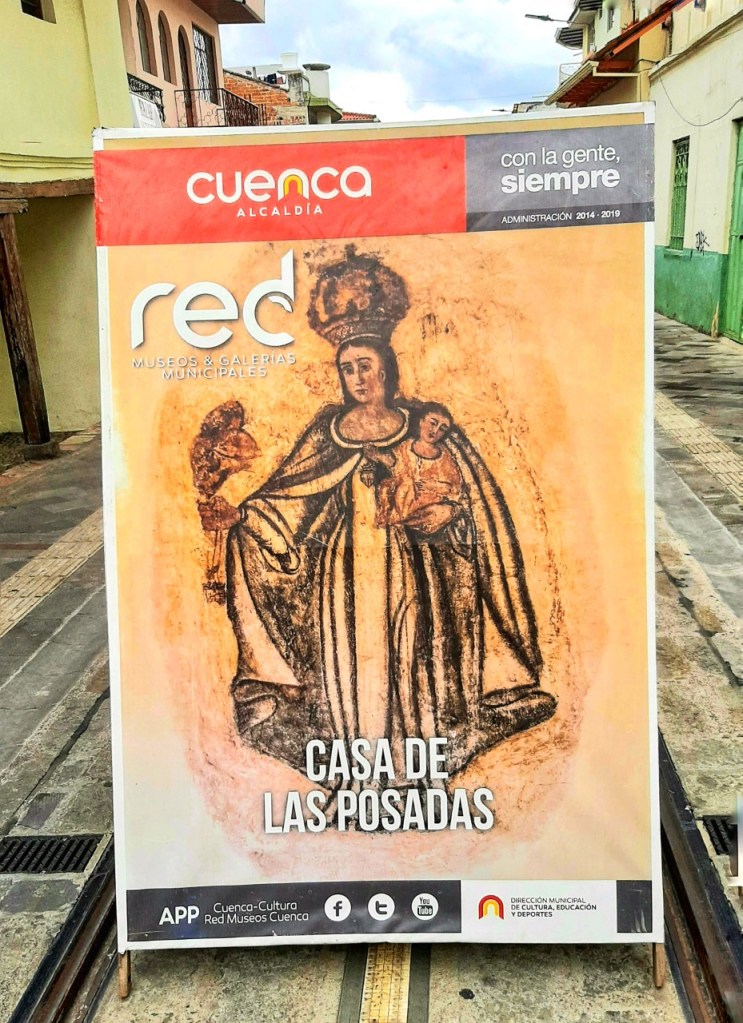
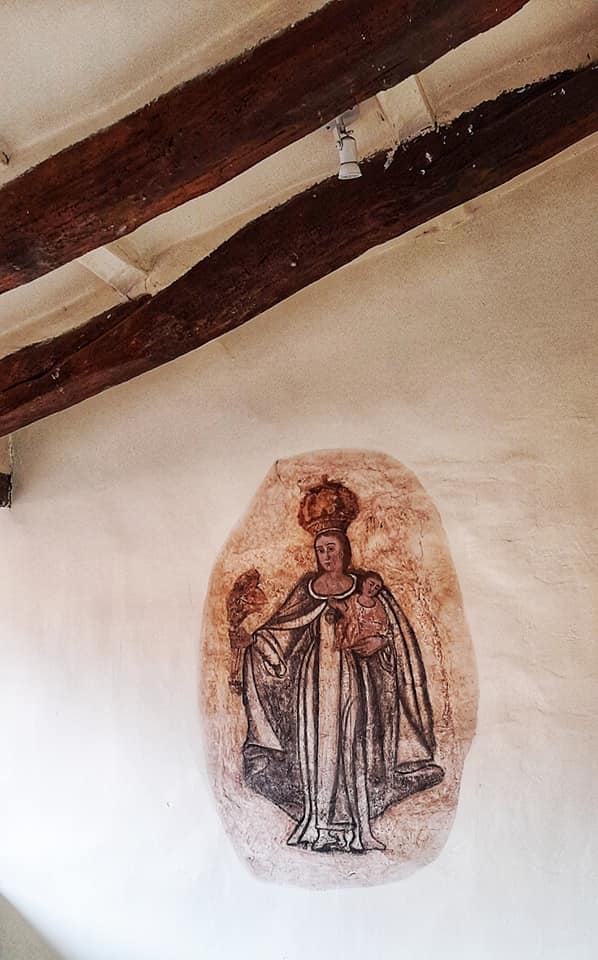
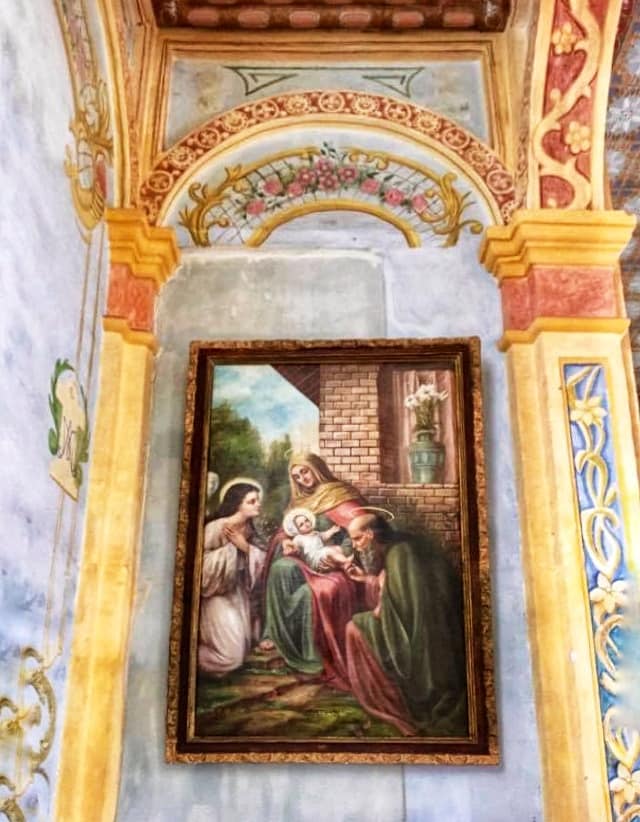
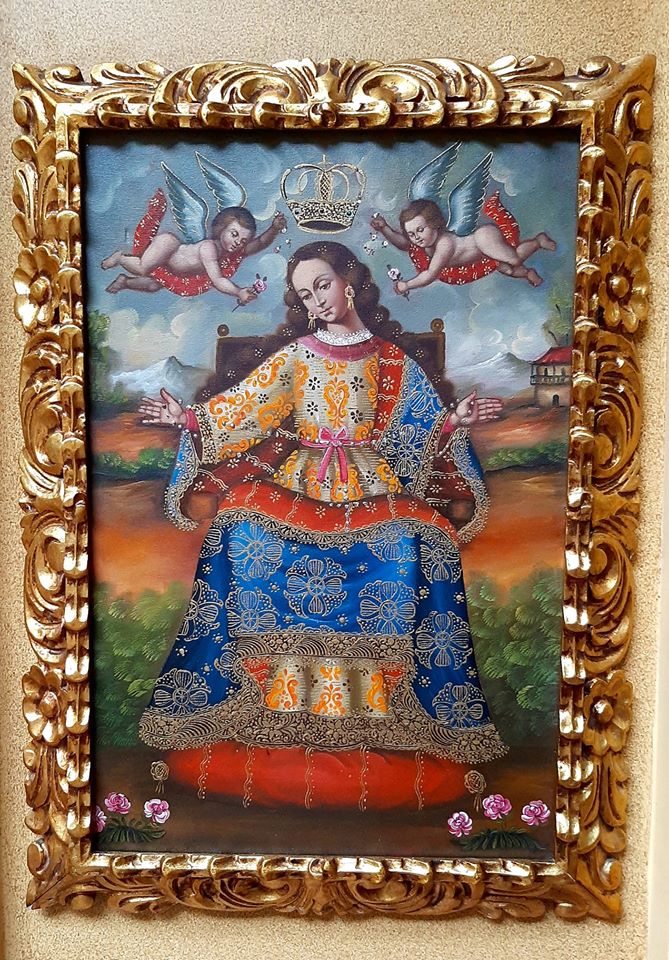
Painting of the Virgen del Carmen….unknown painter
Casa de las Posadas is located in the San Sebastián neighborhood , on Gran Colombia 17-44 and Baltazara de Calderón streets.
Cuenca old and new….Casa de las Posadas, one of the oldest buildings in Cuenca, with the new Tranvia passing in front.
There were two stone lined water canals discovered buried under this section of the Tranvia line.
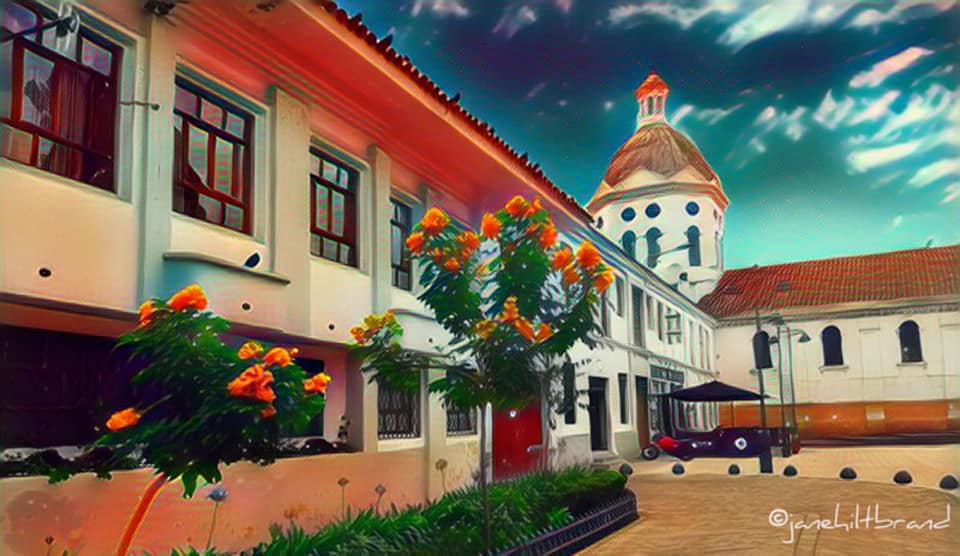
Before, and after restoration…..
It is now a Cultural Patrimonial Property of the City of Cuenca, and serves as a venue and gallery for various art shows.
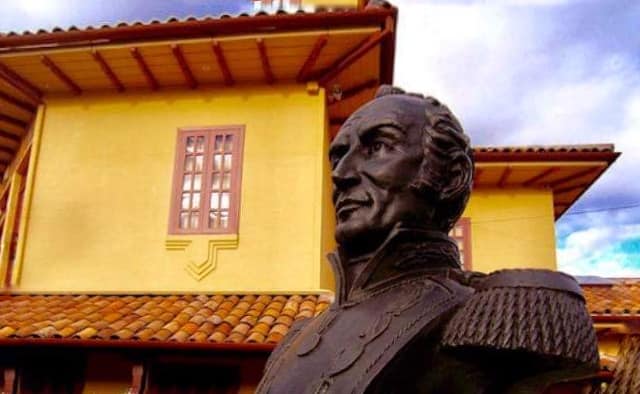
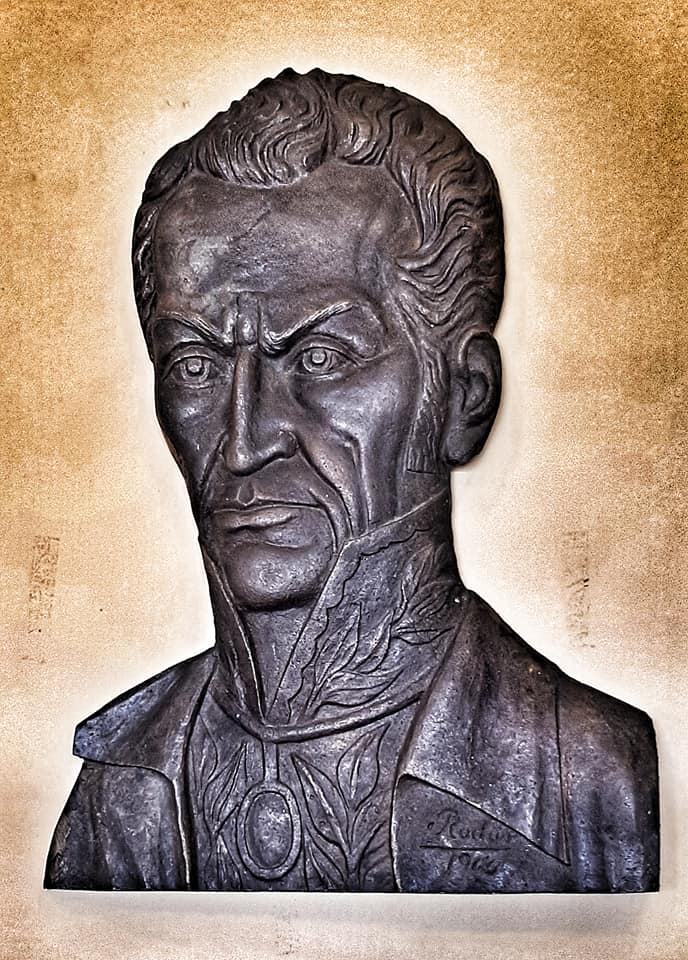
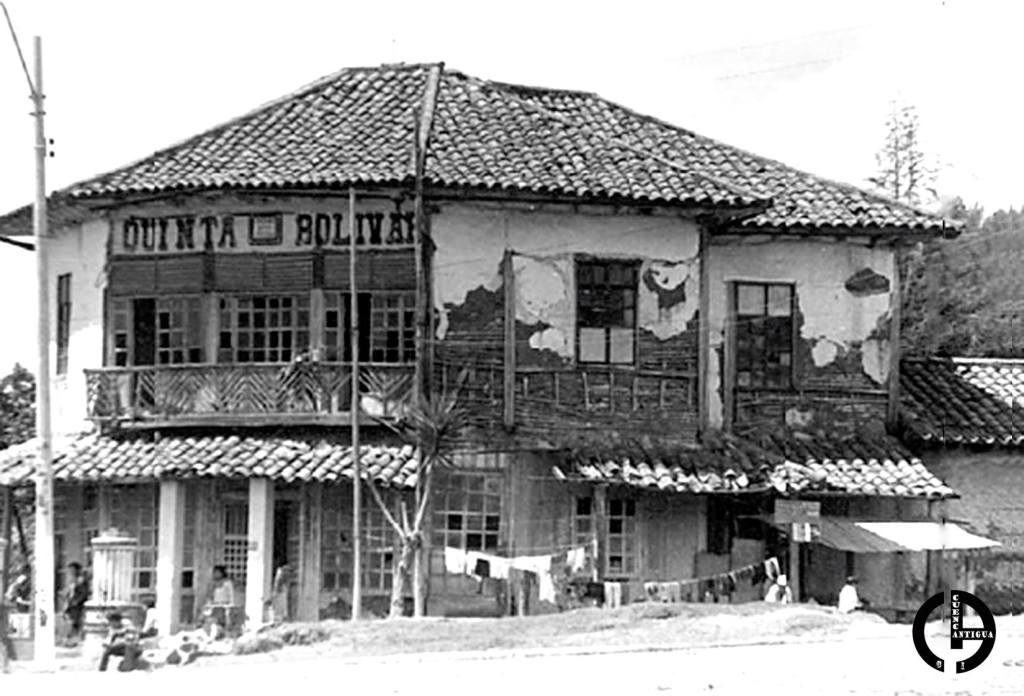
Simon Bolivar, The Great Latin American Liberator, visited Cuenca in September 1822. The current building is not the actual house where Bolivar stayed, but it is in the location of the home where he did stay, and has been dedicated to a museum in his honor.
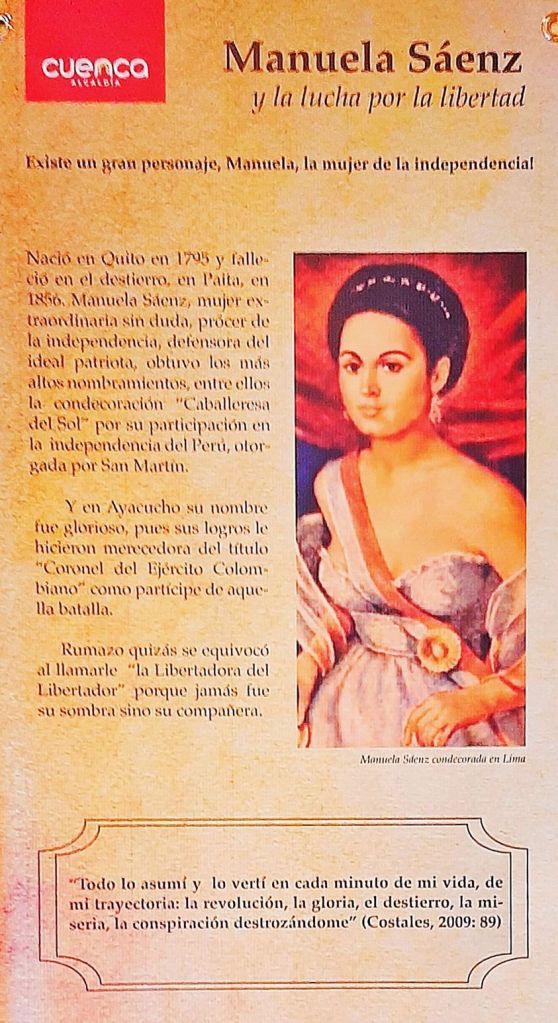
In 1822 Bolivar’s army had a great victory at the Battle of Pichincha on May 24th, in the fight for independence from Spain. Following that on June 16th he triumphantly entered Quito, where he received a hero’s welcome. This was also the day he first met Manuela Saenz, who was to become his lover, and also a very important part of Ecuadorian history.
Bolivar traveled extensively that year, in endeavors to create “Gran Colombia” which at its height eventually included present day Ecuador, Colombia, Panama, Venezuela, and parts of northern Peru and northwestern Brazil. After meeting with General San Martin in July in Guayaquil, he traveled to Cuenca through the Cajas mountains, and was received with flower arches, banquets and parties, and celebrations. He was invited to stay at the old Chaguarchimbana estate, owned at the time by Maria Castro de Izquierdo, a very rich woman, and the mother-in-law of Antonio Soler. She was an antimonarchist and a staunch supporter of independence, and she invited Bolivar to stay in the house and work in a quiet environment on his ambitious freedom plans for the whole of Latin American.
However, the country house in which he stayed is not the one standing today. That building was demolished in the 1930’s. The house we see today was built in 1936 by Benjamin Ramirez Arteaga, a prominent legal adviser. It was used as a holiday home, and during its heyday family and friends would frequently gather for parties on the banks of the Yanuncay River.
Quinta Bolivar has a library with an important bibliographic collection on Bolivar, and the time of Independence. The library is named after Manuela Saenz.
This is the only known photograph of the actual house where Bolivar stayed…..
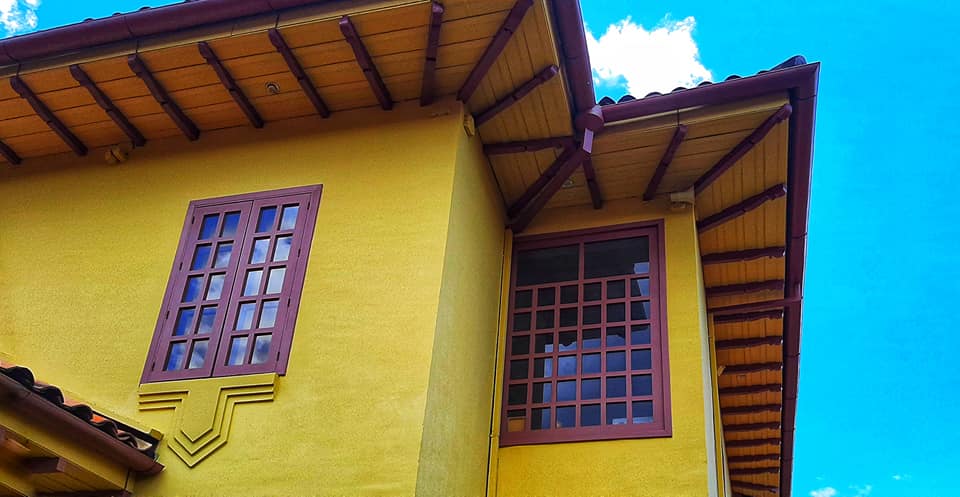
In 1960, Dr. Ramirez donated the property to the Azuay Employees Associate, which used the house initially for its meetings and then rented it out. Several years later, by which time the house had fallen into an advanced state of decay, Cuenca City Council purchased it and embarked on renovation works. The renovation process began in 2004 and ended in 2005.
This is a photo of the current house, before the renovation by the City.
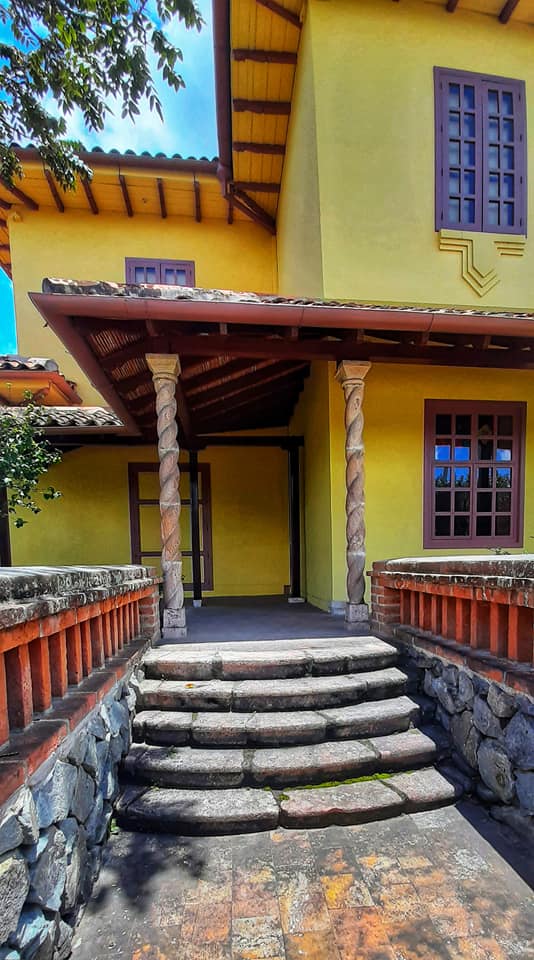
The house is a homage to the Liberator of America and since July 2005 has accommodated the city’s Bolivar Museum.
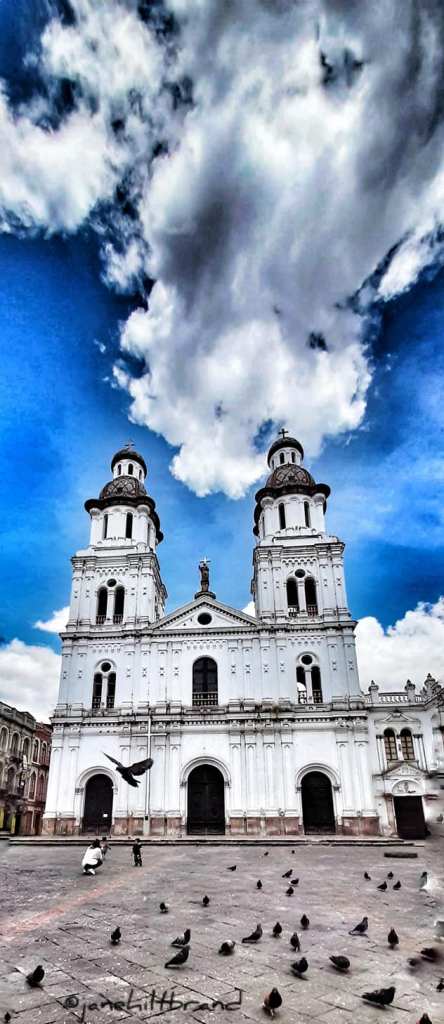
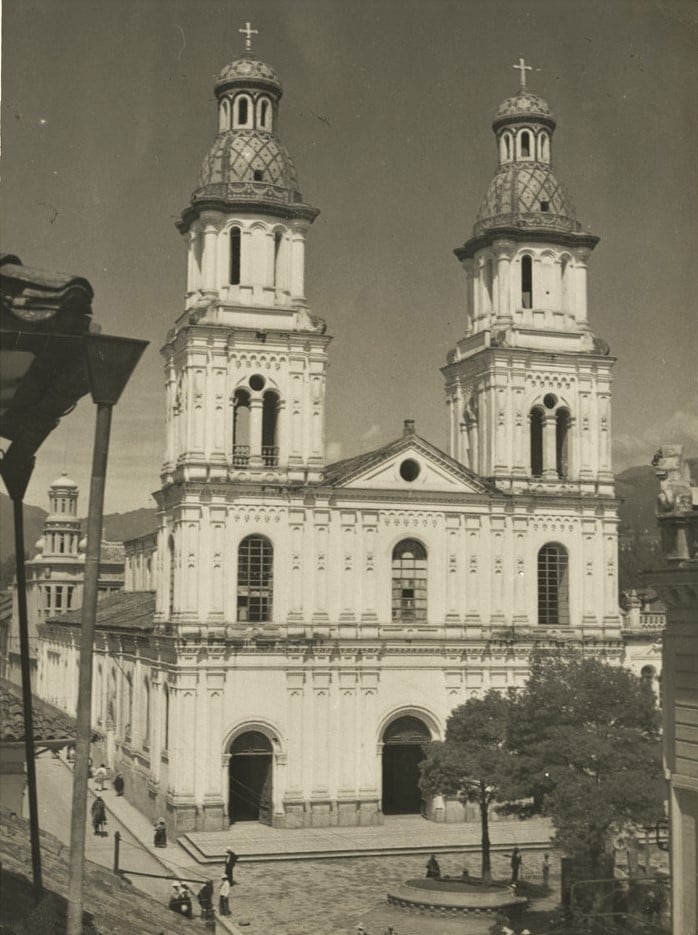
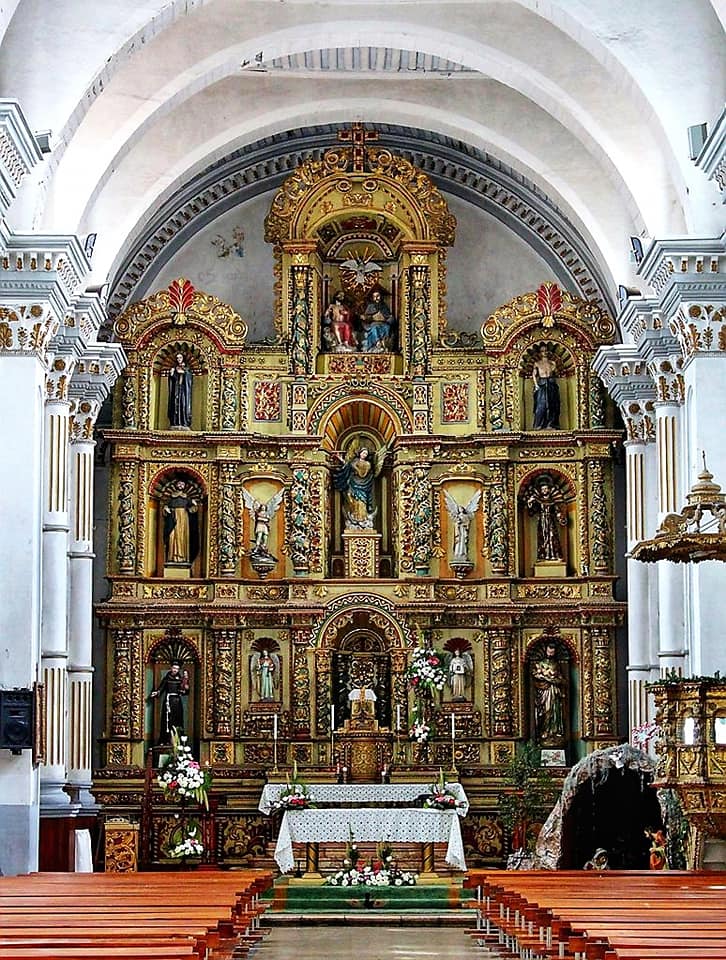
The history of the Dominican Church and monastery is closely linked to the Spanish foundation of the city. The viceroy of Peru Andres Hurtado de Mendoza issued instructions to Gil Ramirez Davolos for the foundation in Cuenca of a monastery dedicated to St. Dominic. A few years later, in 1562, brother Tomas Galiano commenced the building works, completing them in 1569, and dedicating the buildings to Our Lady of the Rosary. The first monastery erected was a humble building made from bahareque, a type of adobe and straw, with very few priests for services.
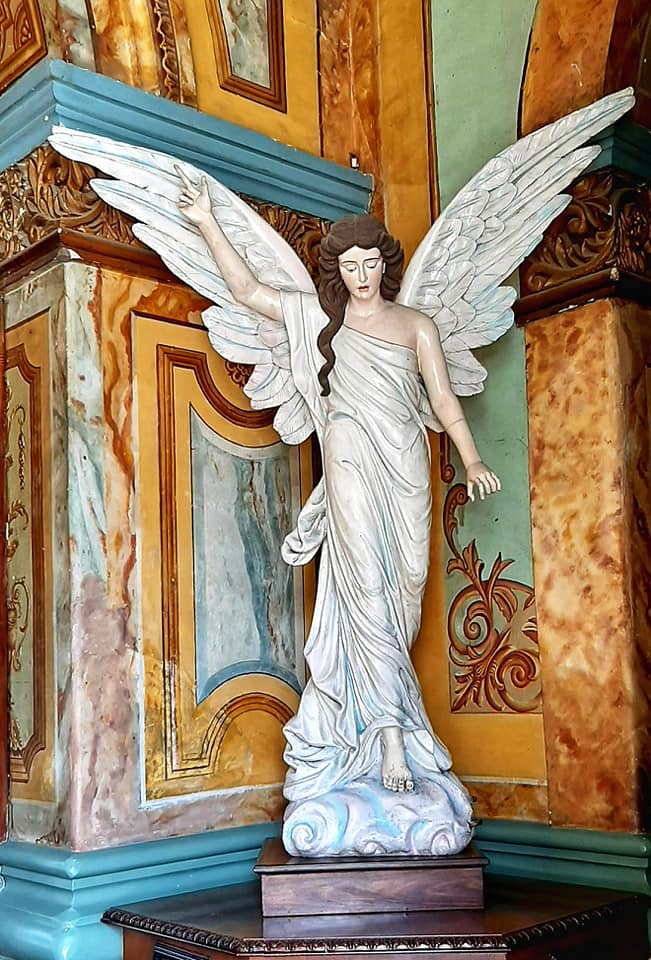
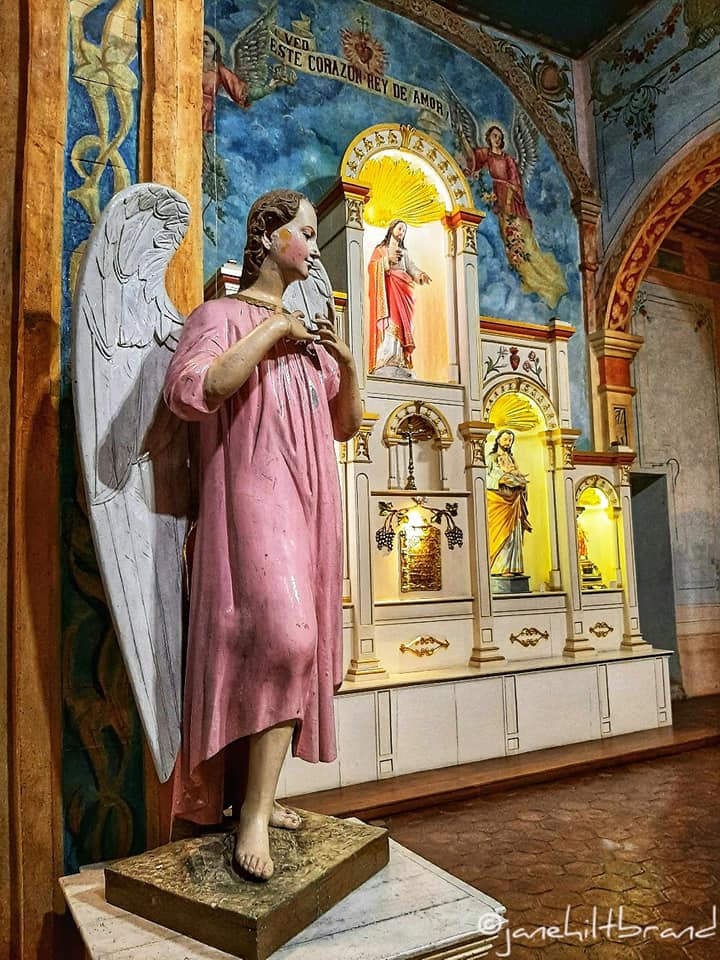
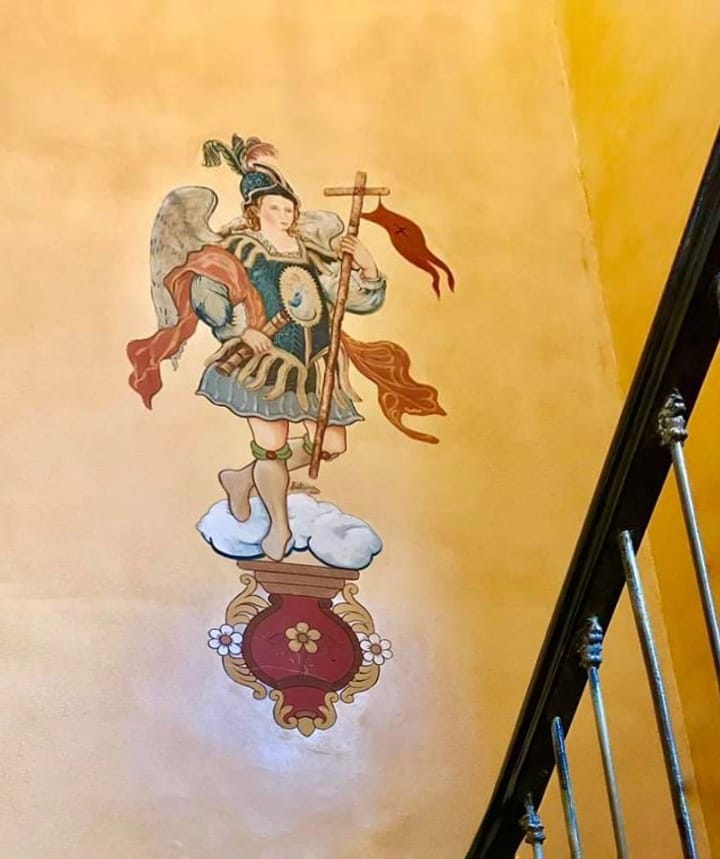
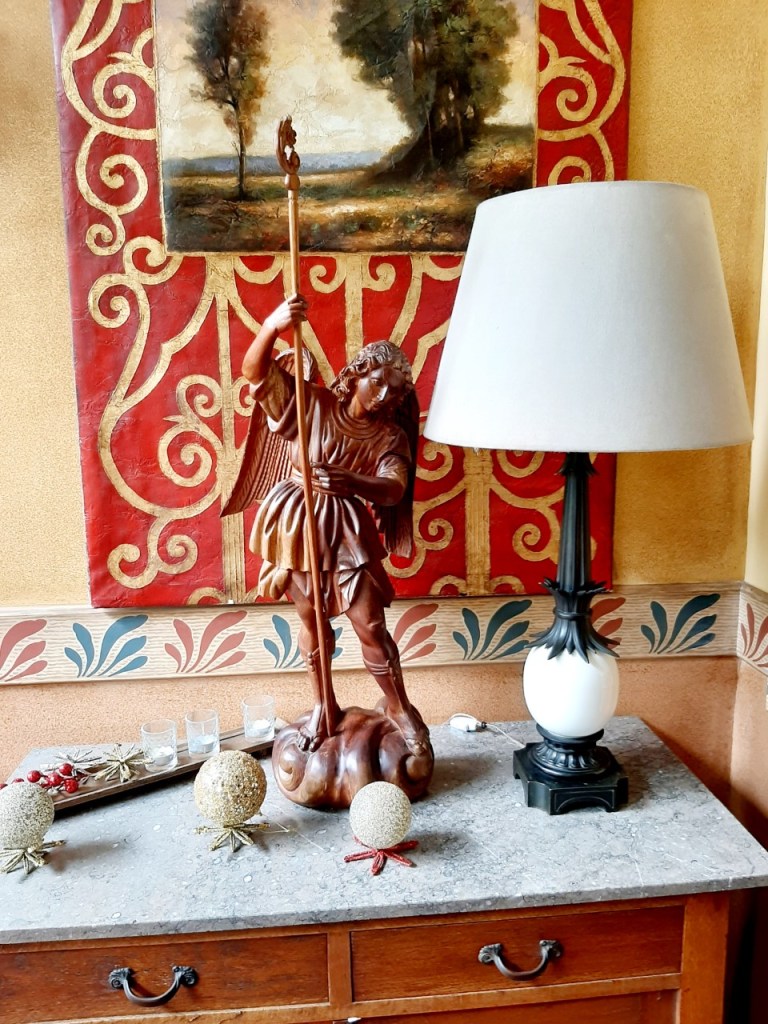
Angel of Santo Domingo
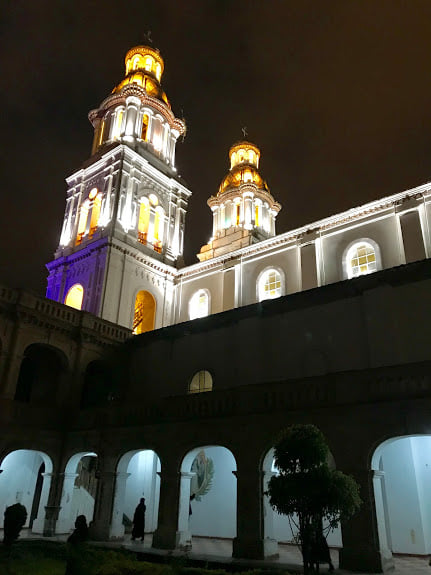
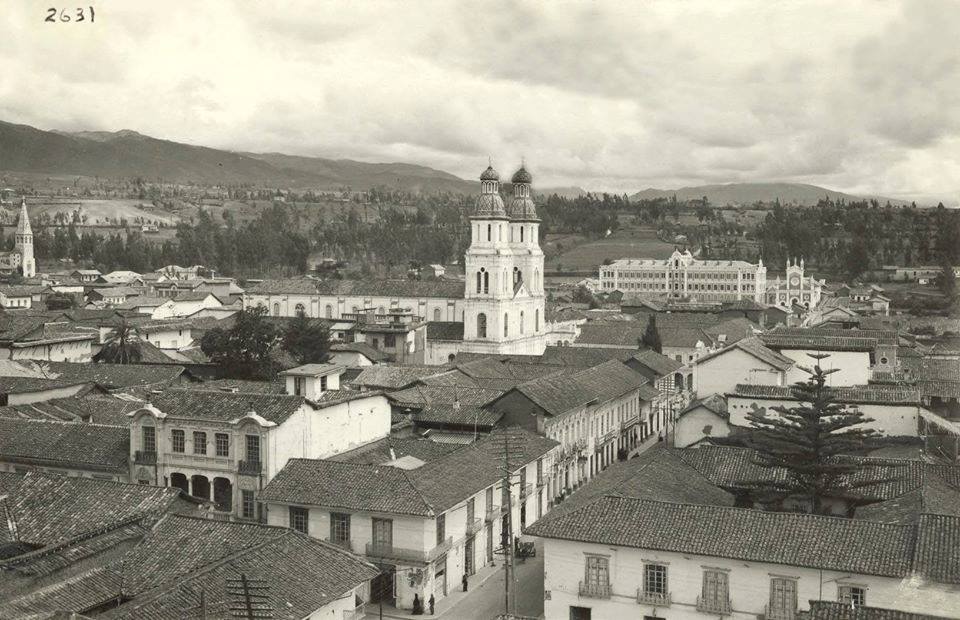
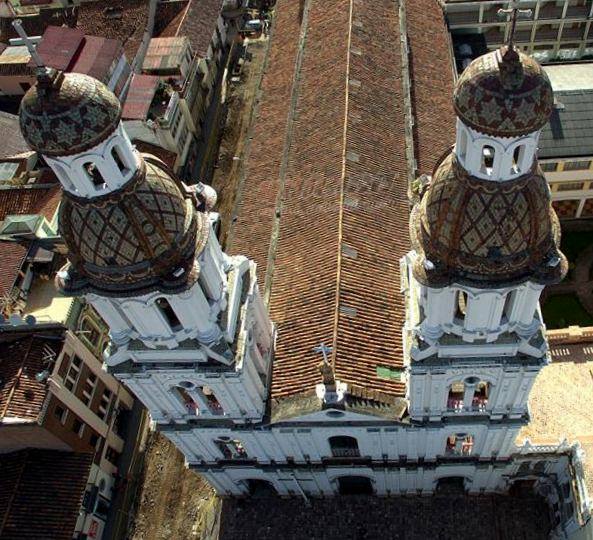
The present day church was built between 1906 and 1926. Outstanding features of the facade are the two towers. Made from brick they stand forty metres high.
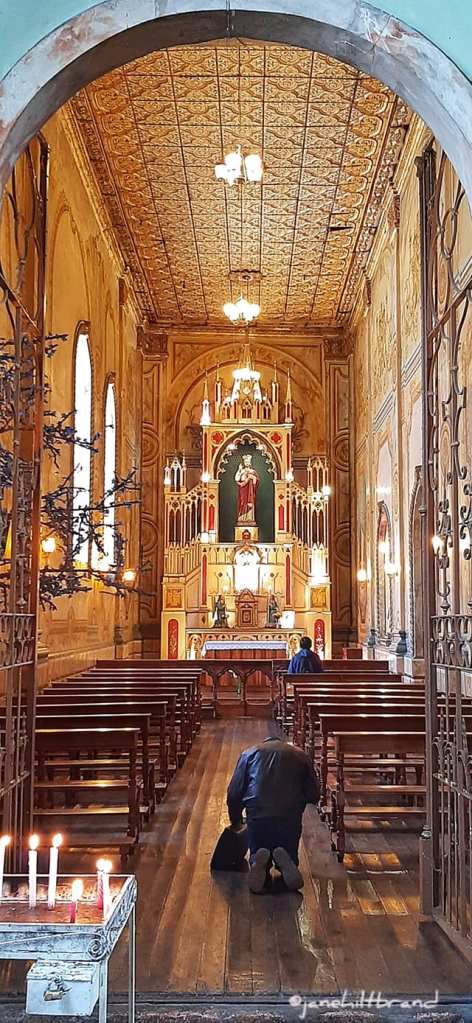
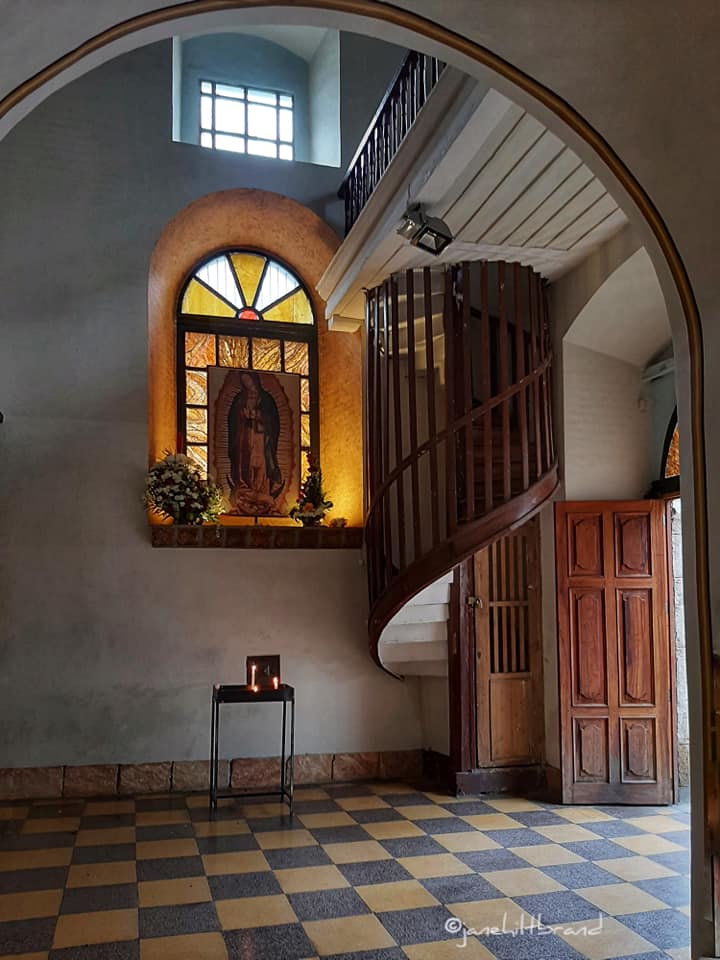
There are two chapels. This is the Chapel of the Virgin of the Rosary accessed from Gran Colombia Street.
The church bells are the largest in the city and are popularly known by the names of St. Rose and Ronca Moreno. In the first case this is due to its christening along with hundreds of other bells on the feast day of St. Rose, in Europe, in 1706. The other bell was apparently made in Cuenca on the basis of mingas -work in kind by the community under the supervision of Father Moreno, who wanted it to the largest and loudest in the city. The bell is 2.6 metres wide and 2 meters high, and it produces a deep, heavy sound. The towers can be seen from various points of the city.
At the very top is a statue of St. Dominic, the patron saint of the religious order, holding a string of rosary beads.
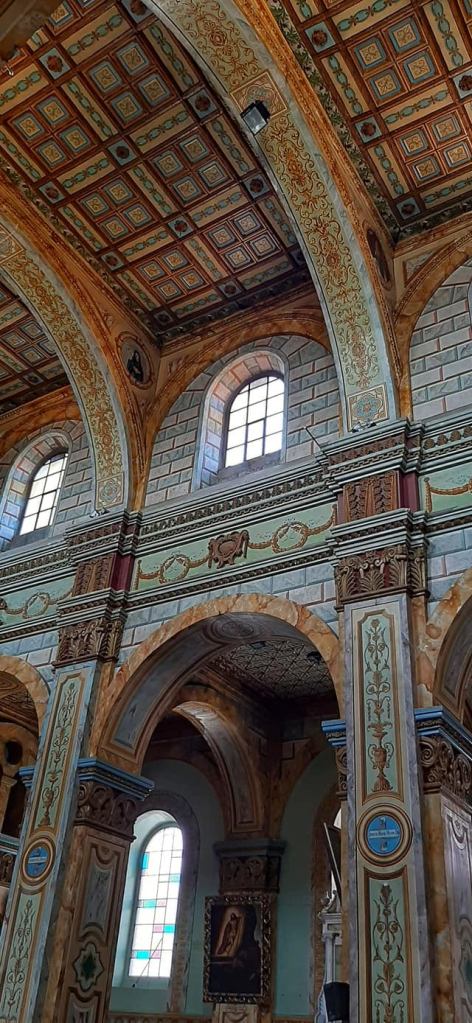
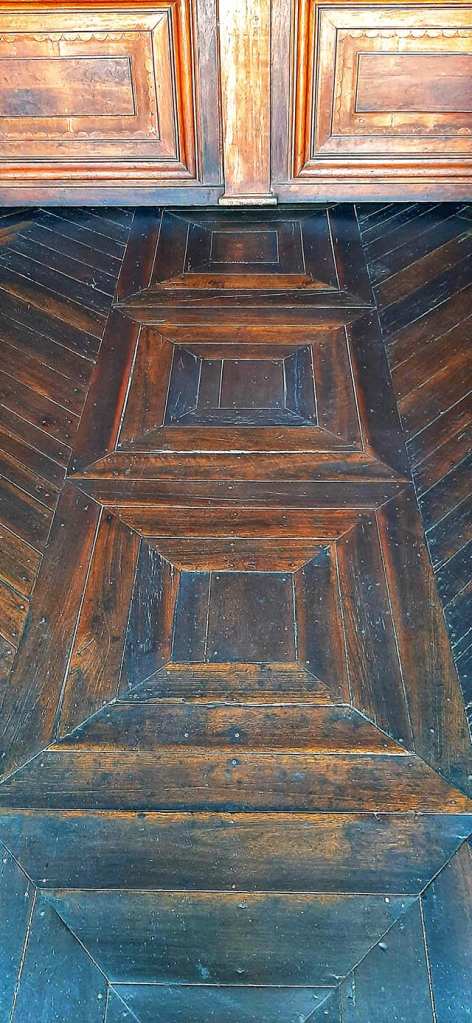
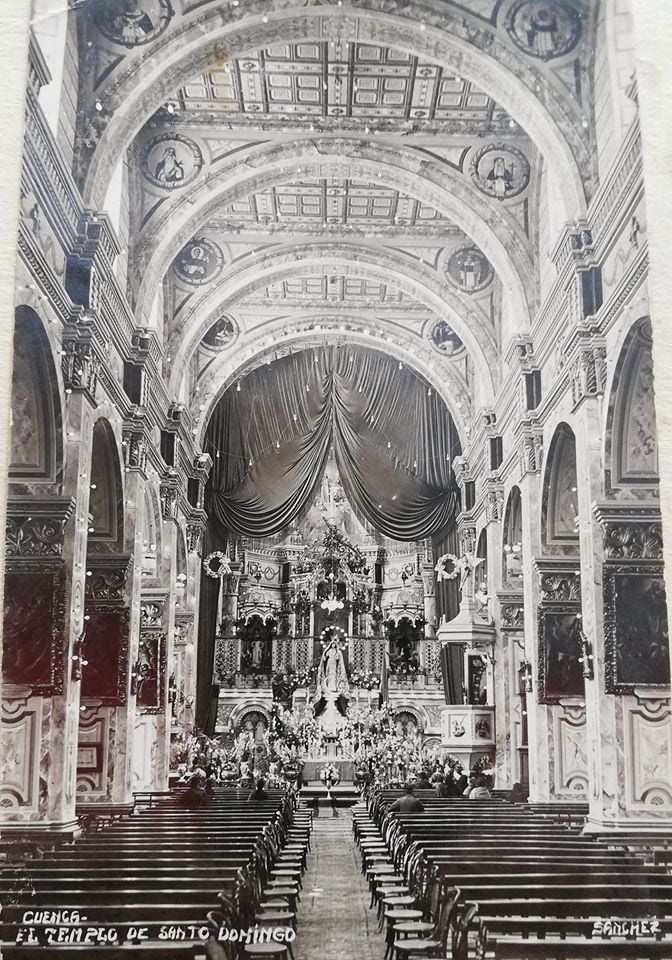
The interior floors of the church are based on wooden planks, arranged in a square shaped pattern.
Genuine treasures of the church are the colonial canvases depicting the fifteen mysteries of the rosary all with the same gold leaf frames. These paintings date to the 1700’s.
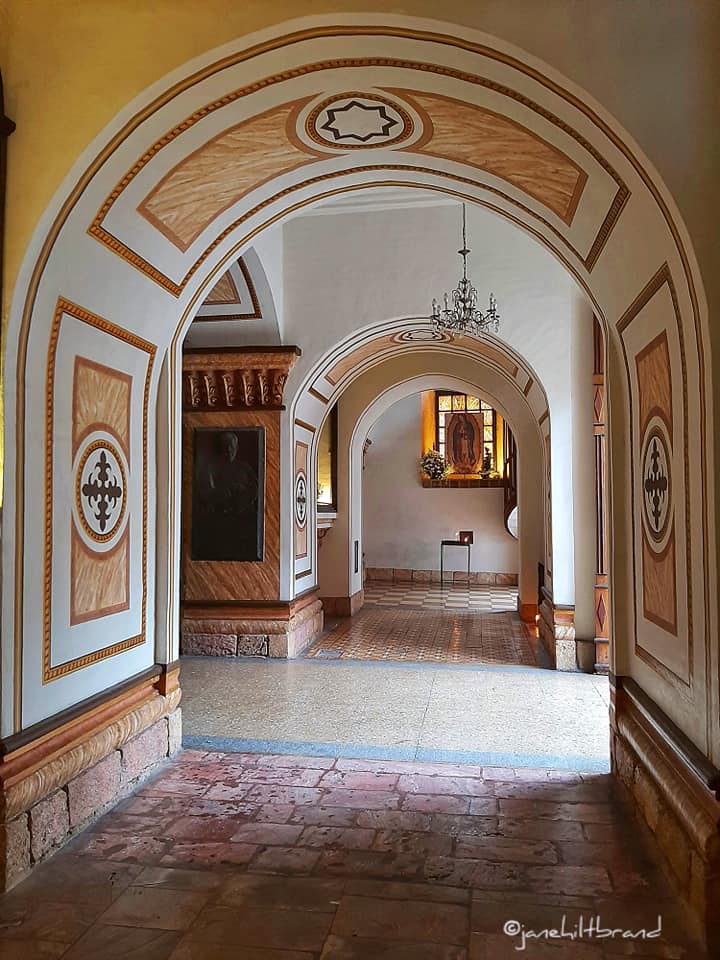
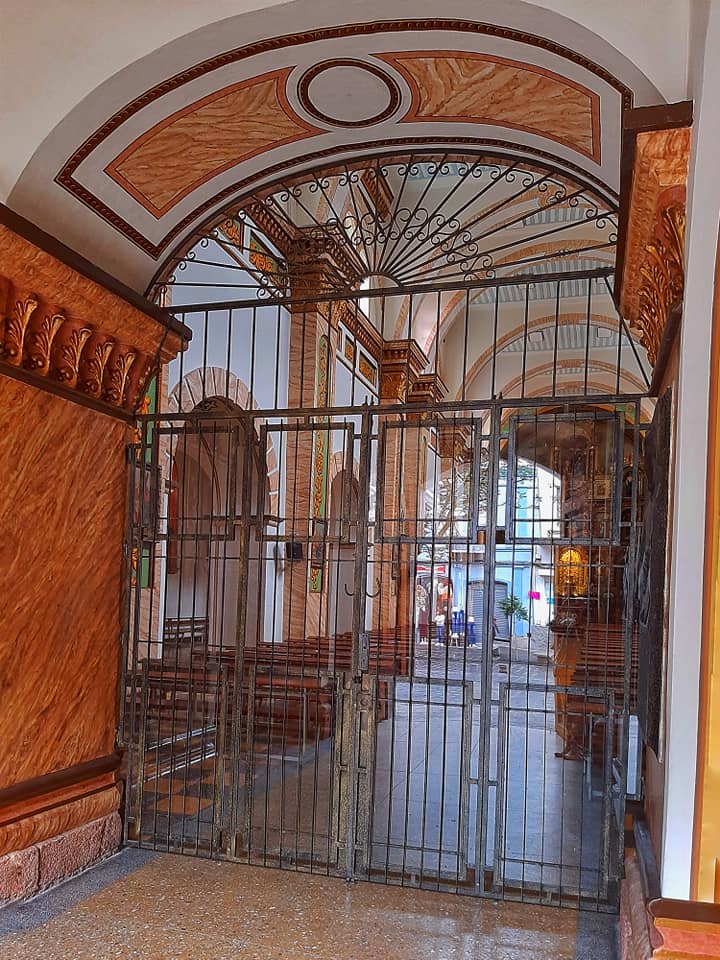
The monastery is accessed via an external door, and also another entrance is inside the church, linking the church to the cloister gallery.
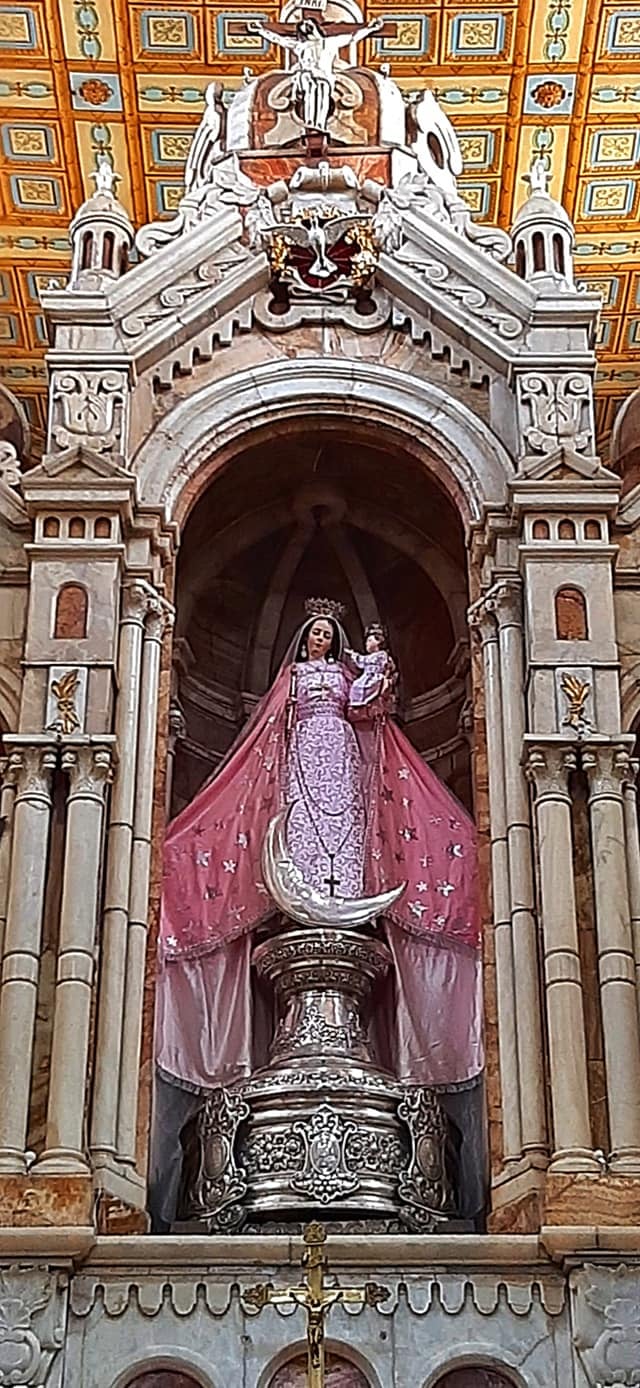
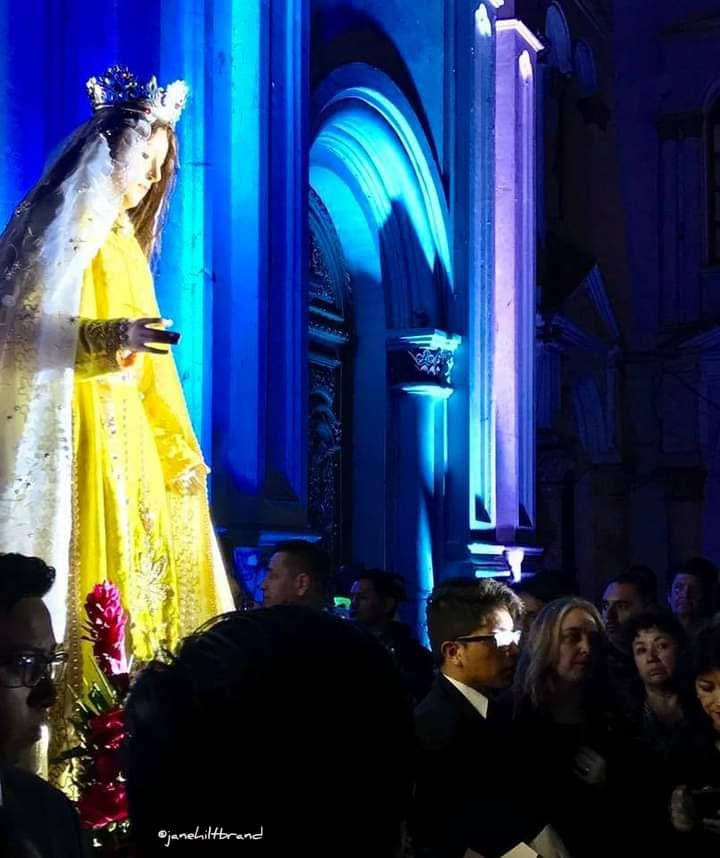
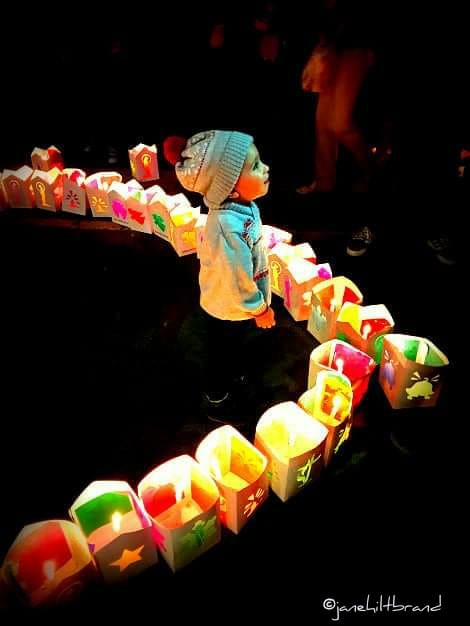
The Festival de Luces celebration, in early December, begins in the Santo Domingo Plaza. The Virgin is brought outside to the front of the church, to bless the crowds.
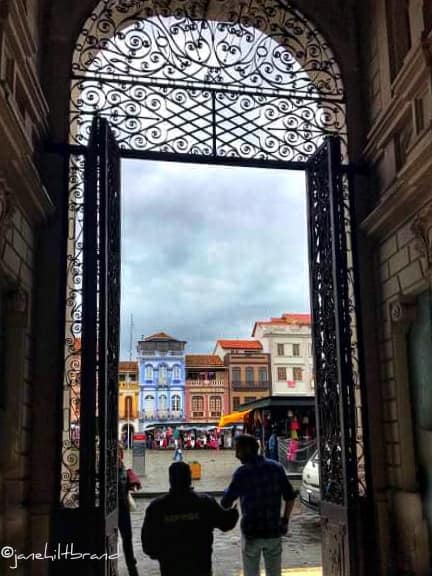
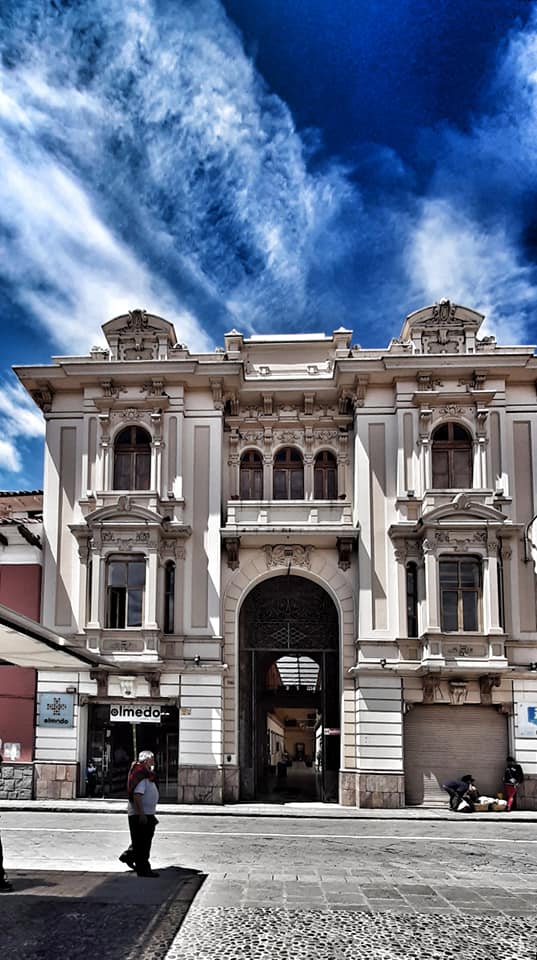
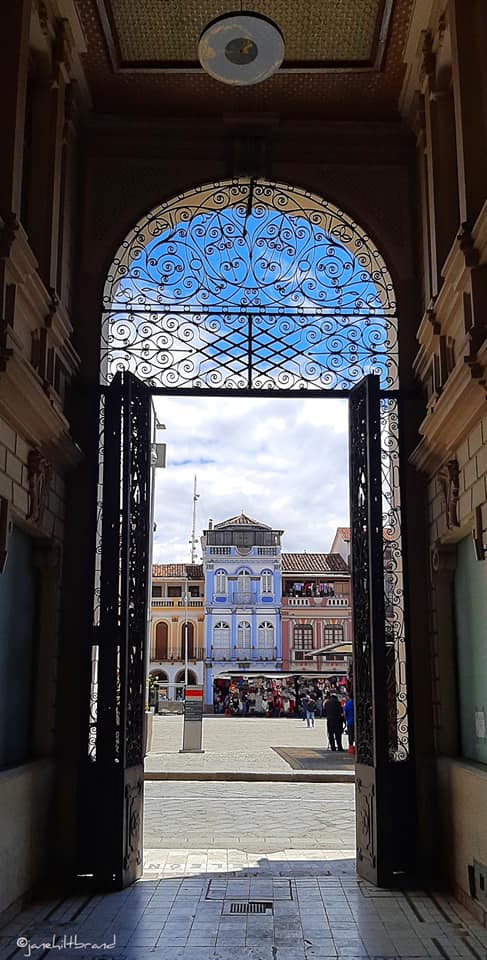
A Guide to Cuenca Architecture #38 PASAJE LEÓN. The León Passage was designed by the León Delgado family in 1930 as a large urban boulevard for commercial activities. Its construction was funded by the Delgado family, which had amassed a fortune through the exportation of Panama hats. It was planned as the first “Shopping Street in Cuenca.” Pasaje León was designed by Carlos Ordóñez Mata, and influenced by French neoclassical design. The entrance is on Presidente Córdova, bordering Plaza San Francisco. The door is an exquisite example of intricate wrought-iron, 26 feet high.
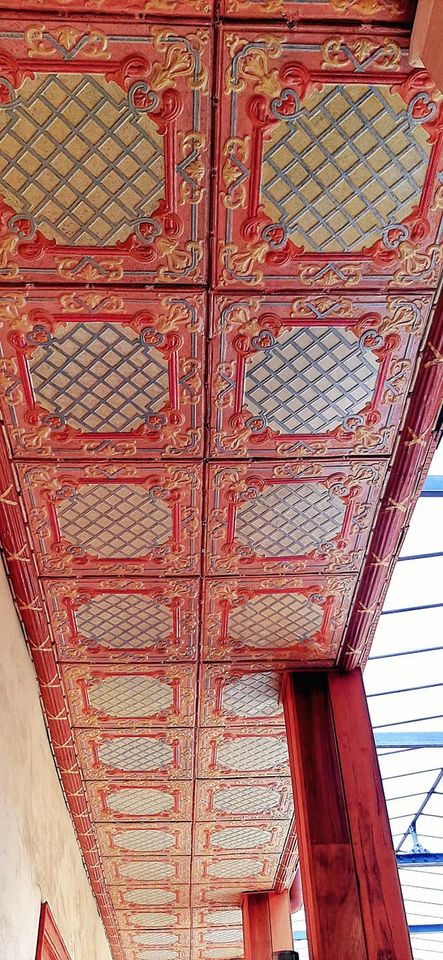
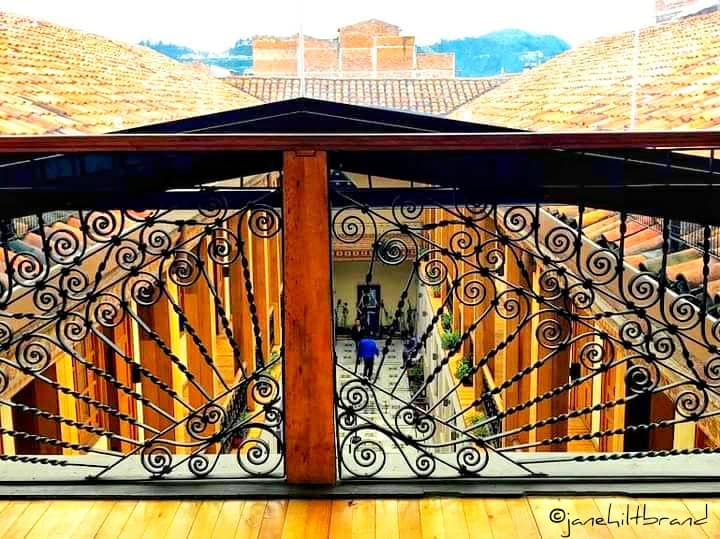
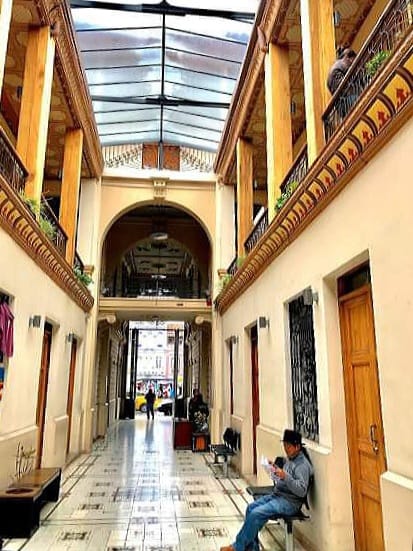
Internally, the spaces are organized around the “passage” and have relatively high ceilings, while the different sections of the building are connected via bridges with Art Nouveau ironwork. All the internal spaces, including the staircases, have polychrome brass ceilings.
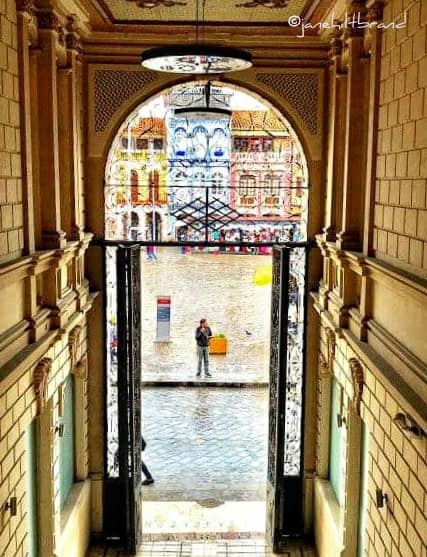
The front door overlooks Plaza San Francisco.
Plaza San Francisco vendors.
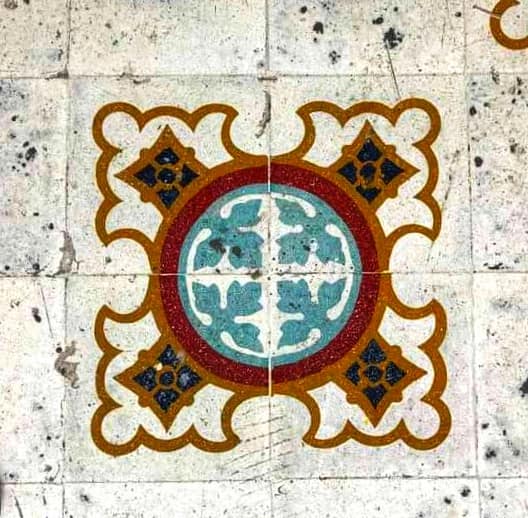
All of the original floor tiles were restored.
The building has been used for several purposes. Around 1946 it accommodated railway warehouses, and in the 1950s it was turned into a boarding house for students. In the 1980s the west side of the building was damaged by fire, resulting in the replacement of ceilings, windows and a staircase.
French neoclassic design, very popular in Cuenca at the beginning of the 1900’s, which was a time of great prosperity for the city of Cuenca.
Brass is one of the most attractive elements of the decoration . There are more than 1,968 sq ft of polychrome brass that adorn the ceiling and moldings of the central patio.
Beautiful twenty-six foot high wrought iron door
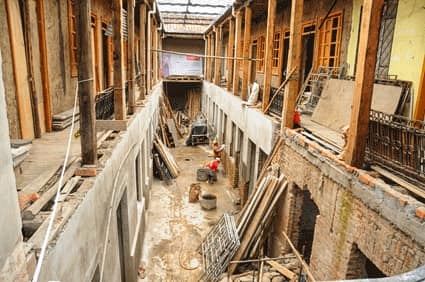
In 2015 the City of Cuenca executed a complete restoration of the building which at that point had been abandoned for almost a year. Ten property restorers recovered the wooden doors that were over 80 years old and moth-eaten. They were covered with chemicals that will protect them for decades The experts also improved the front door, wrought iron railings and the original tiles of the courtyard. The restoration was completed in 2015 during the administration of Cuenca Mayor Marcelo Cabrera.
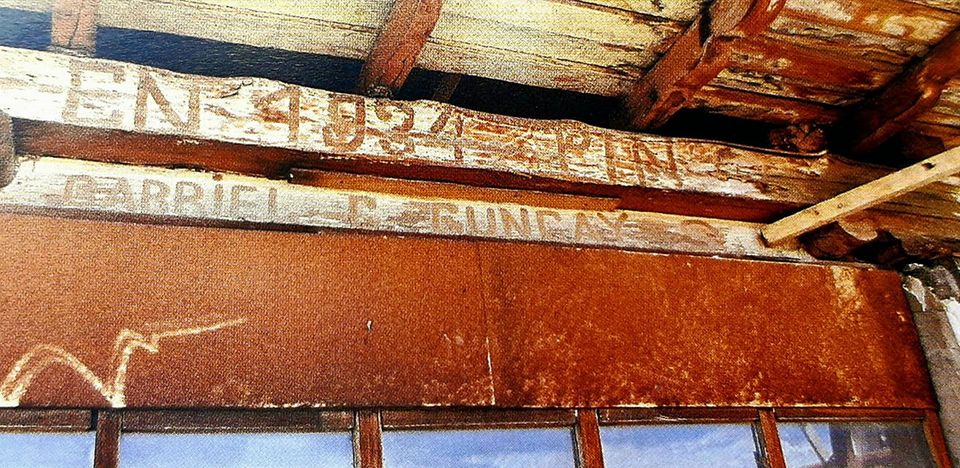
During the restoration, this inscription was found painted on a wooden beam ” Esta casa en 1934 pintó Gabriel G. Guncay.”
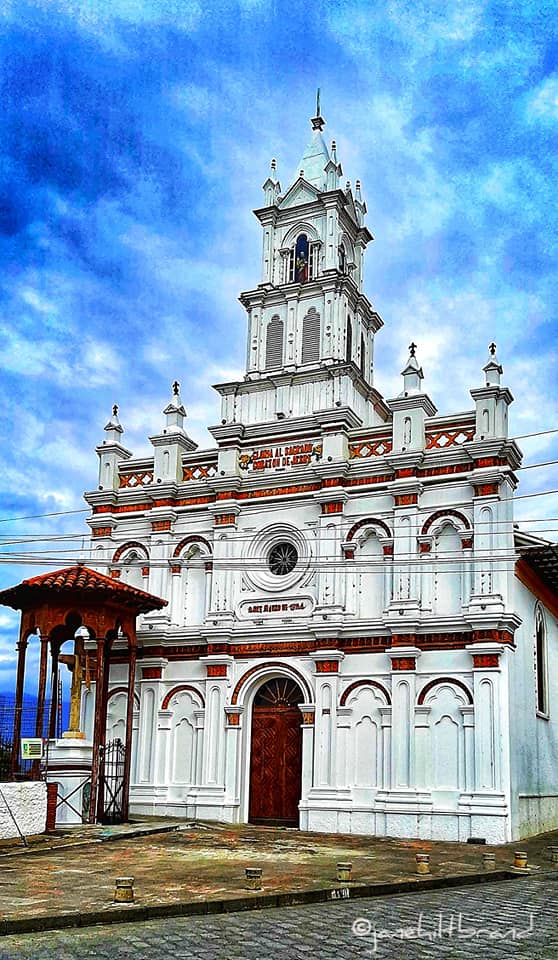
The place where Iglesia Todos Santos is today, originally was an indigenous shrine with the name of Usno. When the Spanish occupations began in Cuenca, the first Catholic masses were celebrated in this same temple in 1540. Spaniard Rodrigo Núñez de Bonilla, is attributed with the construction of the first Catholic church built on this site in 1557.
The current structure was built in 1820, following instructions from Bishop Miguel Leon. Garrido. In 1895 the chapel and surrounding grounds were donated to the Oblate nuns . The complex was built including the church, the school, and the convent. The Oblates nuns ran a school which was the first to offer free education to indigenous girls.
In March 1924 it was given the name “Todos Santos’ due to the variety of saints that were inside. One of Cuenca’s historic boundary crosses stands outside, one of several in the city.
In 2005 a disastrous fire destoyed a large portion of the church and the semi-cloister convent in which the Oblates nuns live, and in 2007 there was another fire. From 2007 to 2014 there was a long process of restoration. In January 2014 the Oblate Sister of the Most Holy Hearts of Jesus and Mary, after seven years of restoration opened the church to show this hidden gem of Cuenca.
Cuenca, old and new on Calle Larga…..
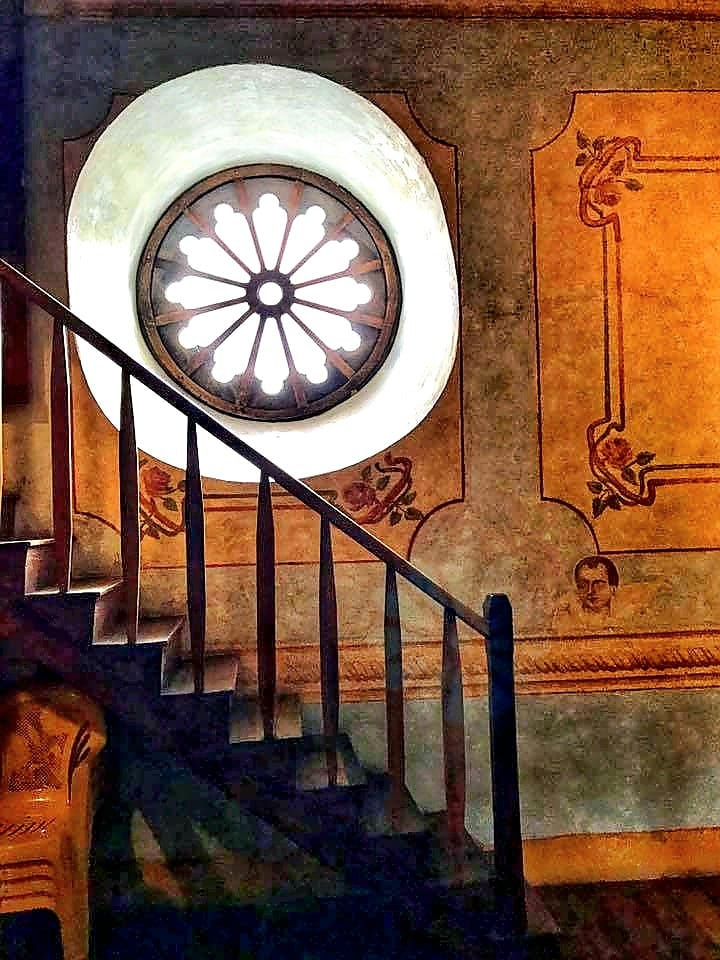
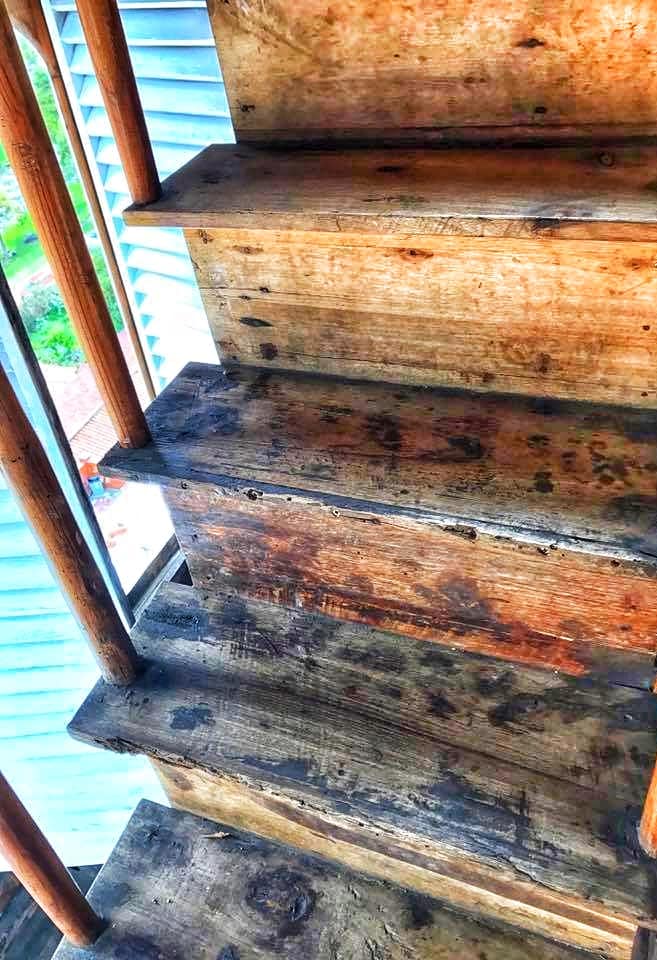
During the restoration the restorers found murals from the early 1900’s which had been covered over by several layers of white paint. The wooden stairs to the tower were repaired to provide safe access to the one of the best views of the city and the Tomebamba River.
The bells in the tower. You can see how old the wood is in these steps to the tower.
There is a life-sized statue of Jesus in the tower. There is only enough room for maybe one or two other people.
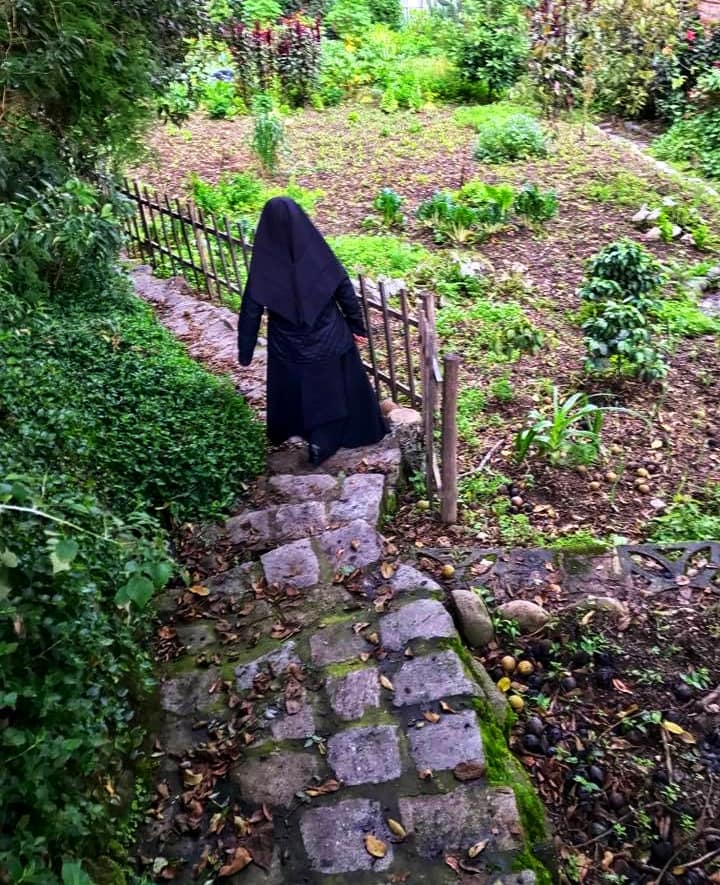
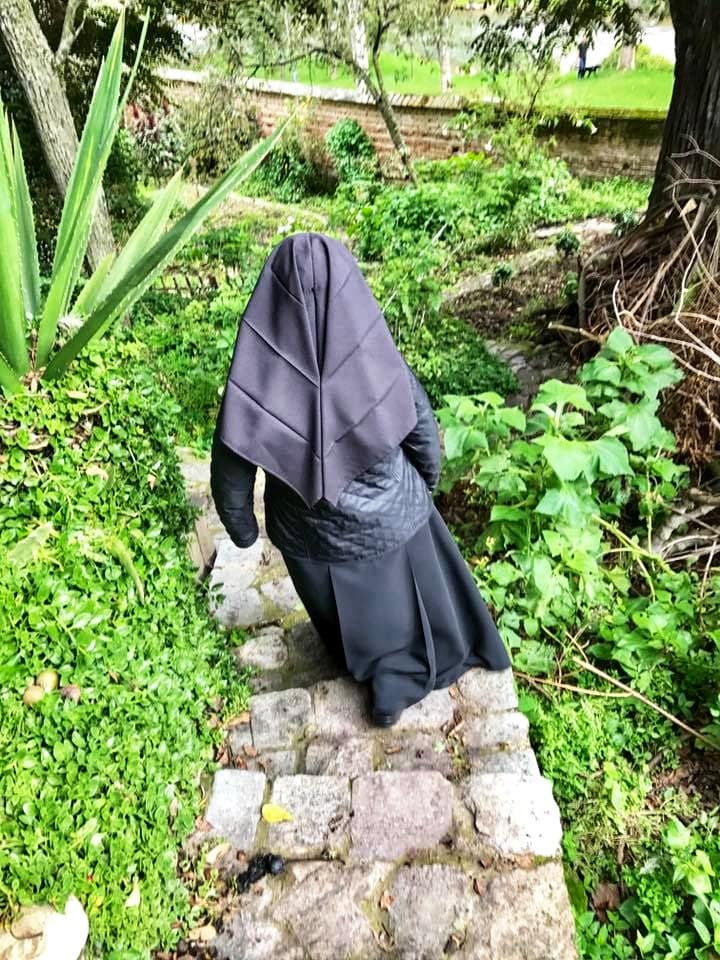
Sister Ruth is giving a tour of the garden. The rear garden facing the Tomebamba River is a well tended native garden, where the stone terraces built by the ancient Canaris are visible again, and provide a backdrop and support for the walkways and planting beds filled with herbs, and organic fruits and vegetables, oregano, cedron, dill, cilantro, celery, and colorful flowers.
This very old key is the actual key to the garden door.
The Todosantos bakery was famous in the city and the smell of fresh bread, characterized the neighborhood for decades until the mid-twentieth century when the old wood-burning oven stopped working due to the deterioration of the adobe and bahareque structure that housed it. The historic wood-burning oven was recovered in the conservation project.
Previously the popular Todosantos restaurant was in the basement of the nuns convent.
Note the curved contours of the adobe/bahareque walls. One of the murals that was discovered hidden for many years under layers of white-washed paint, and restored in place.
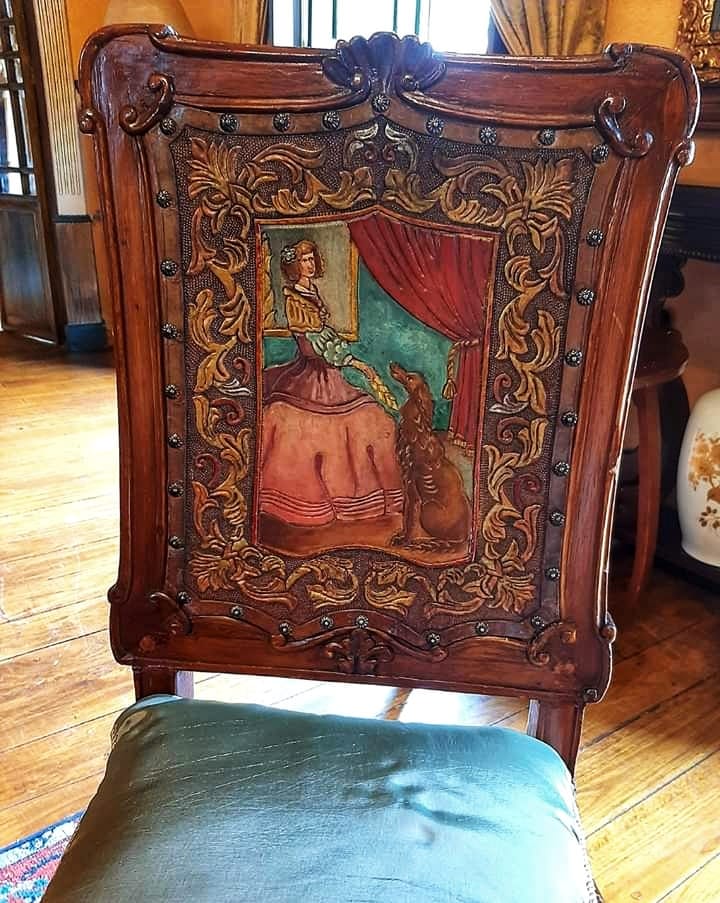
This chair is from the 16th century (1500’s).
Todos Santos at night from the Tomebamba River. Photo on the right is from the 1950’s of the Iglesia, and Bajada de Todos Santos.
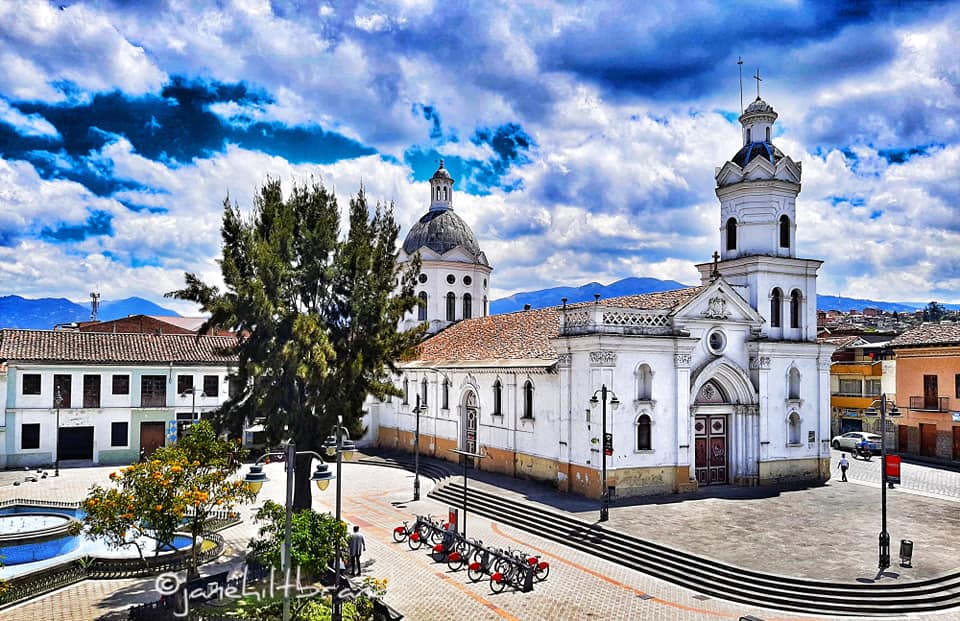
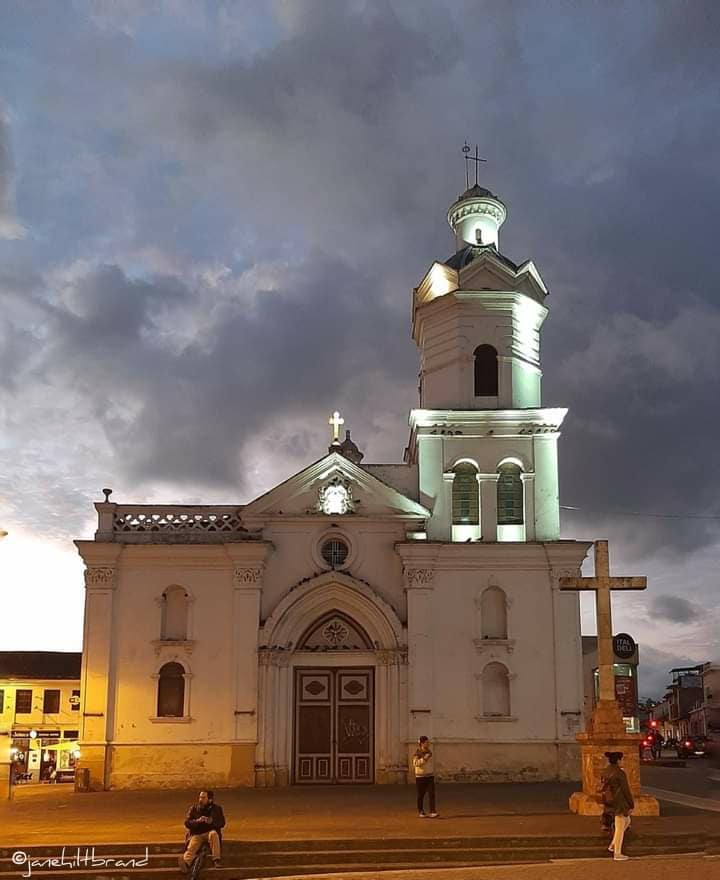
The parish of San Sebastián was founded in 1560, soon after the founding of Cuenca, and the construction of the early adobe-walled church is attributed to the first priests. This small square was named after the church.
The parishes of St Sebastian and St Blas, respectively located then at the west and east ends of the early city, were known as “Indian districts”, indicating the racial and social segregation of the colonial period.
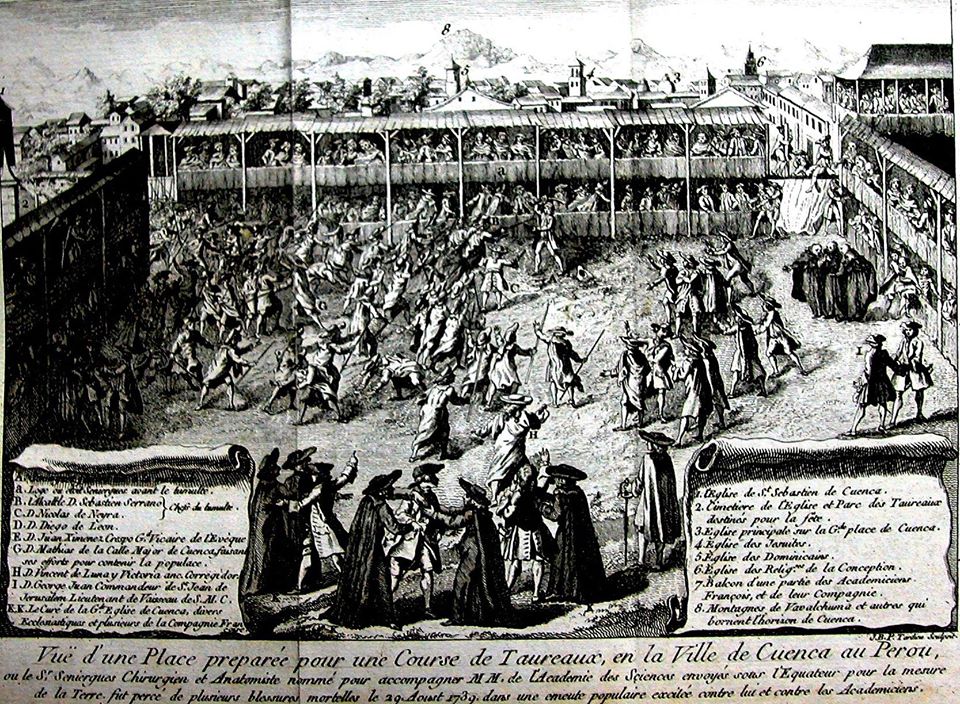
At the time, the square was surrounded by a rough stone wall and was used to hold festivals, the main one of which took place on January 20th, corresponding with the feast day of the district’s patron saint. This festivity was celebrated with traditional dances, and fireworks. The first futbol matches were held in this space, and there are also records of bullfights.
Located on one side of the church is a splendid cruciform fountain with a central spout.
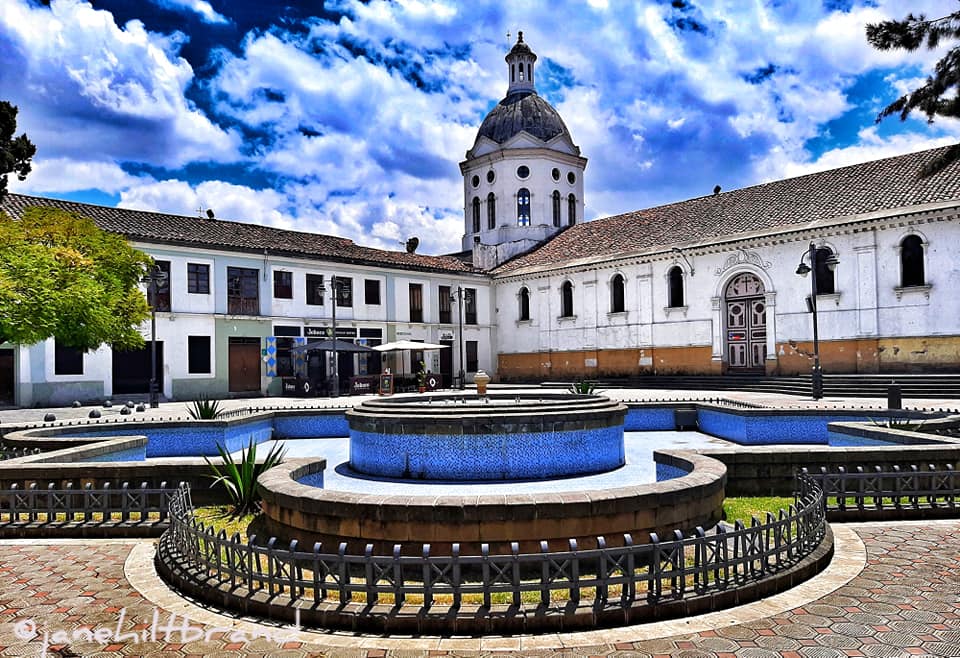
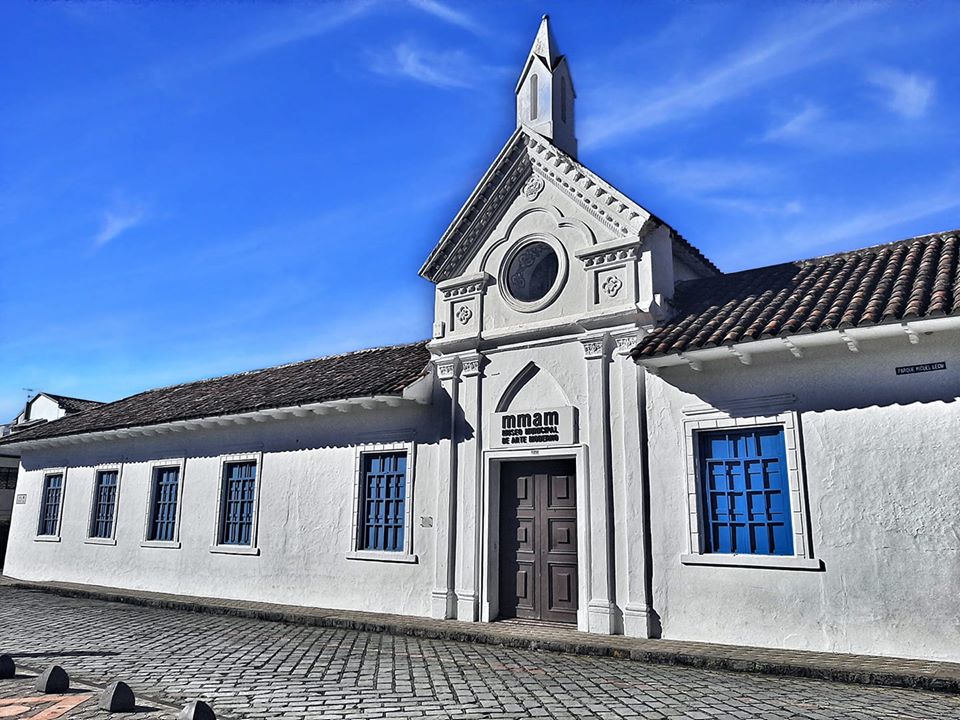
The square is surrounded by important buildings such as the Museum of Modern Art, the Church of St Sebastian, the Larrazábal Gallery, and many delightful restaurants and cafes. It is a lovely place to enjoy a meal, or coffee and dessert, and people-watch.
In 1739 the square was the scene of the tragic death of the French doctor Jean Seniergues, a member of the first French geodesic mission. The expedition’s surgeon, Jean Seniergues, emboldened by a few too many glasses of aguardiente, had the audacity to join his local lover in the very public setting of a bullfight … while she was sitting with her father. The situation escalated rapidly, with weapons drawn, and a crowd of irate locals surrounding Seniergues, jabbing him with pikes and lances while shouting “Kill the French foreigners!” A week later, he died from his wounds.
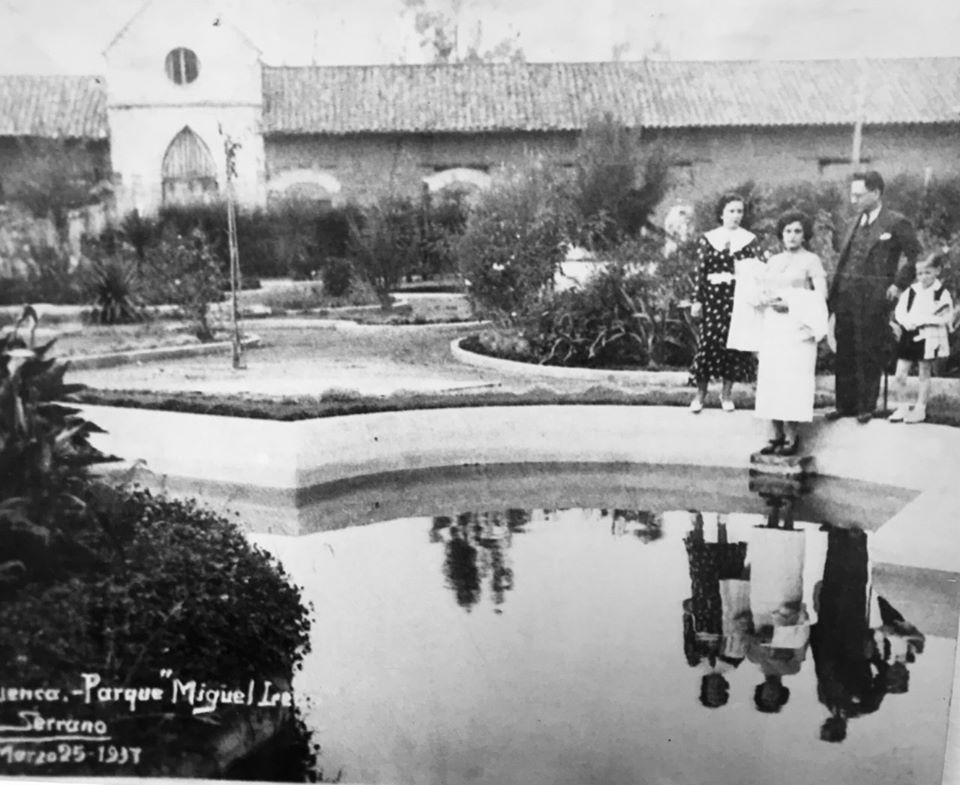
The square was officially renamed Miguel León after one of the bishops of Cuenca At one end of the square there is a bronze statue of the poet Miguel Moreno Mora.
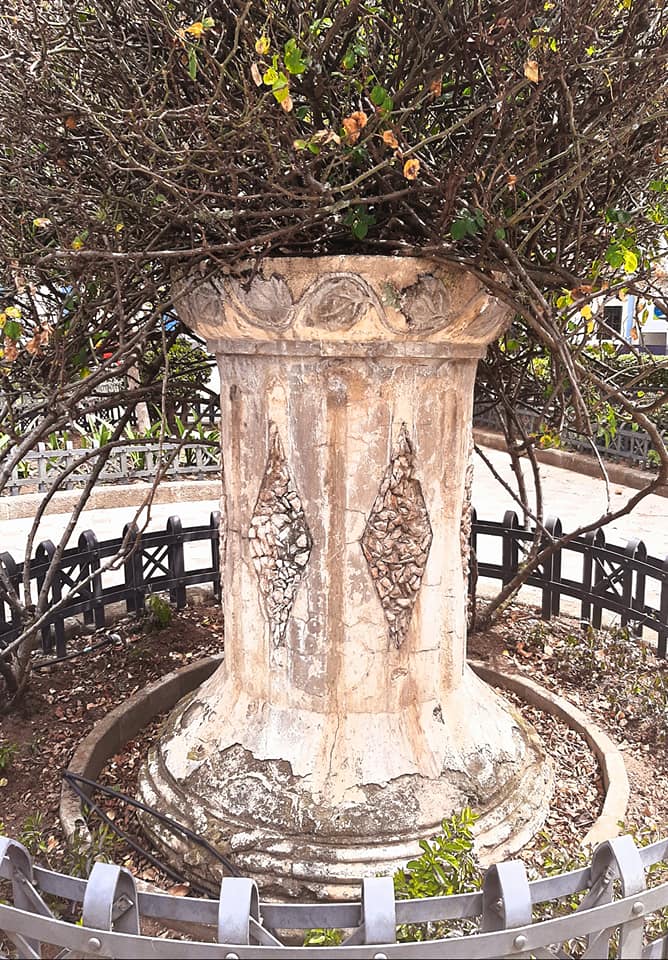
A lovely old fashioned marble planter in the plaza
The geometric layout of the square dates to the early 20th century and its design is attributed to Octavio Cordero Palacios. Of distinct Renaissance influence, it is associated with the ornamental gardens created at Versailles by the landscape designer Le Notre.
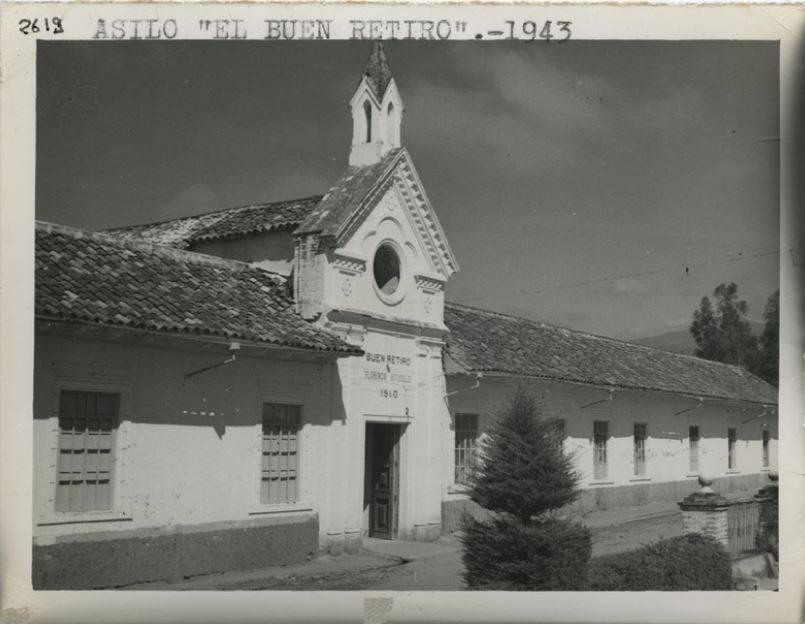
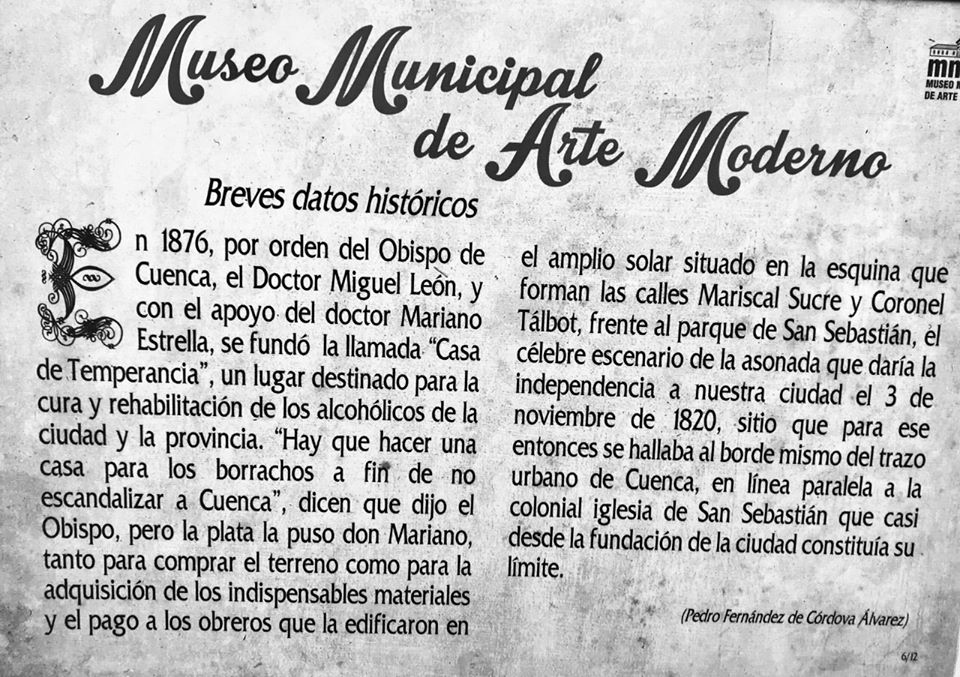
This building was erected in 1876 under the order of Bishop Miguel León to provide shelter for the alcoholics in the city and province, for their rehabilitation and cure. The design is attributed to the German Redemptorist monk Juan Bautista Stiehle, who worked with the bishop on other projects in the city. The entrance is located at the center of the building – a large rectangular door framed by moulding and a pointed arch.
Its location on the city’s former urban western boundary, in the traditional district of St Sebastian, was strategic for the original use of the building. The mission of the “Temperance House” was to offer the necessary services to enable its patients to overcome the vice of drink.
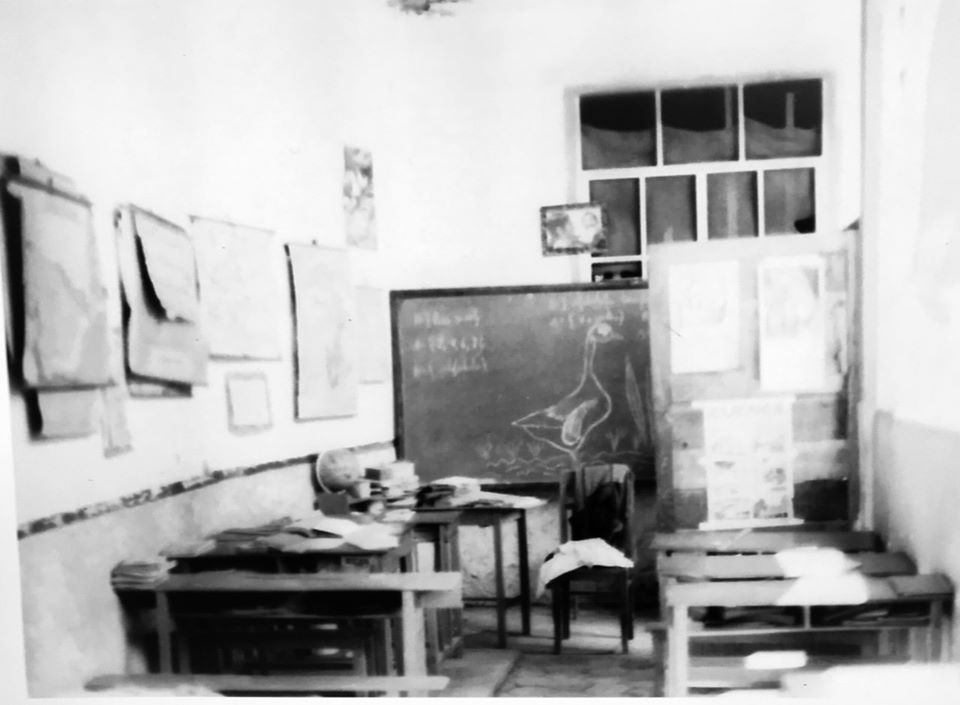
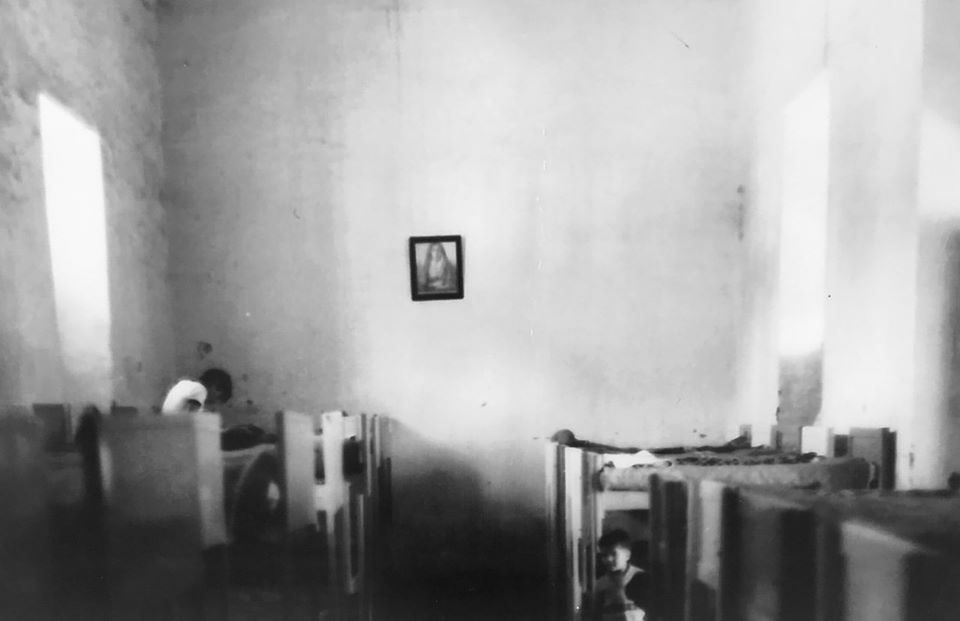
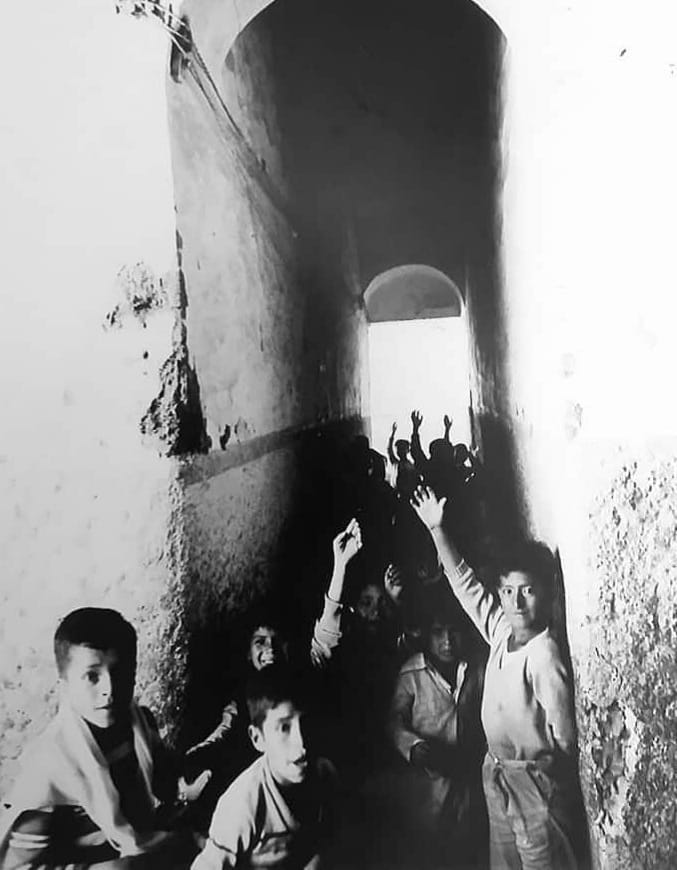
It contained large rooms serving as collective dormitories and small cells for isolating extreme cases. The city authorities, by means of the councillors’ votes, decided who needed reclusion of this type, and they also decided the fate of the rehabilitated. The building fulfilled this mission until 1896, when vast numbers of inmates managed to escape.
Thereafter the building lay in a state of neglect until 1912, being rented out partially or wholly during the interim period. From 1924 to 1939 it served as one of the wings of Cuenca’s Prison for Men, falling into an advanced state of decay due to neglect by the prison authorities. Almost a complete ruin, it subsequently passed into the hands of the Social Welfare Board, which used the building for works of charity, first as a shelter for the homeless and then as a shelter for the elderly.
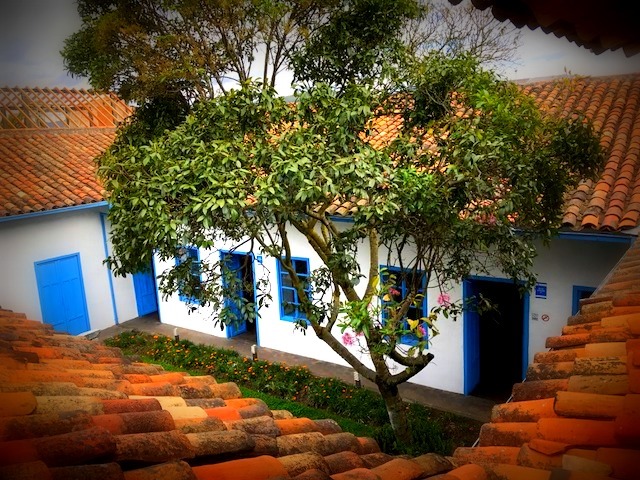
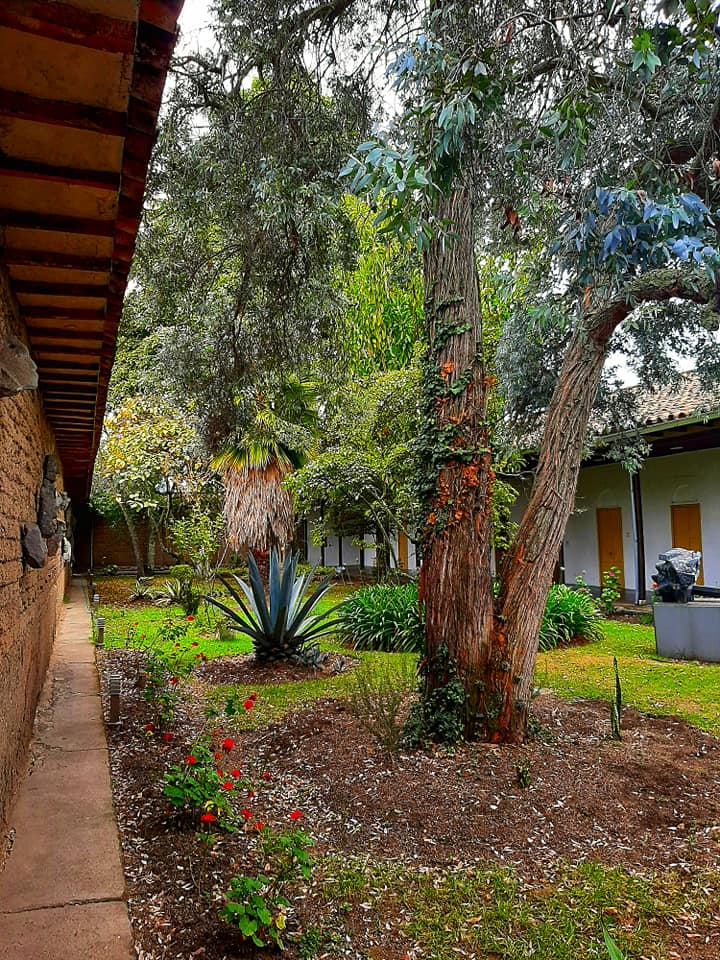
The adobe building with traditional tile roofs, has two large courtyards with gardens.
It was subsequently taken over by the “Gota de Leche” organization, which provided assistance to impoverished mothers. It finally became a home for orphans and abandoned children, necessitating alterations due to the lack of classroom space. As such, corridors were incorporated into the various spaces, cells were joined together, and the former chapel was turned first into dormitories and then into a games room.
These days its large halls provide a constant changing showcase of contemporary Latin American artistic trends.
The trees in the garden (capulis, walnuts, guabos, willows, myrtles), are described in countless inventories drawn up by the various tenants over the years.
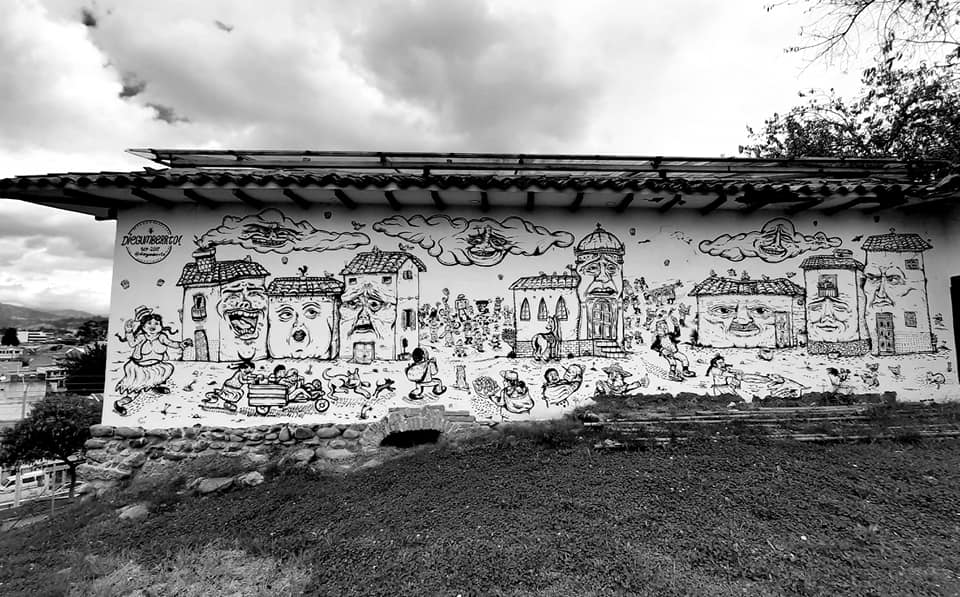
A mural on the rear wall of the building, by Diegumberrto.
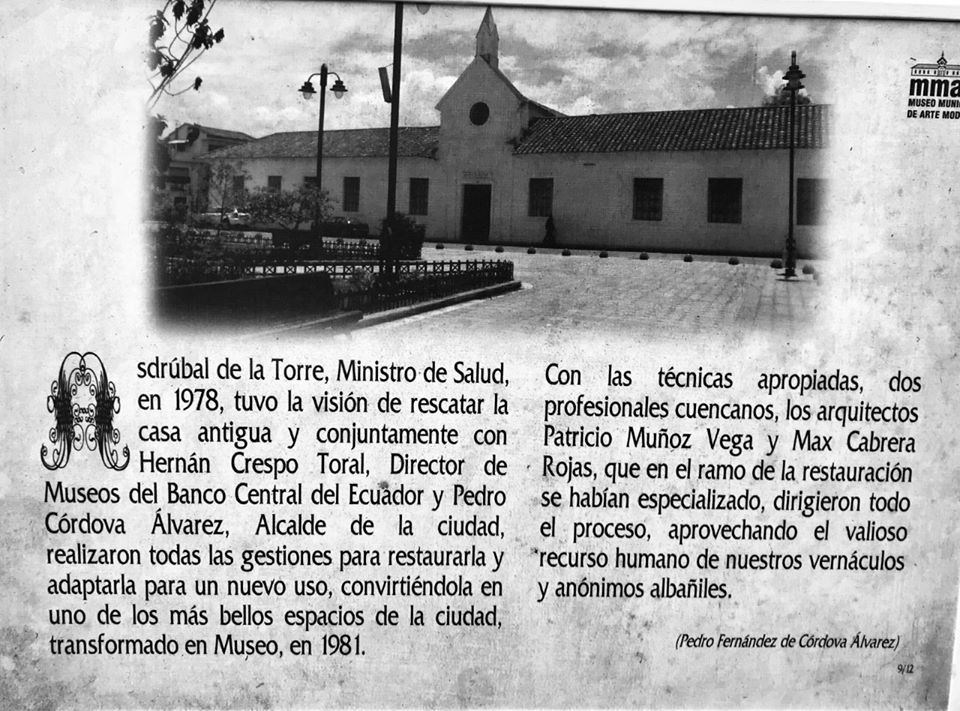
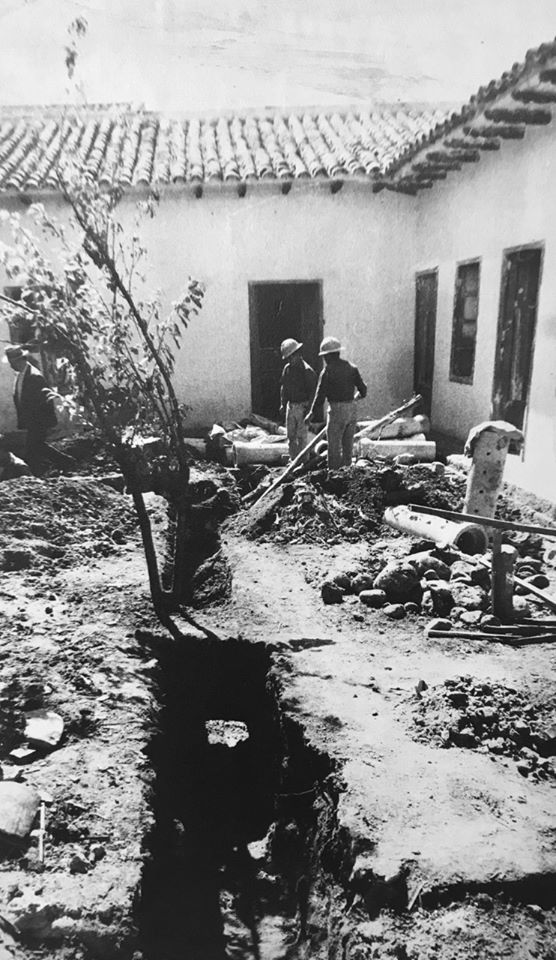
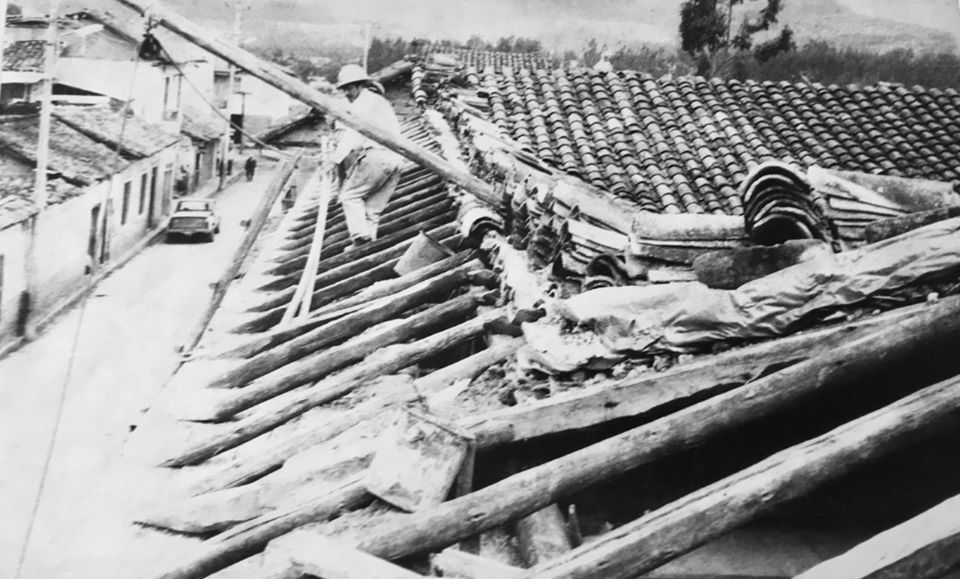
This work marked the beginning of the technical and scientifically supported restoration of buildings and ancient monuments in the city, which helped to make Cuenca a UNESCO World Heritge Site.
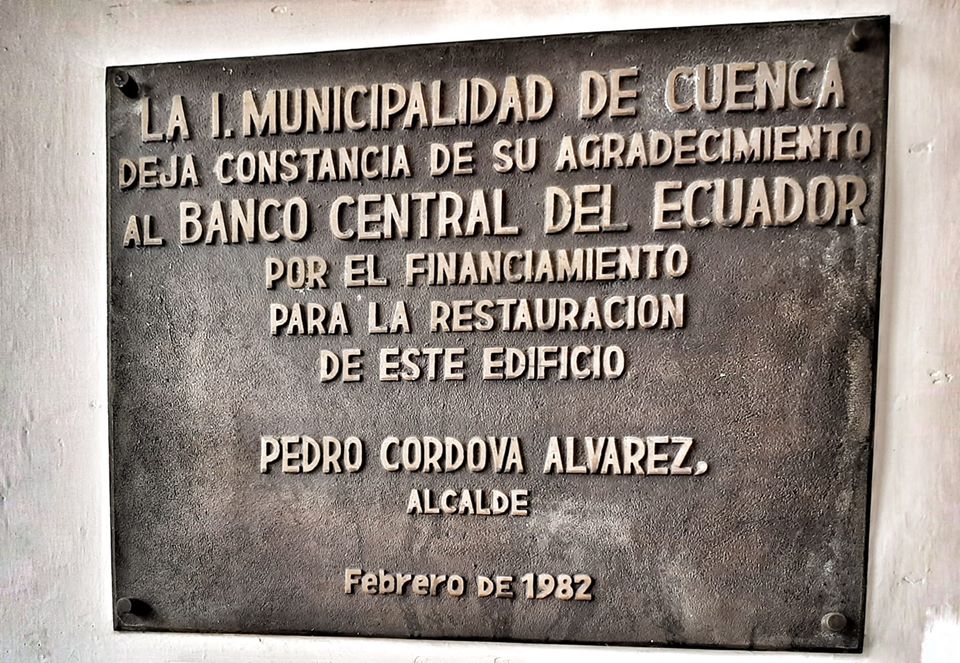
Luis Crespo Ordóñez, a famous Cuenca painter, proposed and supported the creation of a Museum of Modern Art. In 1978 both the Central Bank of Ecuador and Cuenca City Council, under the mayor Dr Pedro Córdova, pledged their support to the project. The restoration works were directed by the architect Patricio Muñoz Vega, and on 1 August 1981 the museum opened to the public.
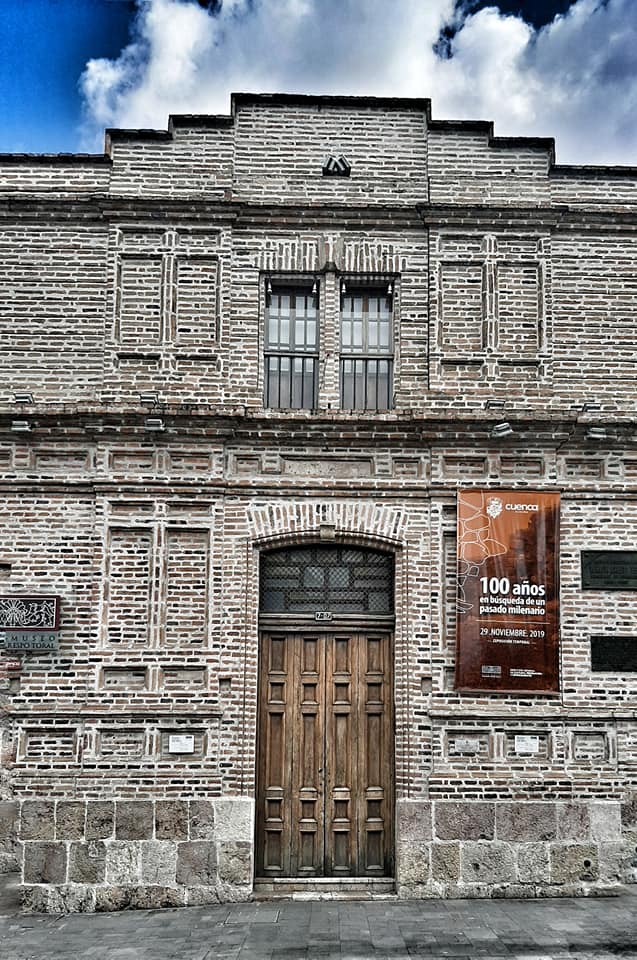
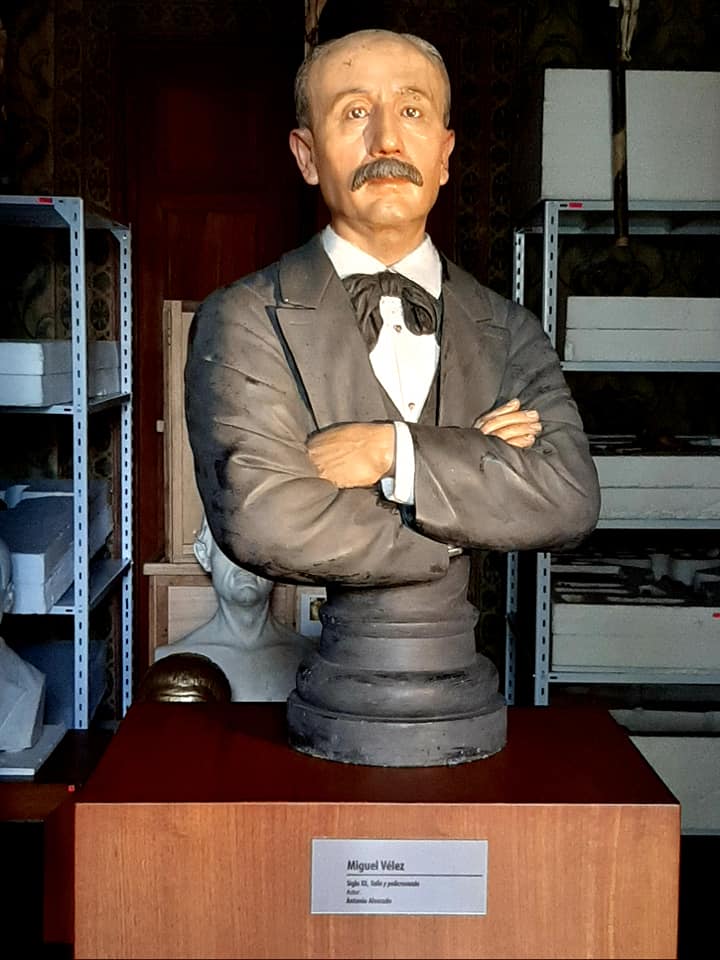
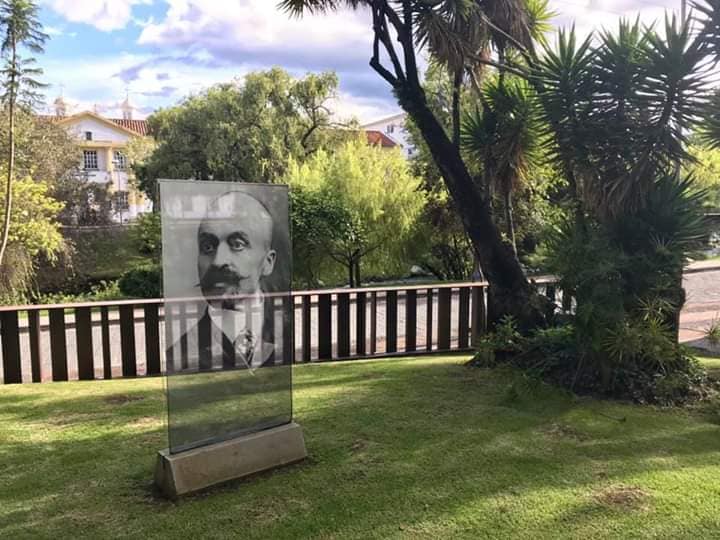
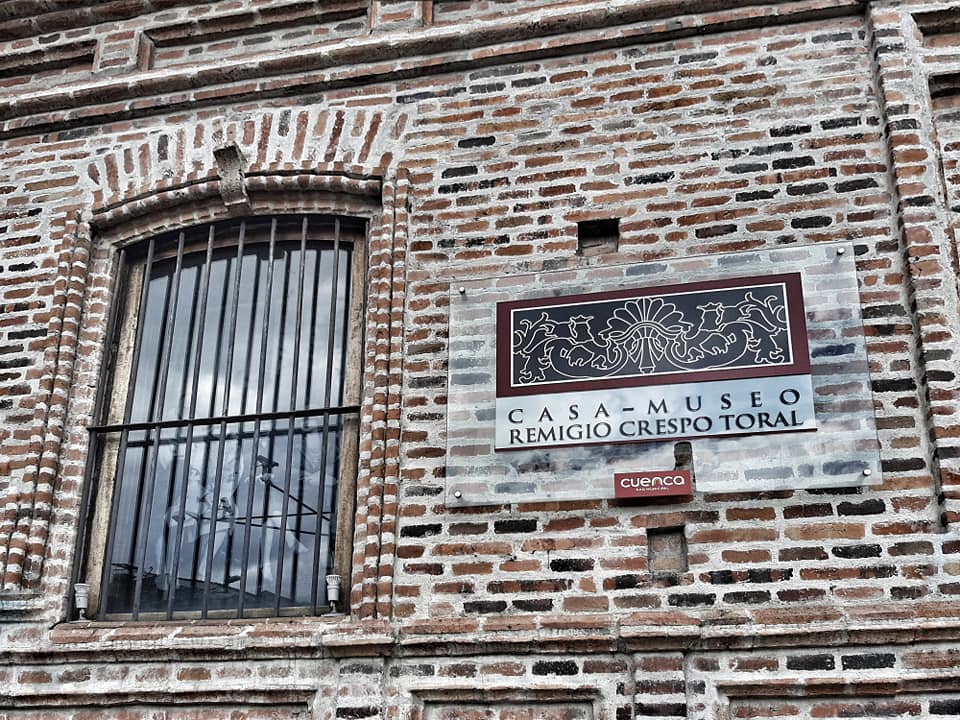
This Museum is a historic restored house which belonged to the famous Ecuadorian poet, Remigio Crespo Toral.(1860-1939) He was a poet/writer; Deputy of the Province of Azuay; Rector of the University of Cuenca; and owner of the newspaper Correo del Azuay.
The majority of the house was likely built between 1910 and 1917. Of note is the exposed brick facade which demonstrated an era of novelty in Cuenca’s architecture at the beginning of the 20th century. It was the first building of its style and status in this area, subsequently giving rise to a handsome group of similar buildings, all in exposed brick.
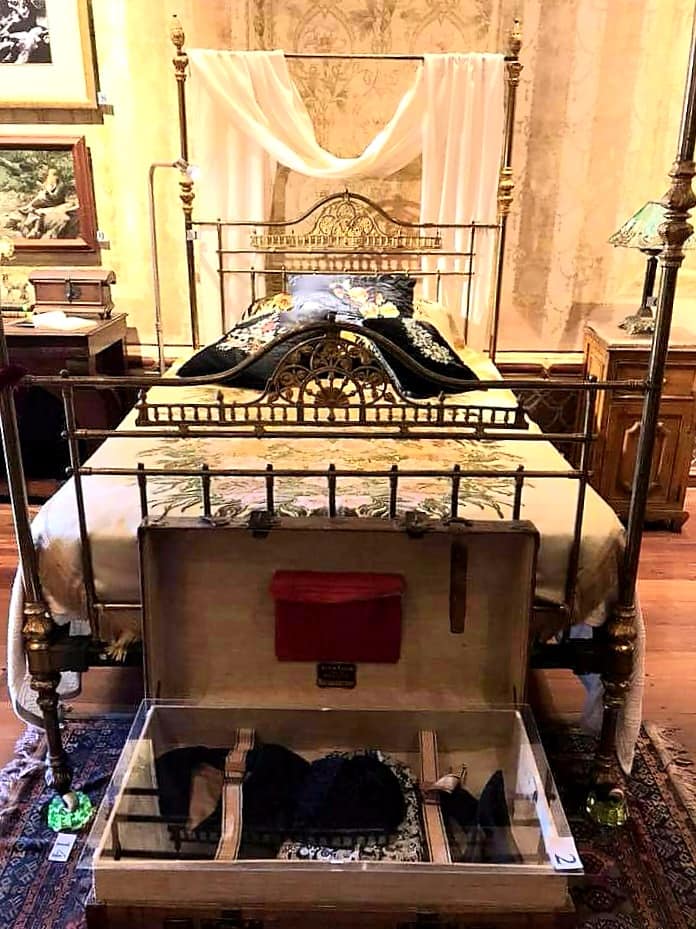
In 1981 the City of Cuenca Building Institution acquired the house with some of the original furniture; highlighting such styles as Louis XVI, and Victorian, as well as other decorations such as lamps, curtains, art work, and mirrors. In 1987 The Central Bank of Ecuador funded the technical studies for the restoration of the building.
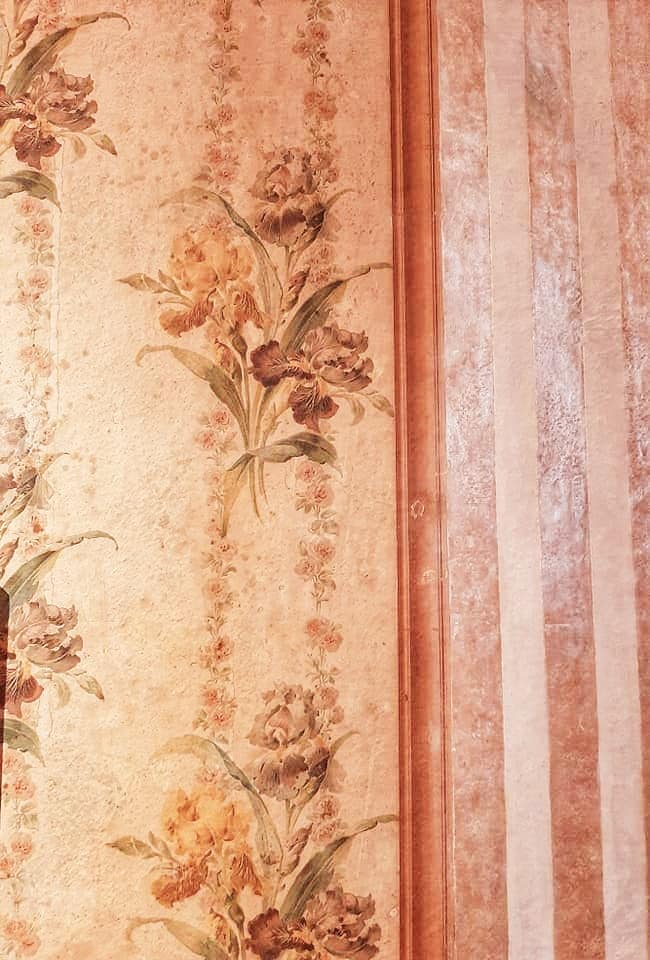
In his first (2005-2009) and second (2015-2019) administration, Cuenca’s Mayor Marcelo Cabrera Palacios, realized the importance of the Historic House. He initiated interventions to restore the architecture, ceilings, wallpaper and mural paintings. Thanks to these renovations, the Museum officially opened as a permanent fixture in Cuenca in 2017.
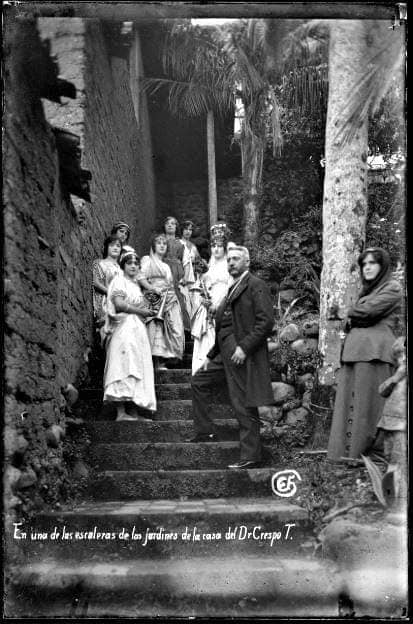
“In one of the staircases of the gardens of Dr. Crespo Toral” The beautiful gardens still contain mature magnolia and walnut trees. The lovely “Cafe del Museo” overlooks the Tomebomba Riverbanks.
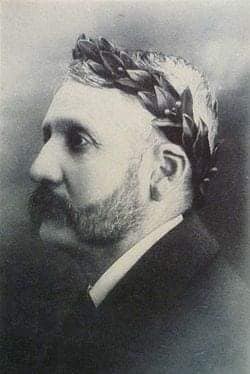
In 1917 Remigio Crespo Toral was crowned as a National Poet.
In 1919 , together with Alfonso Moreno Mora, Dr. Toral founded the Fiesta de la Lira , a literary contest.
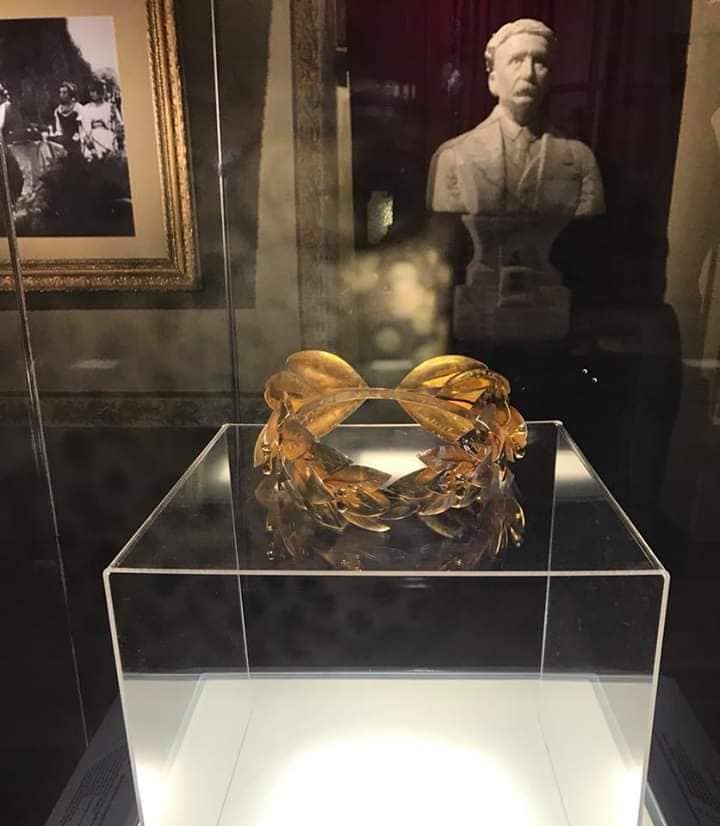
In 1917 the President of Ecuador, Doctor Alfredo Baquerizo Moreno awarded the Golden Crown, a symbol of national tribute to Crespo Toral.
The house was built in several stages and used as its base an old colonial construction inherited by the family in 1886. The ground floor was built first, and then a second floor was added around 1910. The bulding has two totally different facades. The main one is on Calle Larga in the historic center. The back entrance overlooks gardens and the Tomebamba River. The rooms are organized around a handsome staircase, linking the various five levels of the building.
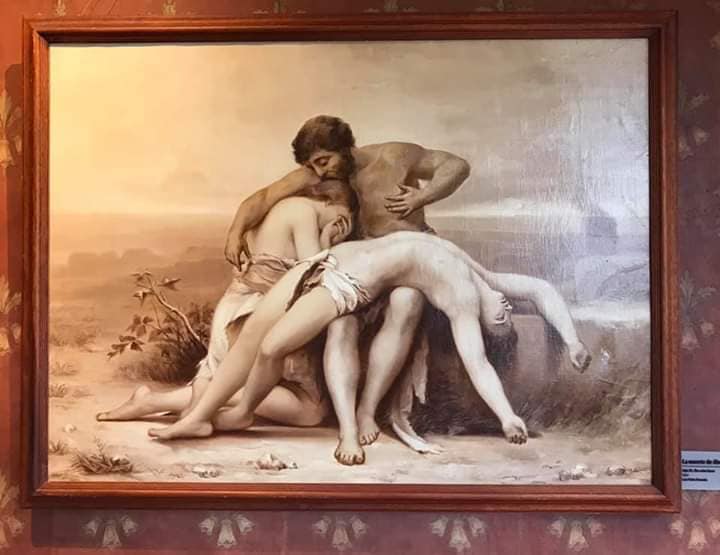
“The death of Abel”. You can see this painting on the wall of some of the old photographs of the house.
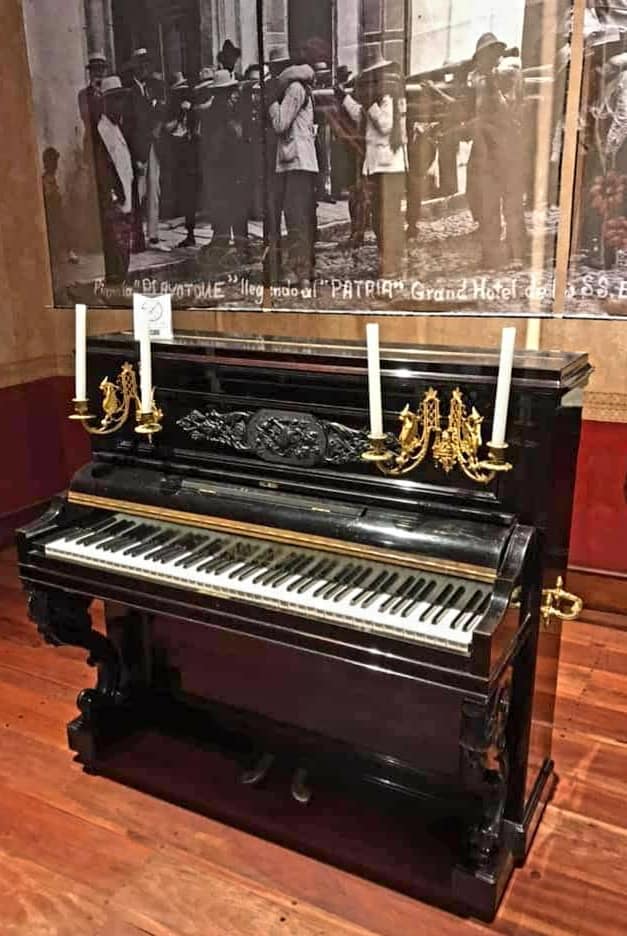
There is a fine collection of jewelry and household items of the times.
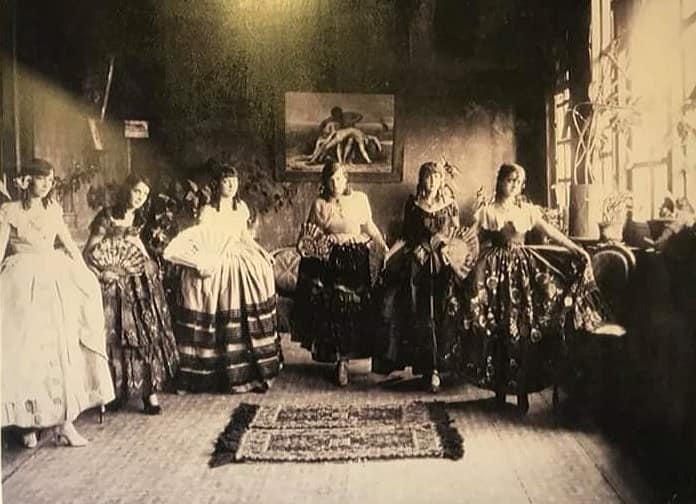
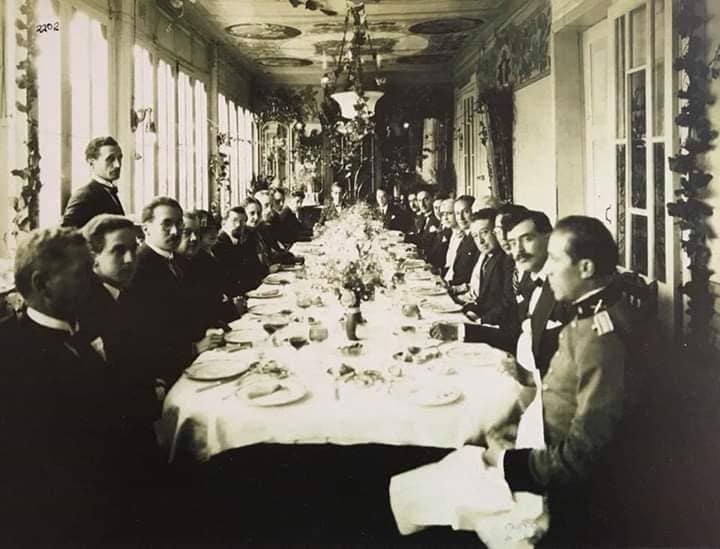
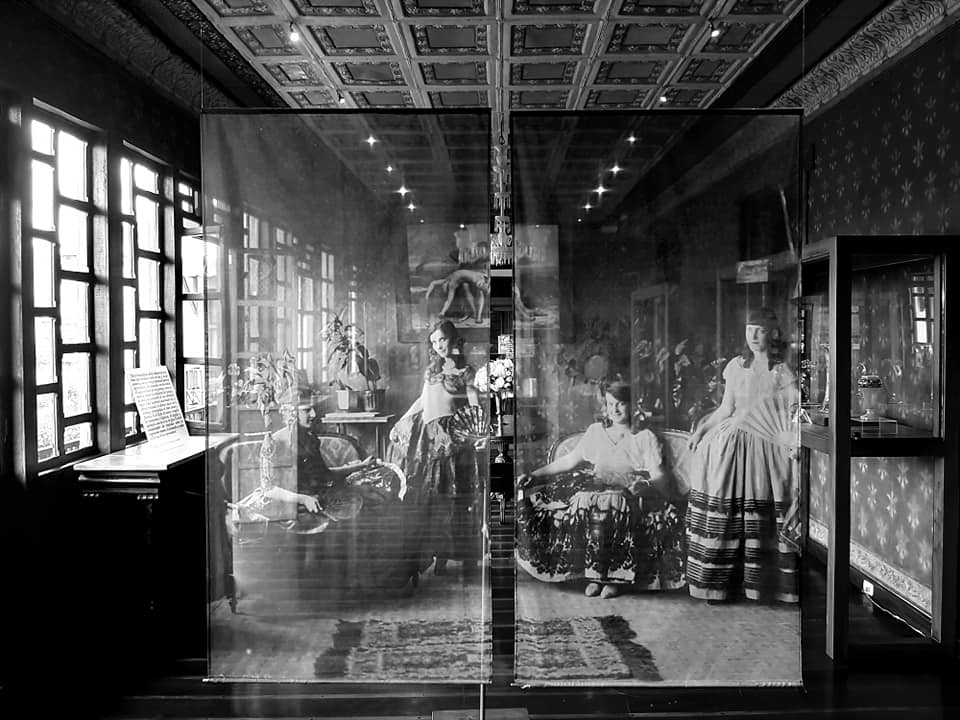
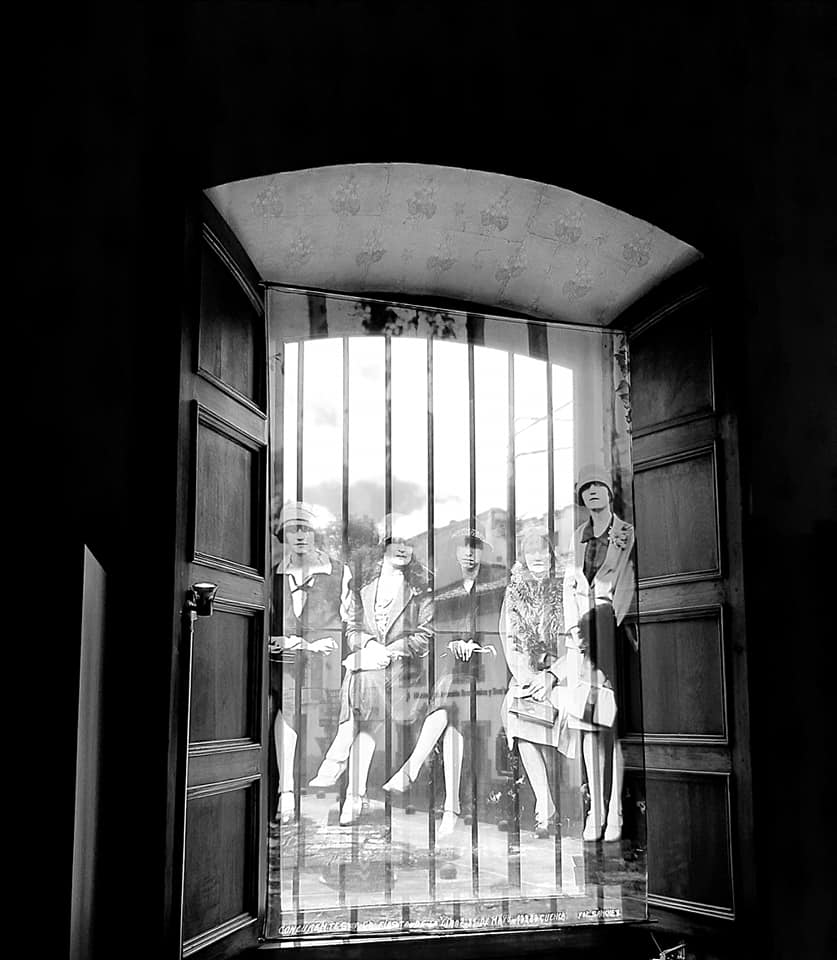
With his wife Elvira, Dr. Toral had nine children. The museum houses a collection of photographs of the Crespo Toral family, and additionally collections of other master photgraphers of the time.
The archives of the History of Cuenca are located in the Remigio Crespo Toral House Museum including all treaties, agreements, letters etc. about the construction of the city of Cuenca.
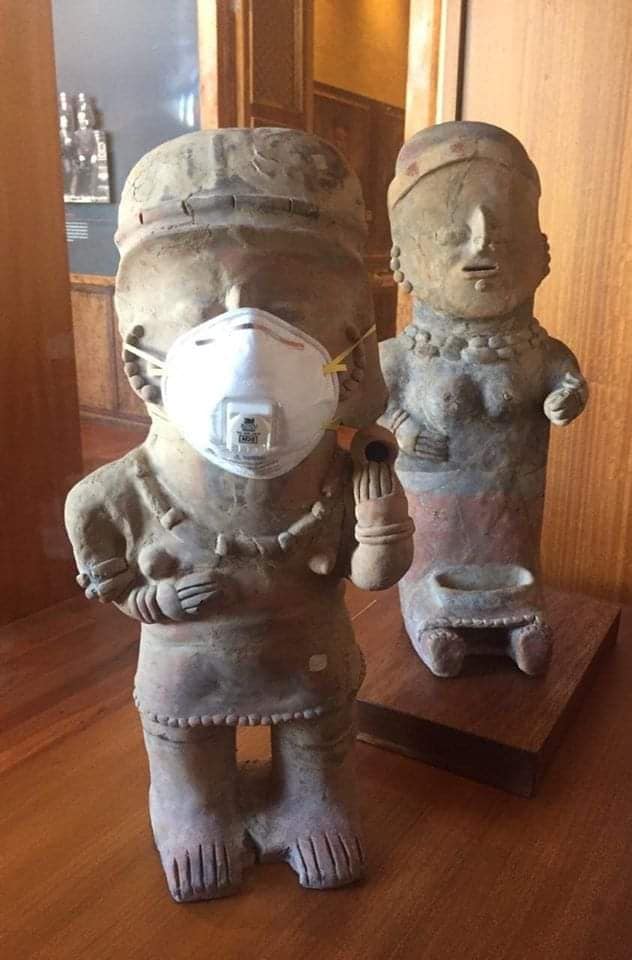
Among the museum’s collections are archaeological pieces collected in various areas of the Azuay province.There are approximately 28,000 pieces among which are pieces from ancestral, regional cultures and portraits from the 19th and 20th centuries. (wearing a mask for coronavirus protection!)
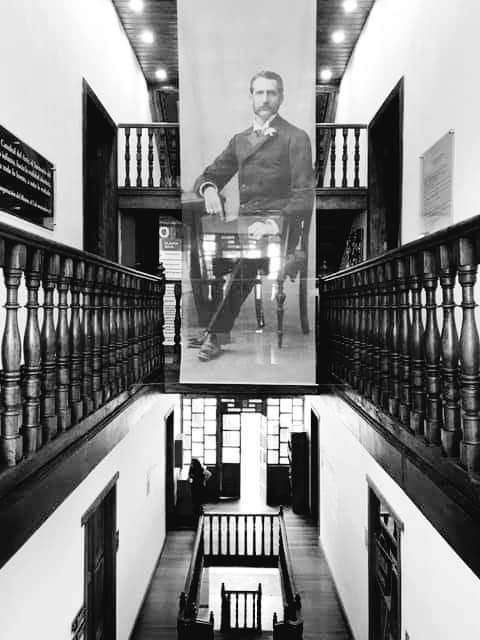
I love this effect of using transparent screens of old photos in the restored rooms. It gives you the feeling of actually seeing the former residents living in the house.
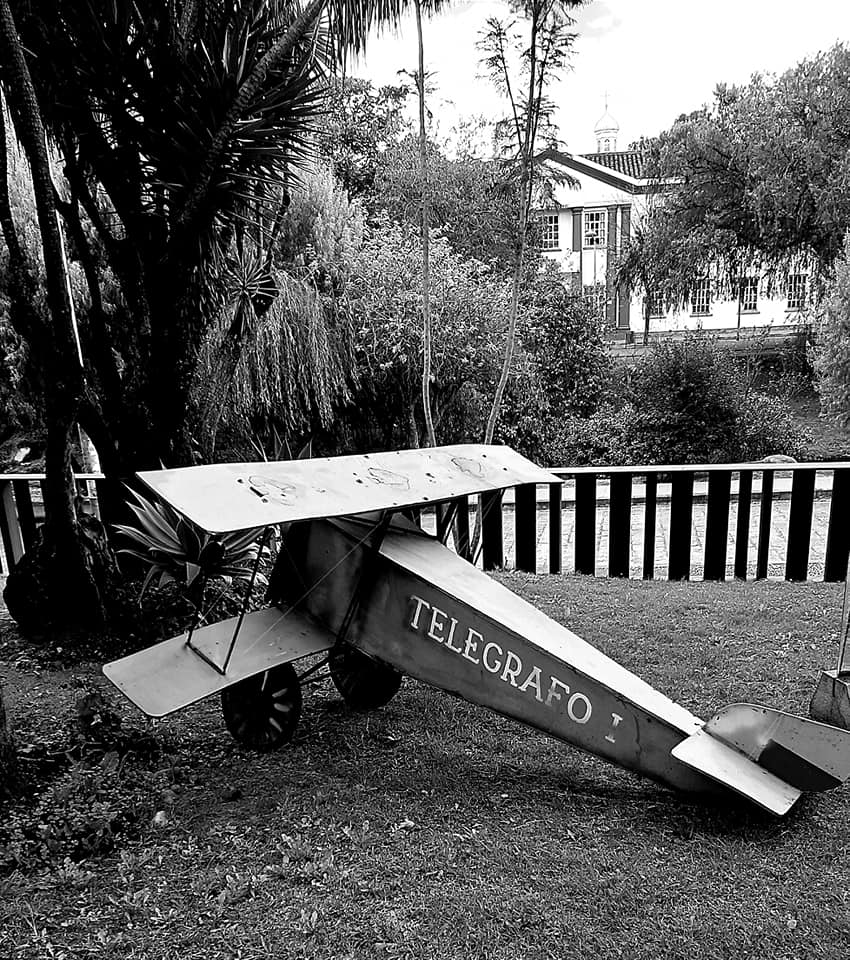
The museum houses relics of the travels of Elia Liut, who was the first pilot to land in the city.
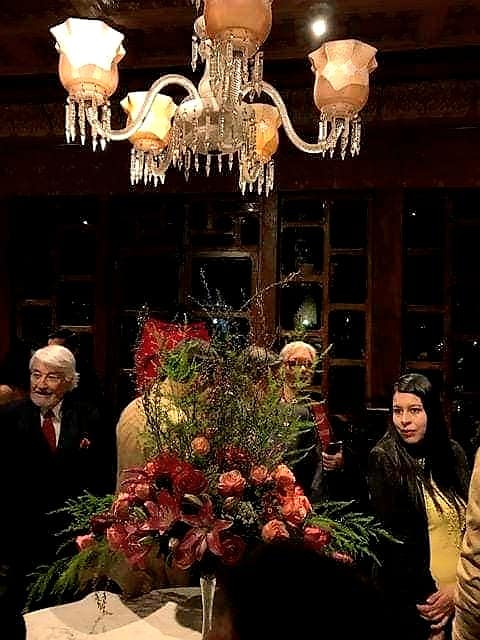
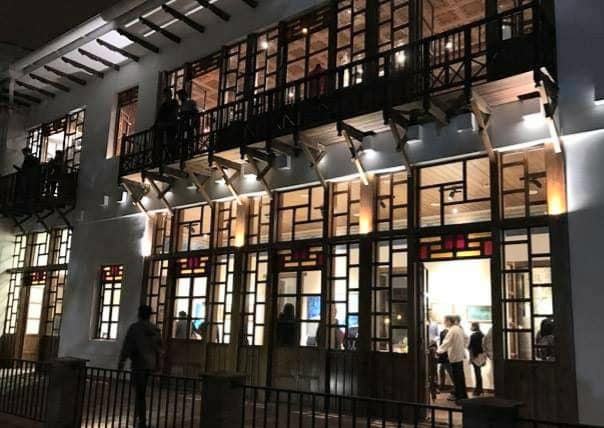
I moved to Cuenca in April 2017. The first weekend I was here there was a festive party for the grand opening of the restoration of the Casa Museo Remigio Crespo Toral. It was a lovely evening that I will always remember! For the opening reception there was a classical music concert in the auditorium, and a jazz band playing in the cafe in back.
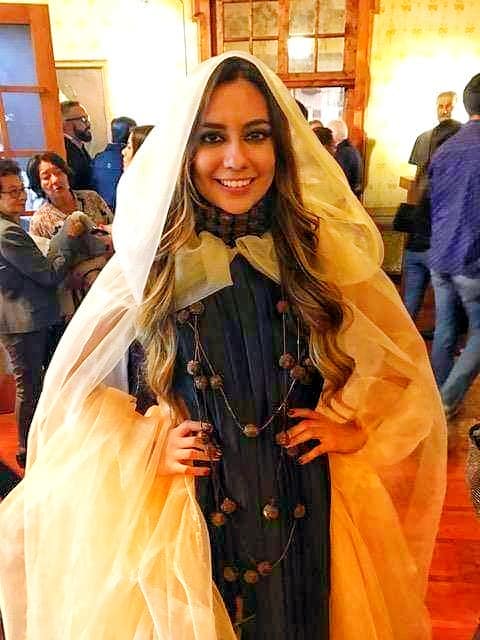
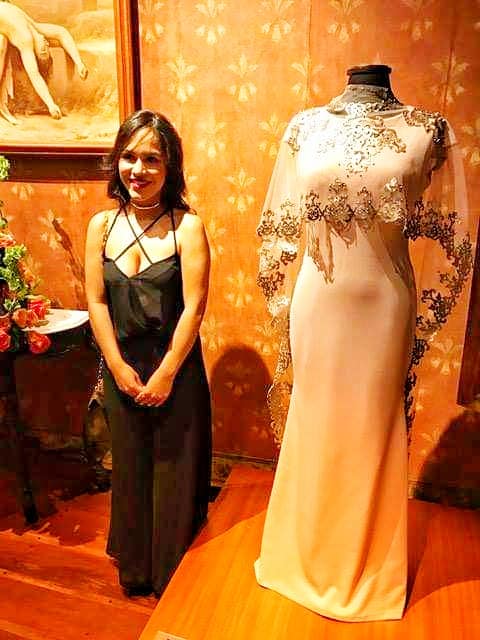
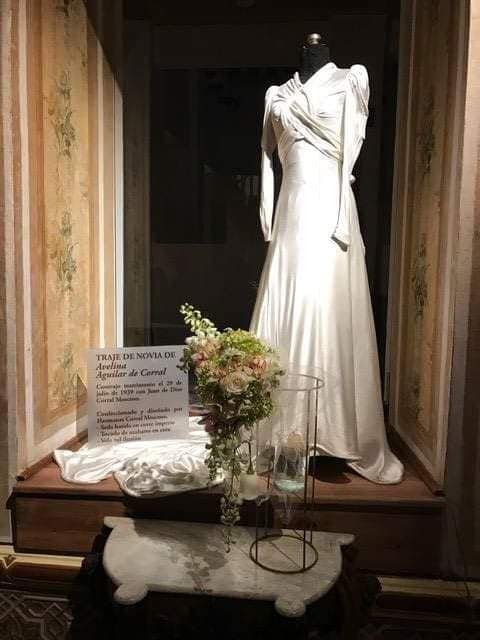
Beautiful young Cuencana women were modeling time period clothing for the opening reception.
The museum currently has limited hours due to the coronavirus situation, but it is still open to the public, and free of charge.
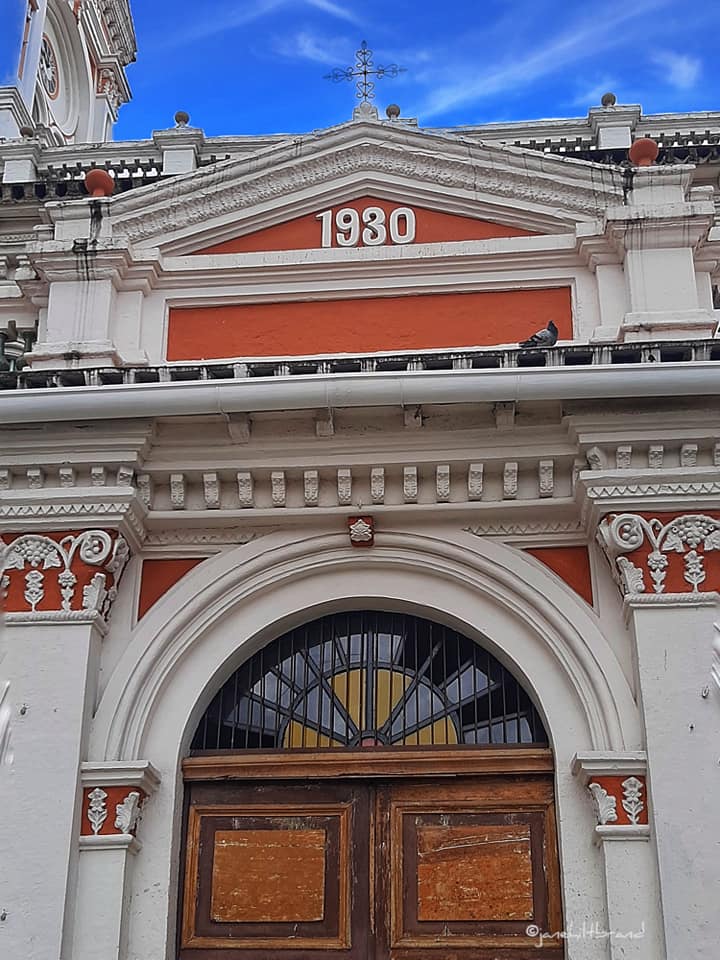
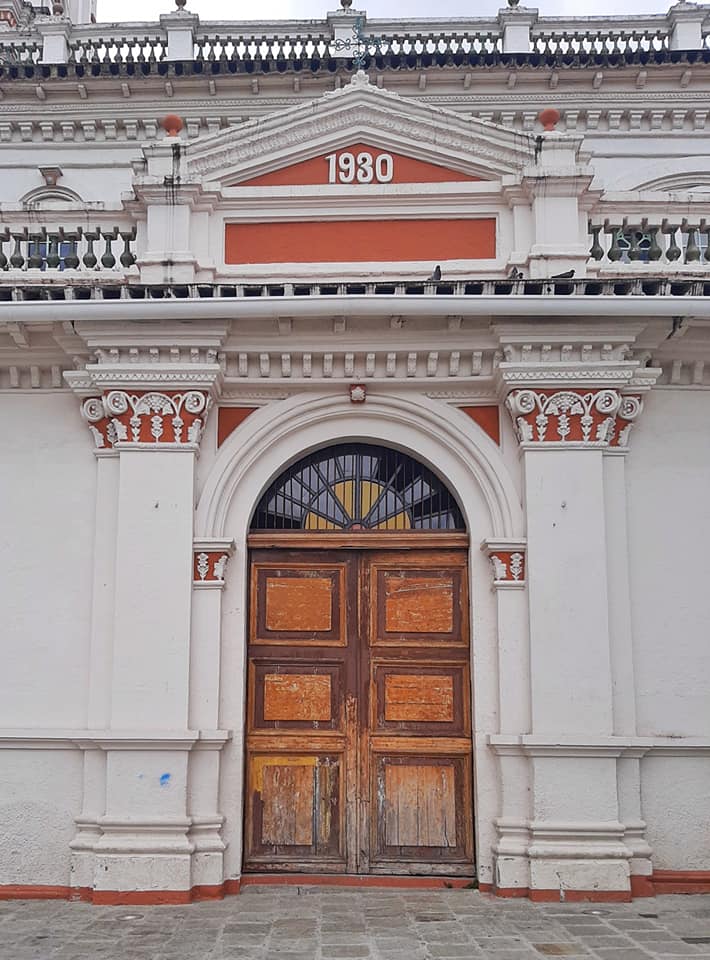
Calles Padre Aguirre y Presidente Cordova. Built from the 16th Century through 1930.
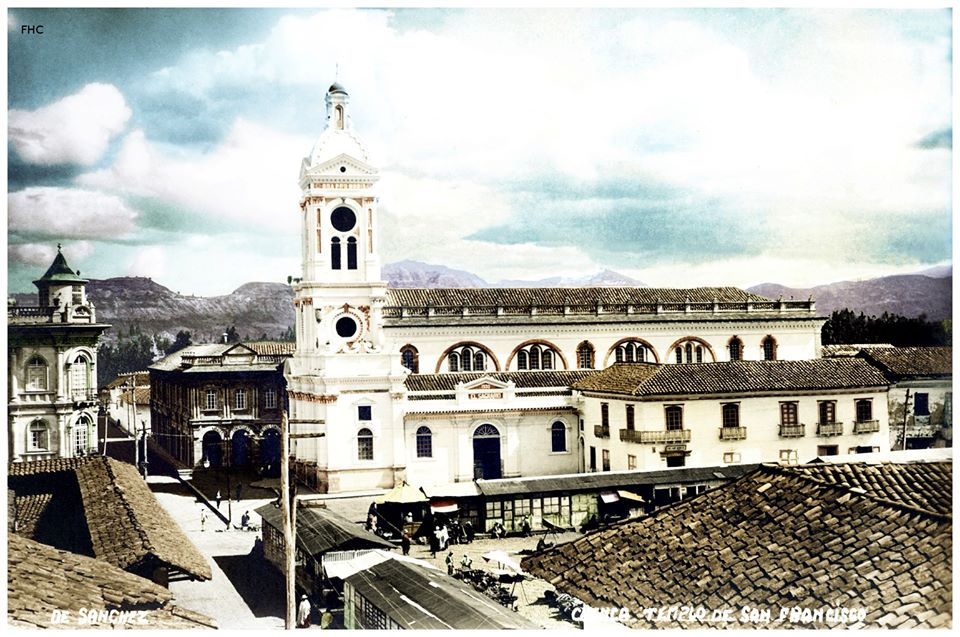
In 1557 Gil Ramirez Davalos reserved a plot of land for the Franciscan Monastery. The construction of the early church dates to 1560, although the present day church is the result of remodeling initiated in 1920 and concluded in 1932.
The main altar of the church dates back to colonial times; and has fine carvings covered in gold leaf, as does the original pulpit.
The church borders Plaza San Franciso, an important market, and location for City Concerts and Events.
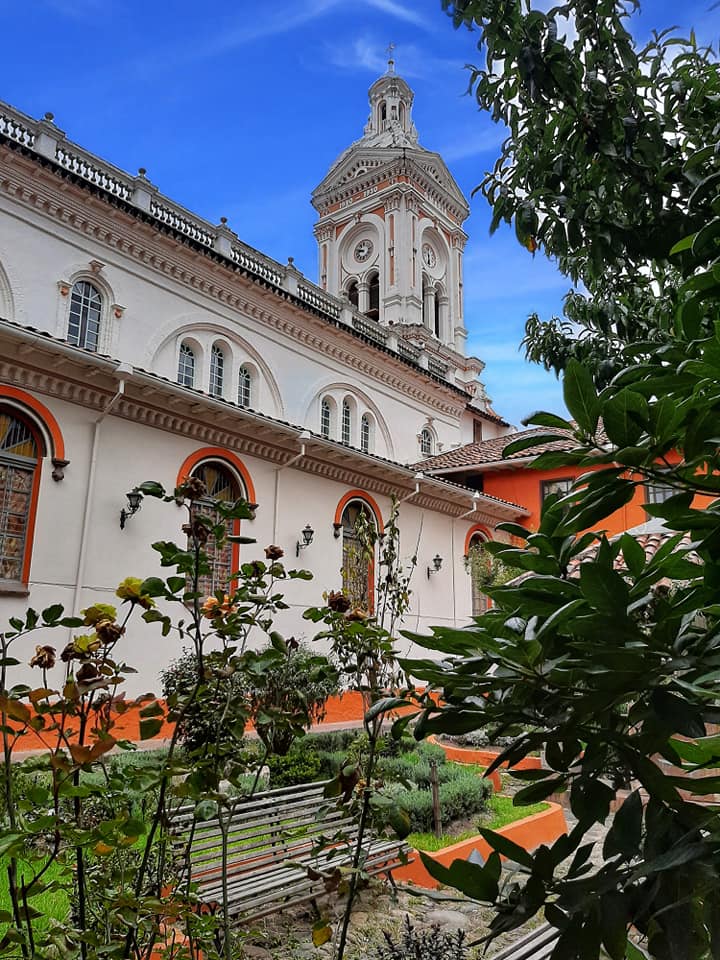
At the top of the tower there is a bell and a clock surrounded by phrases of faith written in Latin.
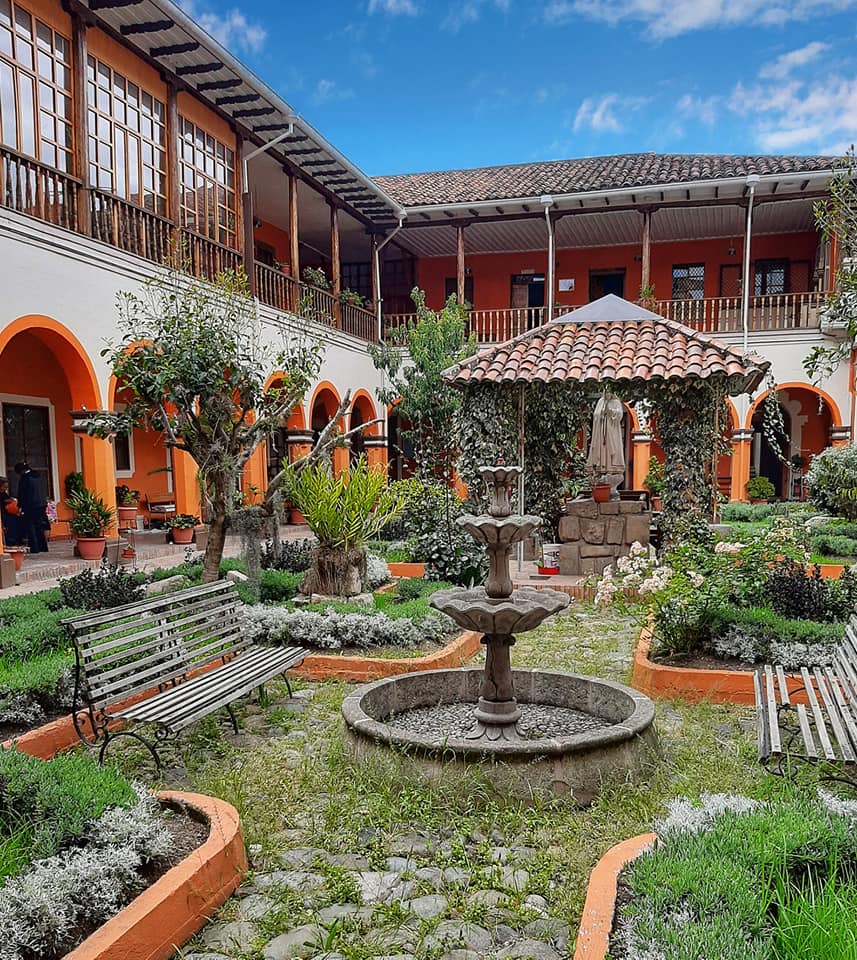
Beside the church is the Parish House with a lovely garden courtyard.
The beautiful Mansion Alcazar is once again open! The “Casa Cordero” as the current Mansión Alcázar was known was built at the end of the 19th century and belonged to Enrique Cordero, son of the former President of Ecuador, a Cuencano man, Dr. Luis Cordero.
In 1999, a comprehensive restoration of the property began, taking care of all the architectural and decorative details. It officially opened as a Boutique Hotel in 2001.
A part of the garden was adapted to turn it into a pergola which housed the distinctive restaurant, CASA ALONSO.
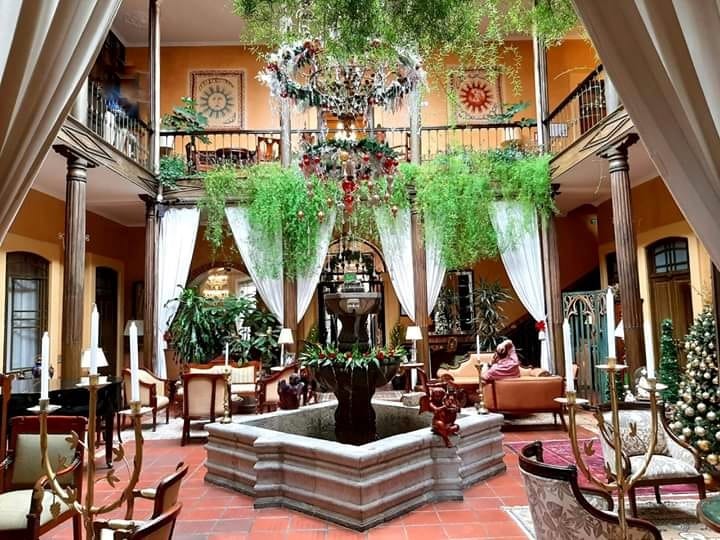
La Mansión is one of the few houses in the city center that still conserves its original gardens with large trees and beautiful flowers, varied vegetation and a natural environment that attracts dozens of bird species to visit the lush gardens.
The Hotel reflects the style of the Republican era, in which the mansion was originally built.
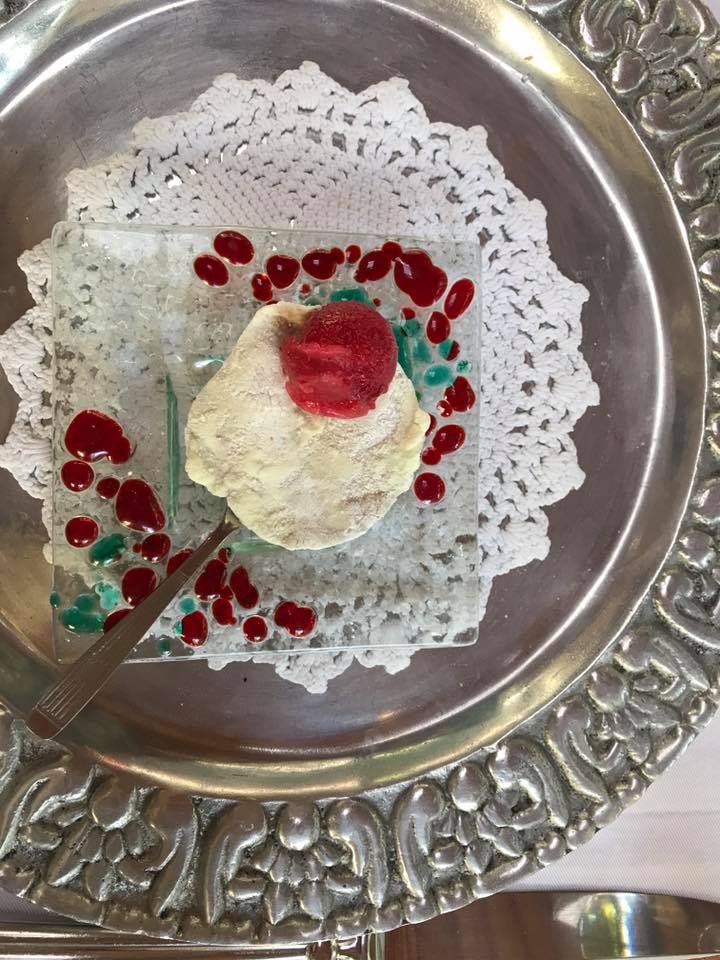
Dining in Casa Alonso was always a very special treat. Photo on right is a sugar-coated rose petal!
The balconies are a prized location to watch the 8 hour long Christmas Eve Parade, “Pase del Niño Viajero”, one of the most colorful parades in all of South America.









































































 A GUIDE TO CUENCA ARCHITECTURE