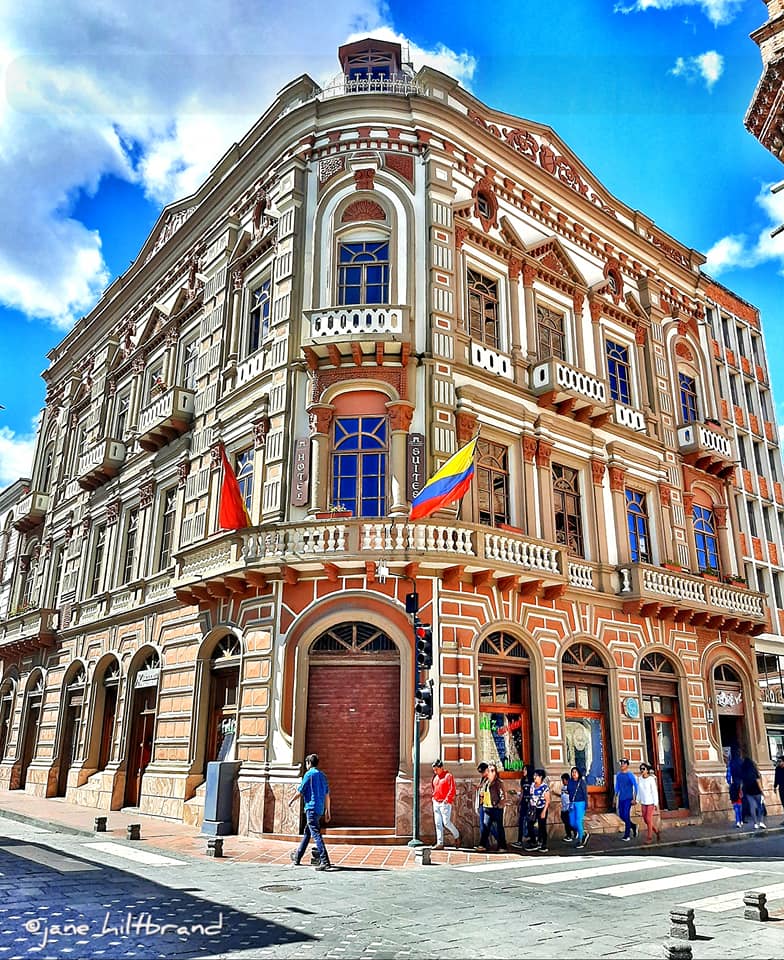
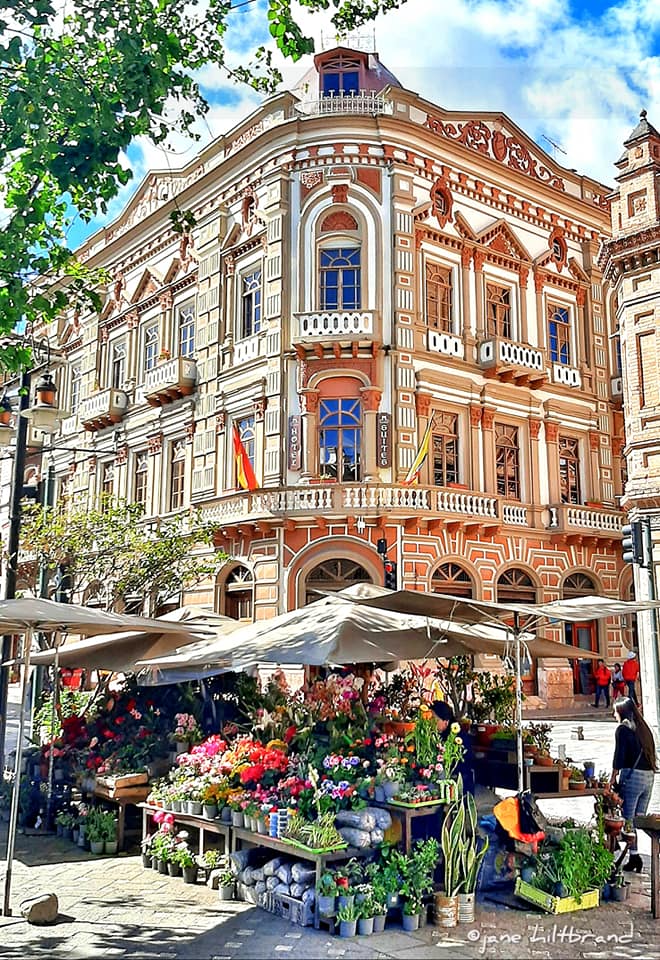
#19 FORMER NEIRA FAMILY HOUSE Currently the Flore Hotel Boutique. Padre Aguirre and Mariscal Sucre.
The building was originally built in 1932, in the Republican Style which prevailed in Cuenca at that time. It has gone through two major renovations – one in the 1990s, and the second in 2008. It is currently occupied by the Flore Hotel Boutique, with shops on the first floor.
The building is across the street from the Flower Market
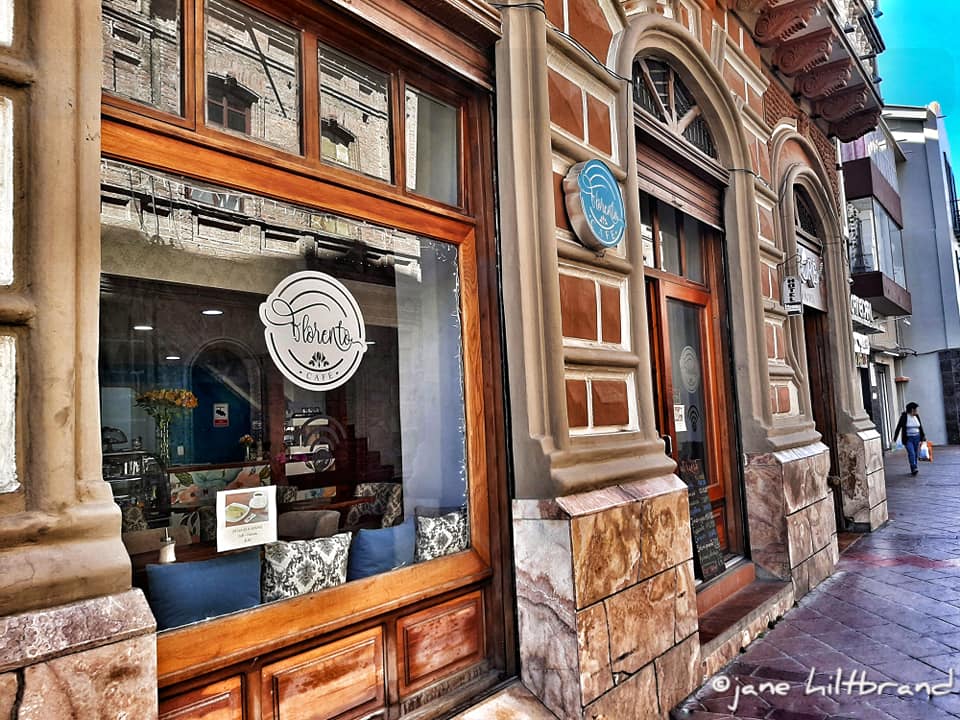
There is a charming coffee shop/ restaurant on the first floor.
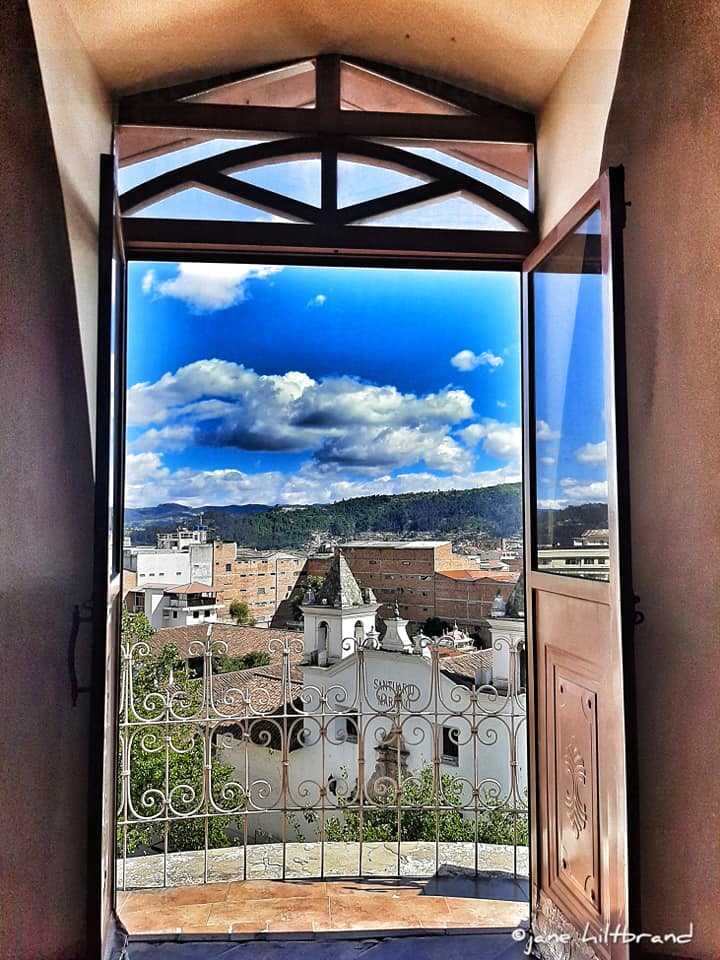
View from the cupola on the top floor
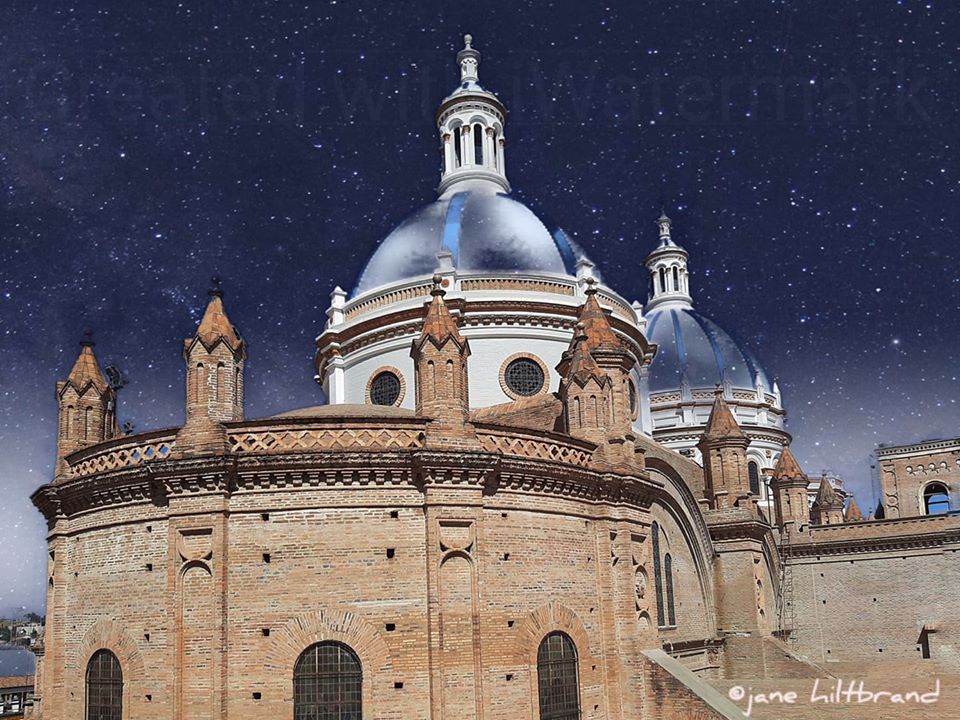
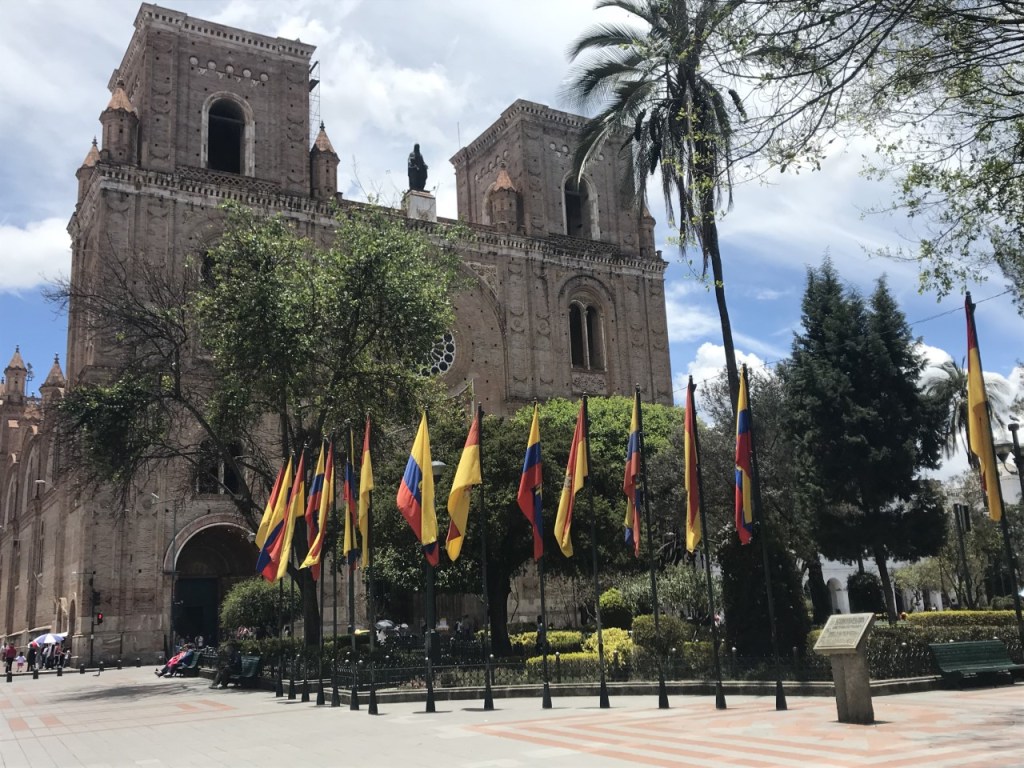
View at night across to the roof and domes of the New Cathedral
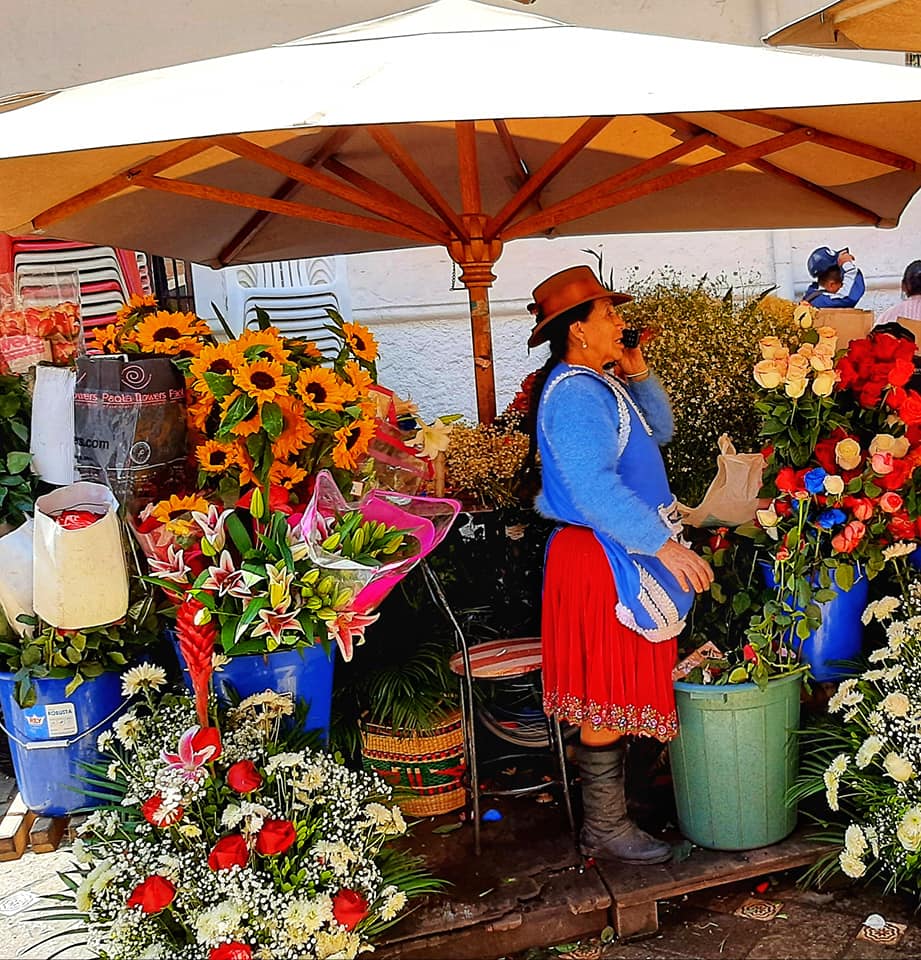
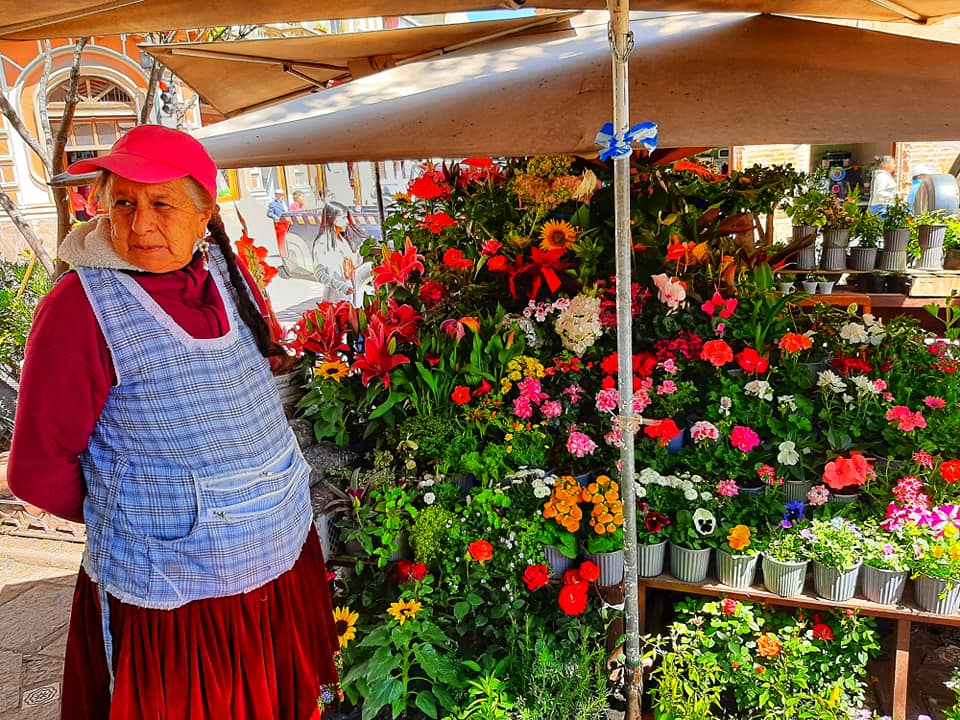
#18 THE FLOWER MARKET Mariscal Sucre y Padre Aguirre.
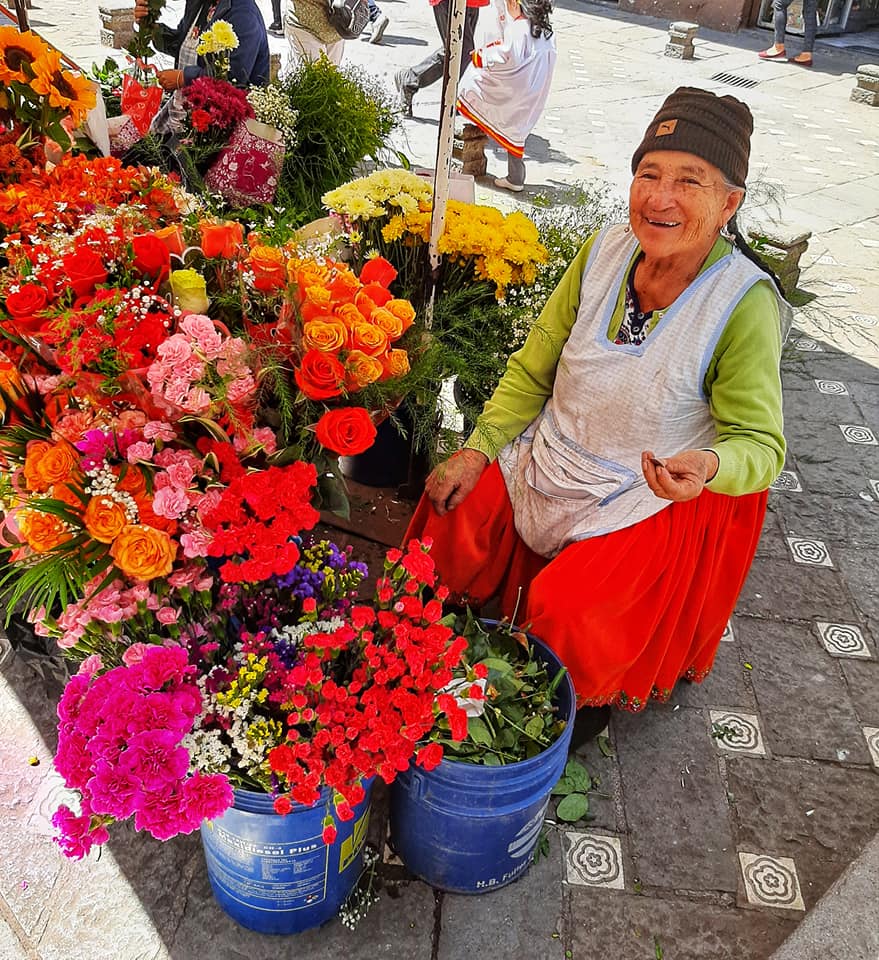
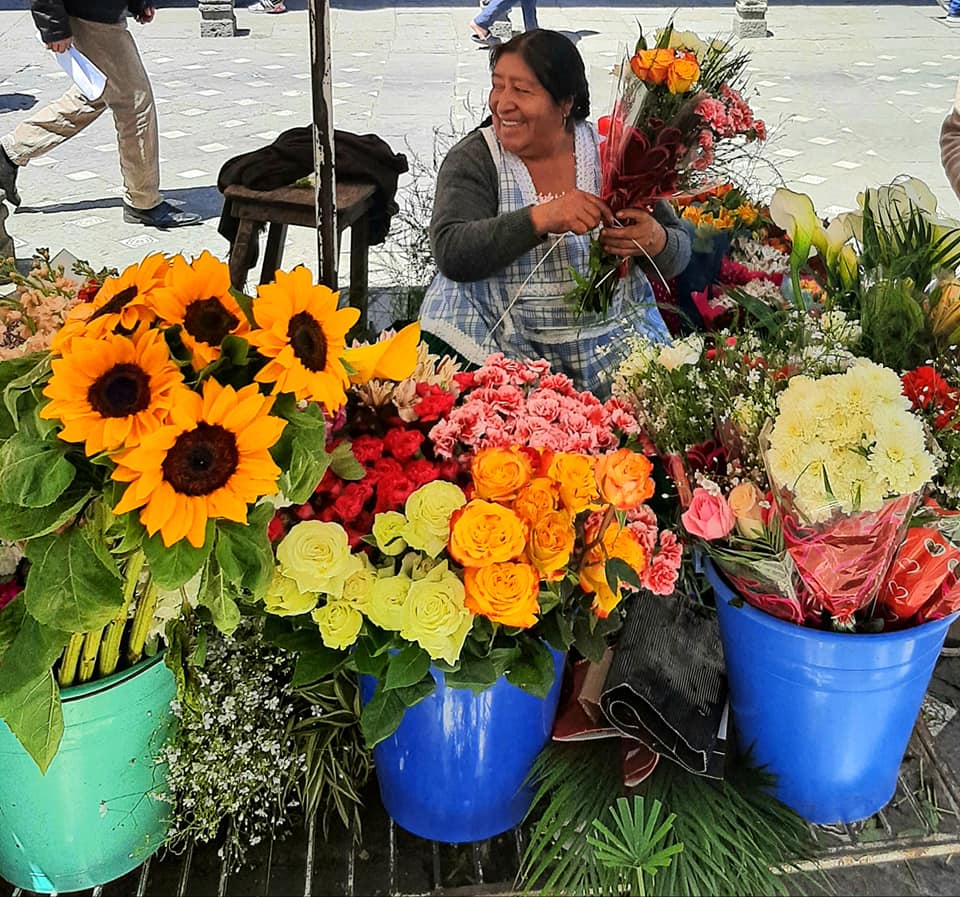
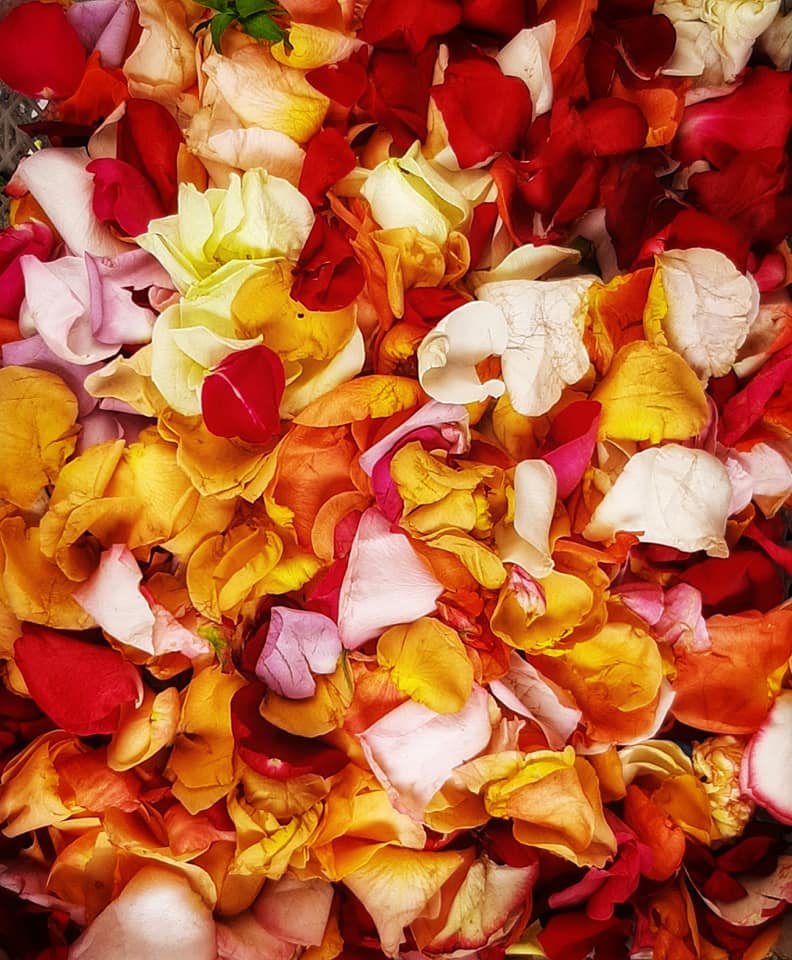
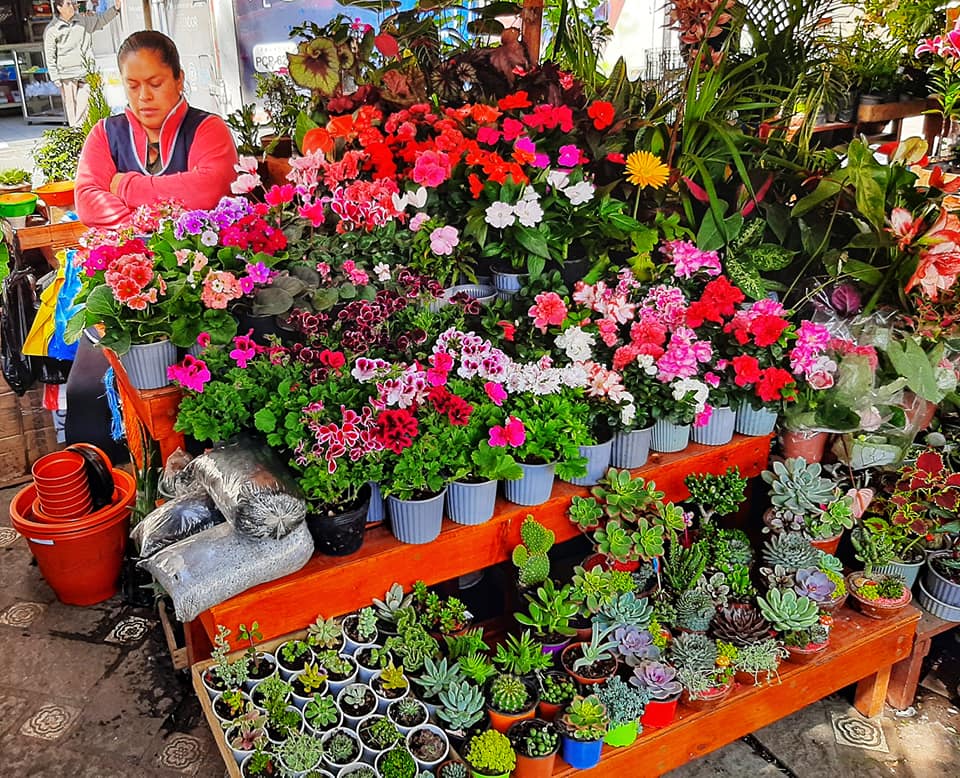
An extremely colorful plaza in front of the Santuario Mariano Church. National Geographic considers it one of the top ten outdoor flower markets in the world!
The Flower Market, with no flowers. During the Coronavirus quarantine, May 2020.
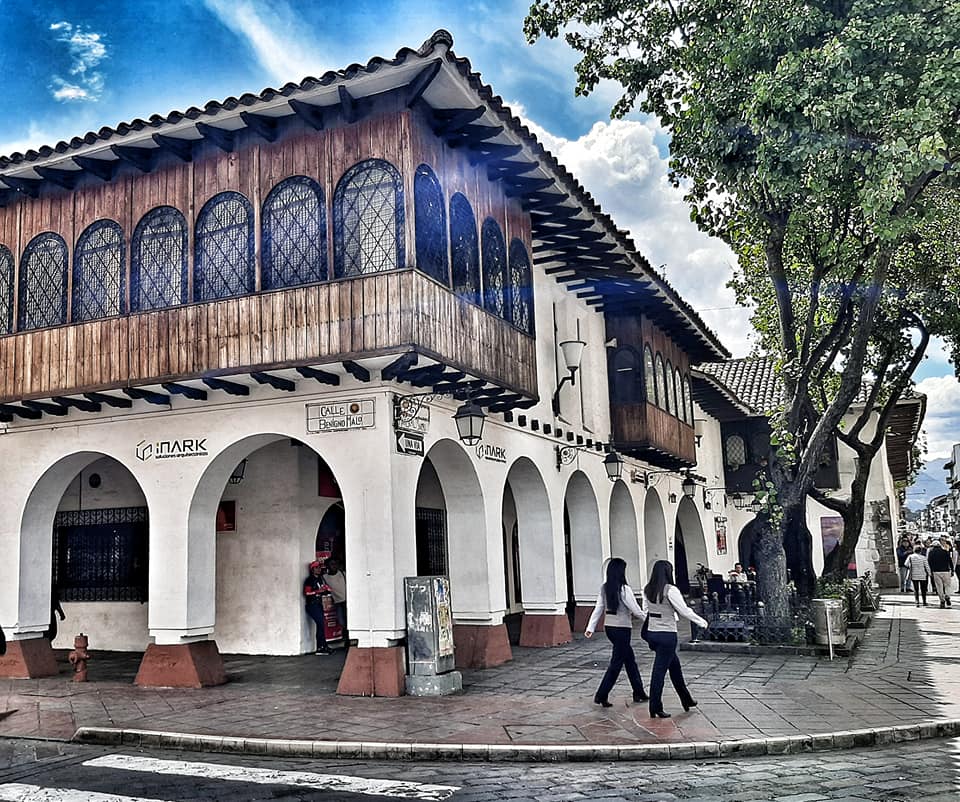
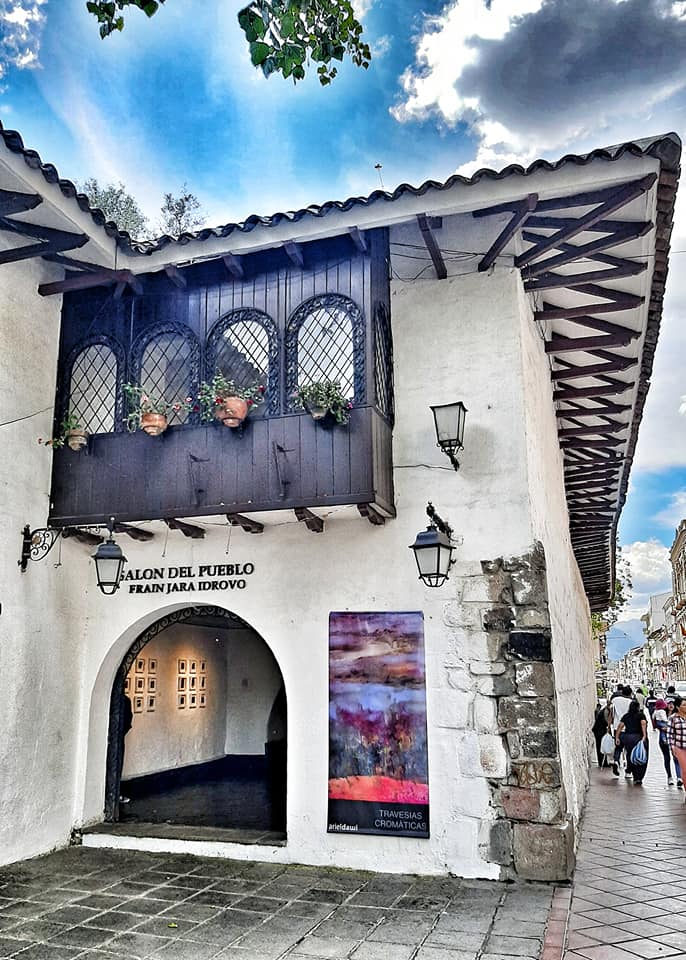
#16 Azuay Ecuadorina Culture Center – Salon Del Pueblo. Calles Mariscal Sucre and Benigno Malo.
The Carmen of the Assumption Convent formed part of this building for almost three centuries. In 1971 the Sisters of the Immaculate Conception decided to relinquish the corner section of the urban block they occupied and sold it to the Ecuadorean Culture Center. The new project was designed by the architect Patricio Muñoz Vega and included the restoration of the old building and the construction of a new building for commercial use.
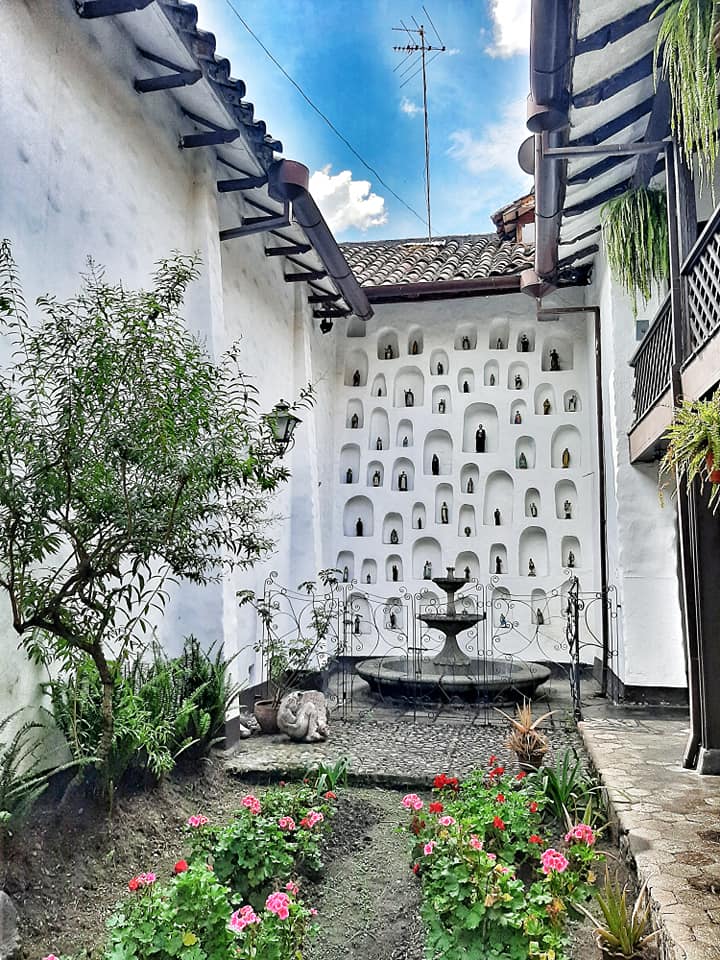
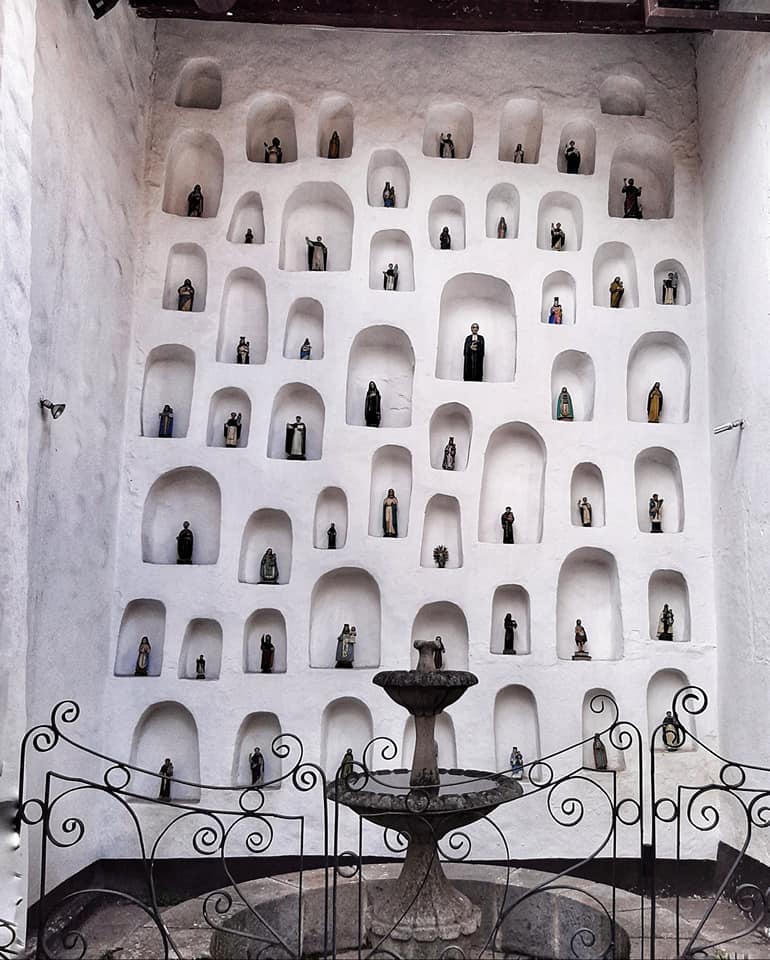
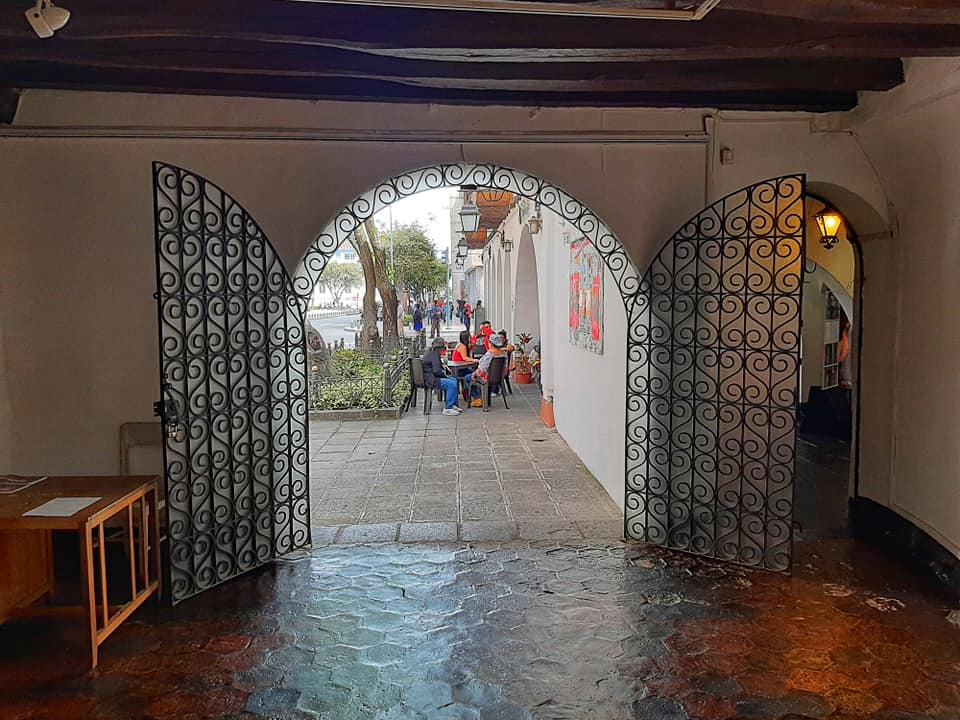
Thick windowless adobe walls surround the interior space containing a beautiful long narrow courtyard. Located at the rear is a stone-carved fountain and a wall with sixty niches dedicated to colonial saints, the tiny statues of which were commissioned by the Culture Center in 1972.
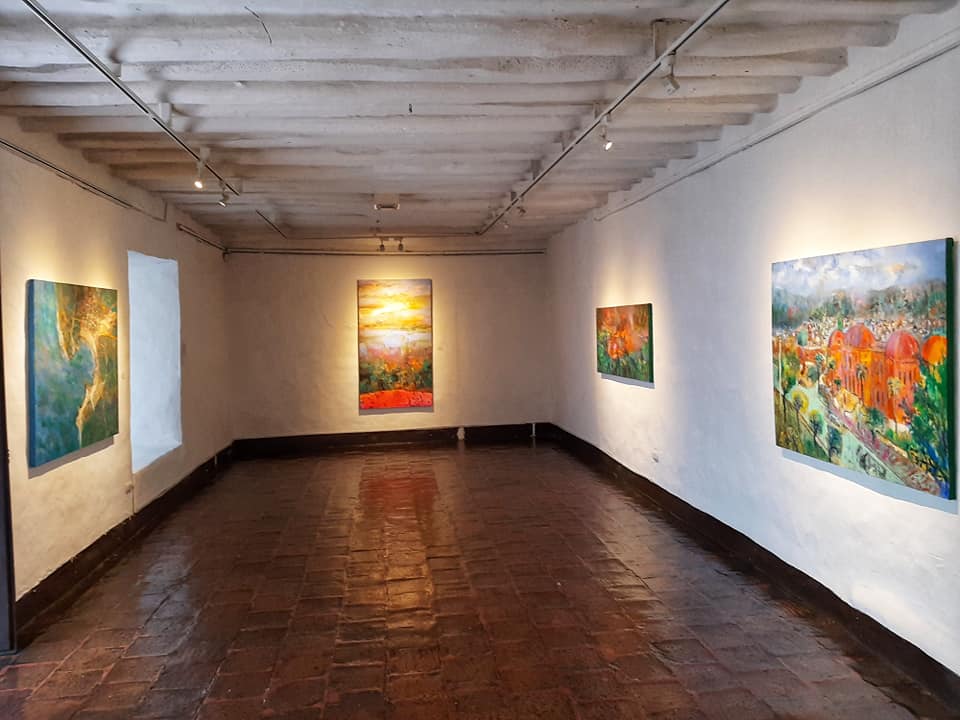
The space is used as a gallery for art exhibitions.
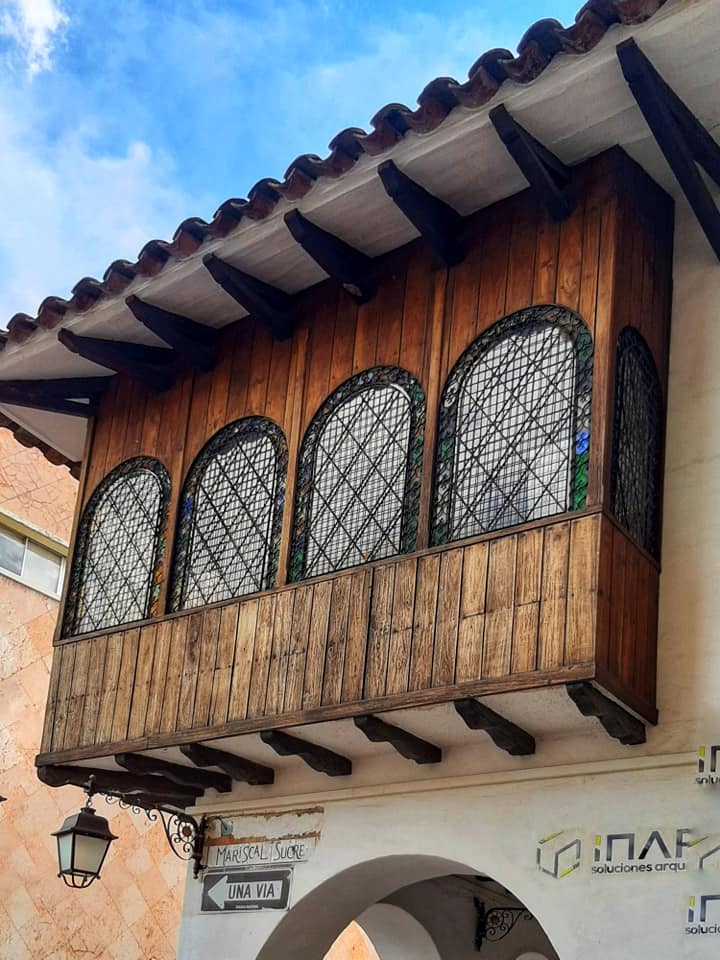
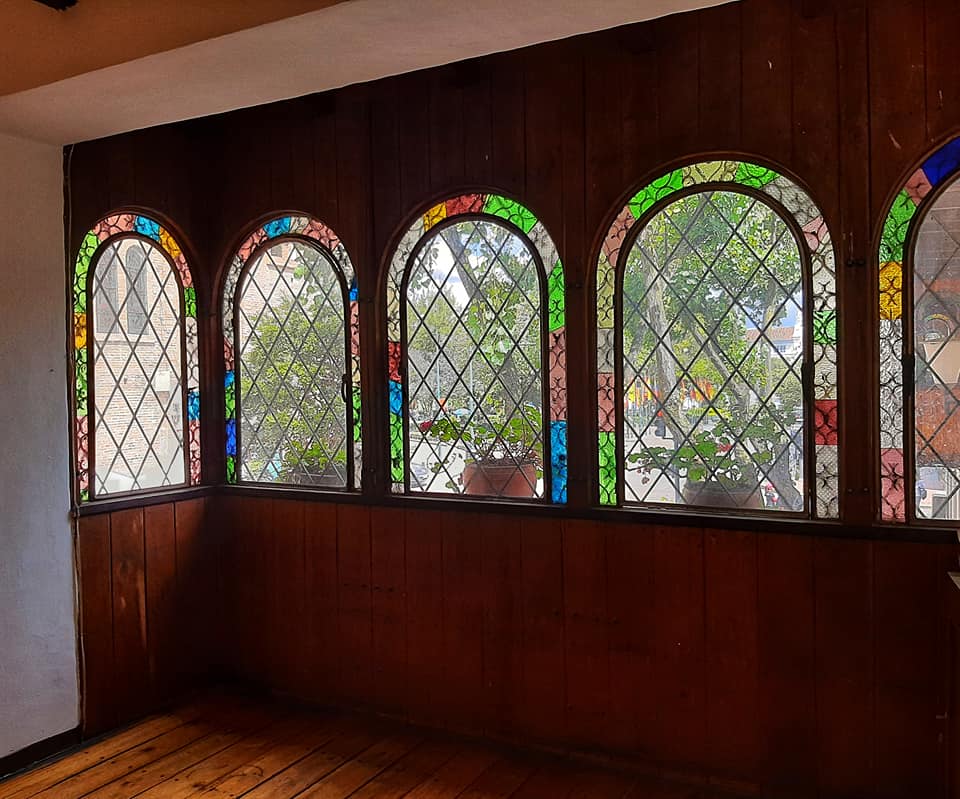
The windows are framed by semicircular arches, while the corner is distinguished by a continuous wooden balcony in the traditional Lima Style.
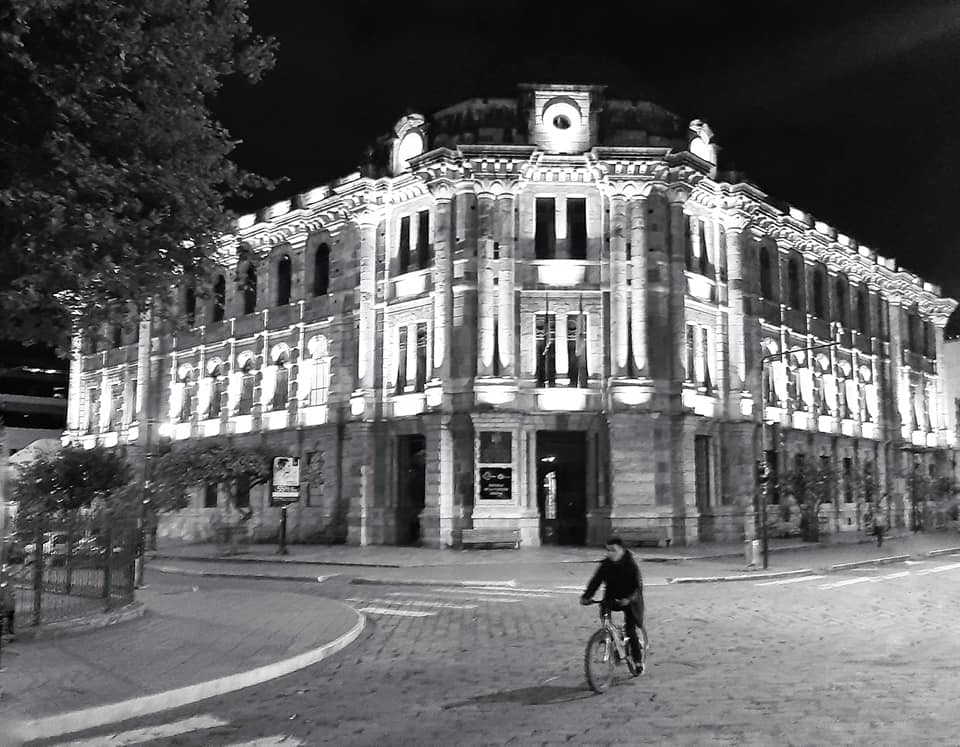
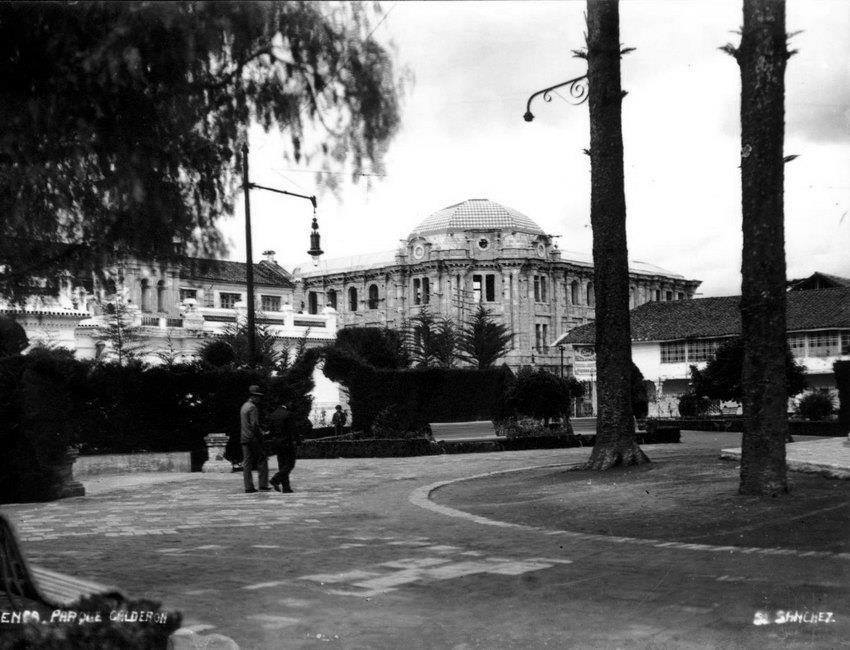
#15 Former University of Cuenca Building, present day Supreme High Court. Calles Mariscal Sucre and Luis Cordero.
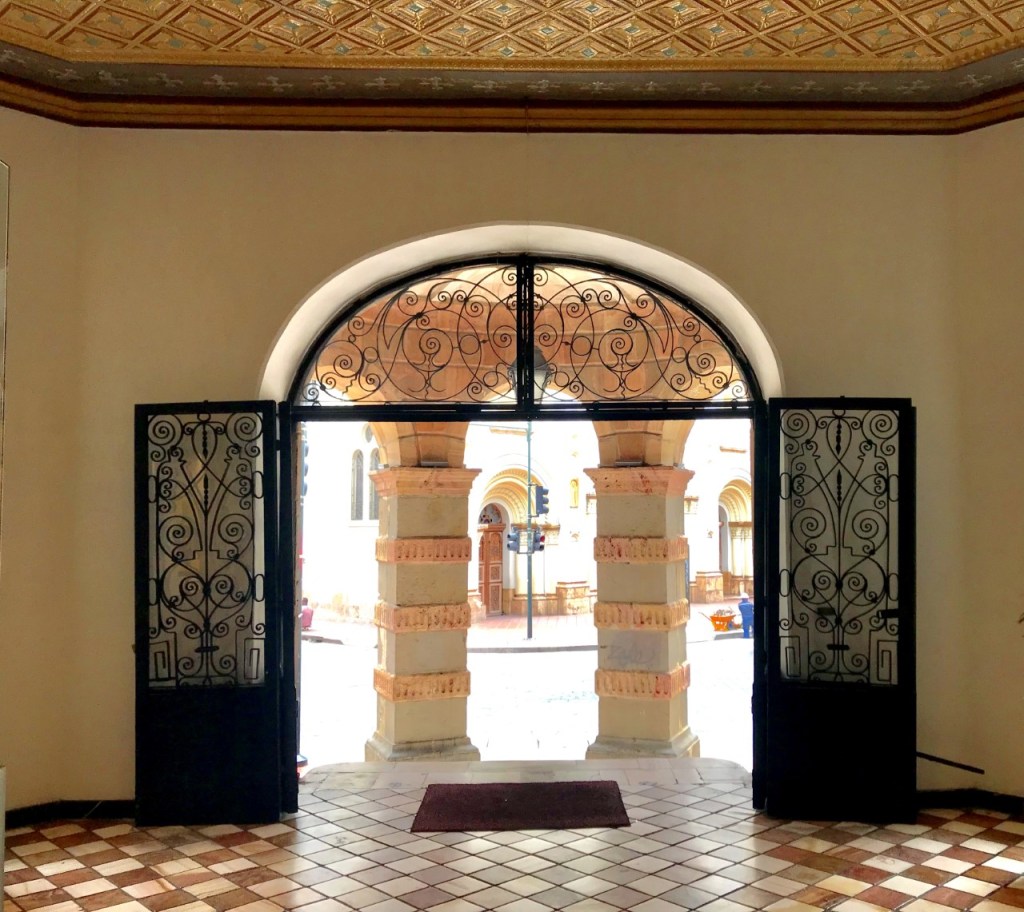
The building was designed by Quito architect Francisco Espinosa Acevedo for the University of Cuenca in 1926-1929. It was sold by the University to the Supreme High Court in 1953.
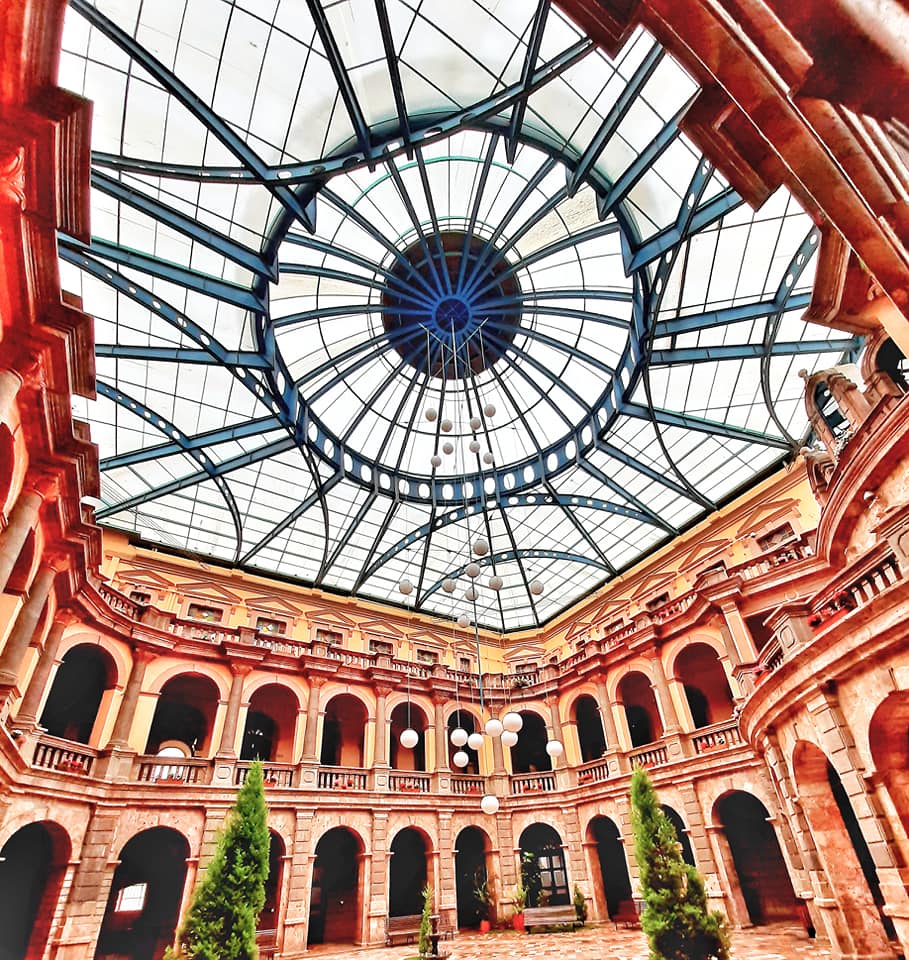
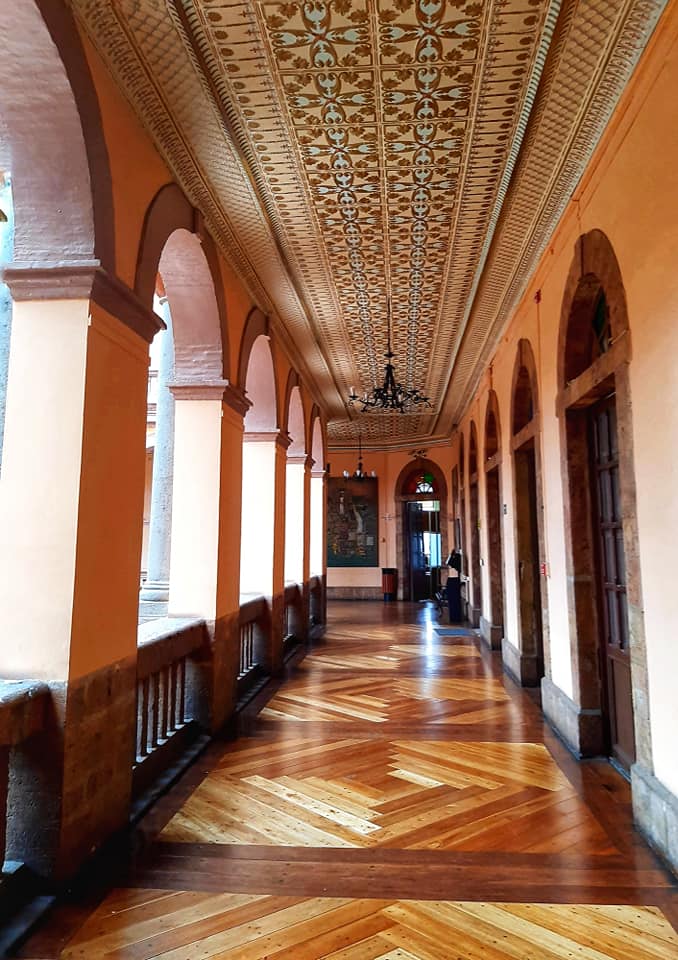
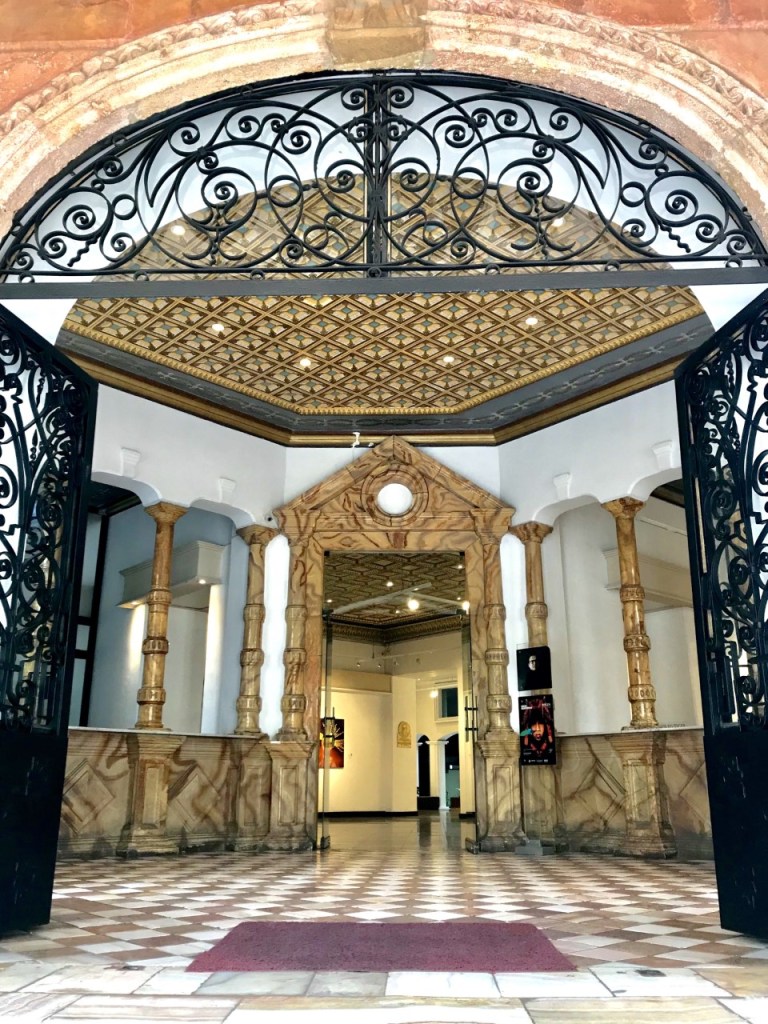
The thick walls are made of brick and finely worked marble. The polychrome brass of the ceilings was imported from France and the stained glass windows from Belgium.
Located beyond the entrance hall is a central courtyard, with interior spaces of three levels of porticoed galleries. The courtyard serves an additional function as the foyer to the old University Theatre known as the Sucre Theatre, which is also accessed from an alley-way off Sucre Street.
#14 Old Cathedral of Cuenca, Calles Luis Cordero y Mariscal Sucre
Construction commenced immediately after the Spanish foundation of Cuenca on April 12 1557, when Captain-Governor Gil Ramirez Davalos designated a block of land on the east side of the Main Square (present day Plaza Calderon) for the construction of a shrine. The walls are of adobe with Inca stone foundations extracted from the ruins at Pumapungo.
The church was erected thanks to the “mingas” system. By 1573 the church, with its altars and chapels was finished. The master builder was the carpenter Francisco de San Miguel, although other builders also participated as the present day church is the result of a series of alterations, extensions and renovations.
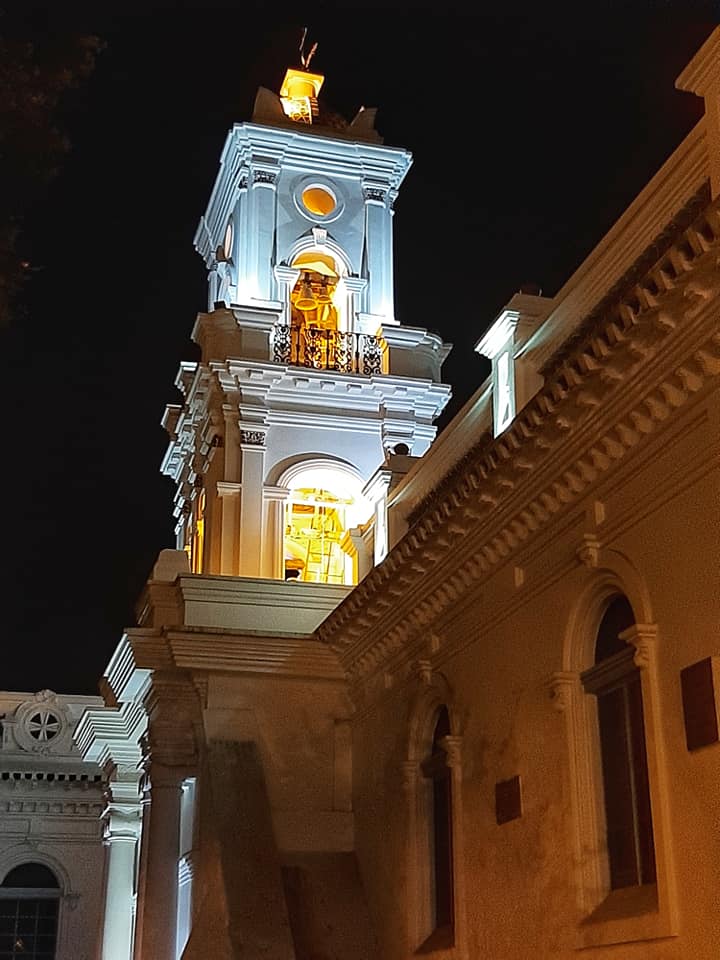
The tower standing today was designed by Colonel Francisco Eugenio Tamariz in 1867 and is of brick construction.
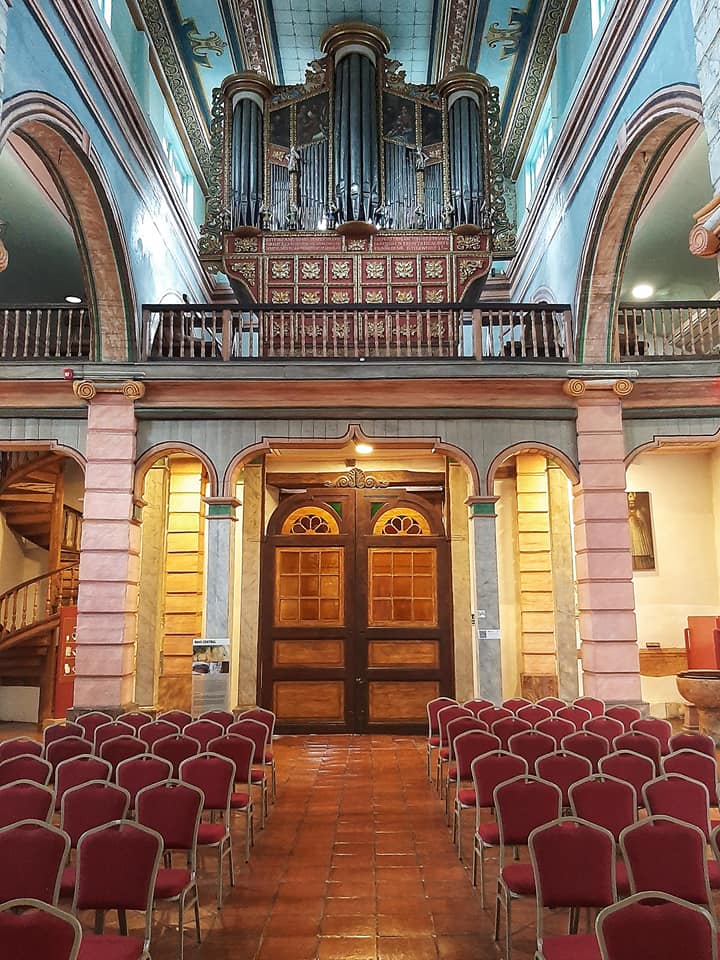
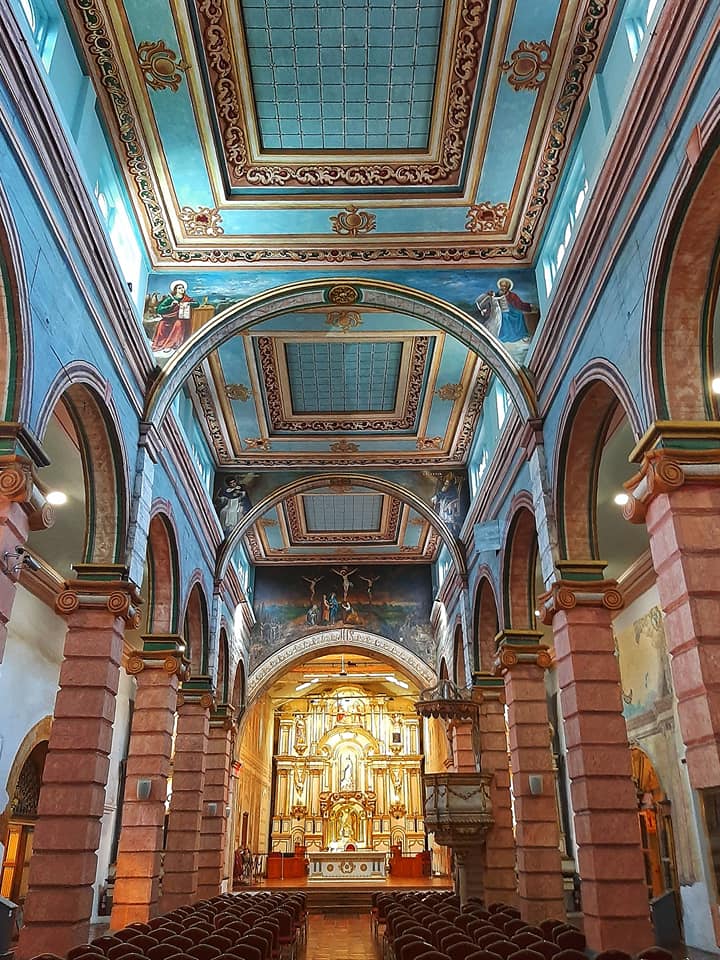
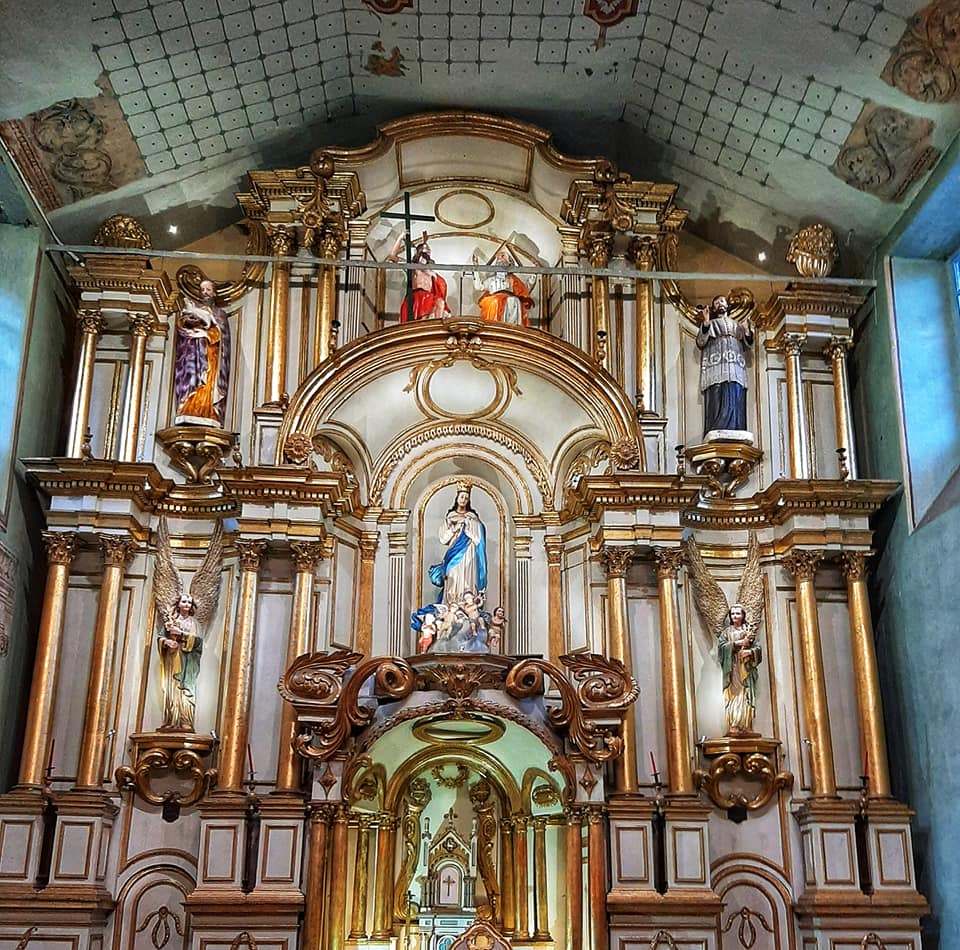
The pulpit inside the cathedral is the work of the local sculptor Gaspar Sangurima and was made in 1817. The choir is accessed via a spiral staircase built in 1823. On the right aisle, accessed their own archways, are three private chapels belonging to wealthy families of the time.
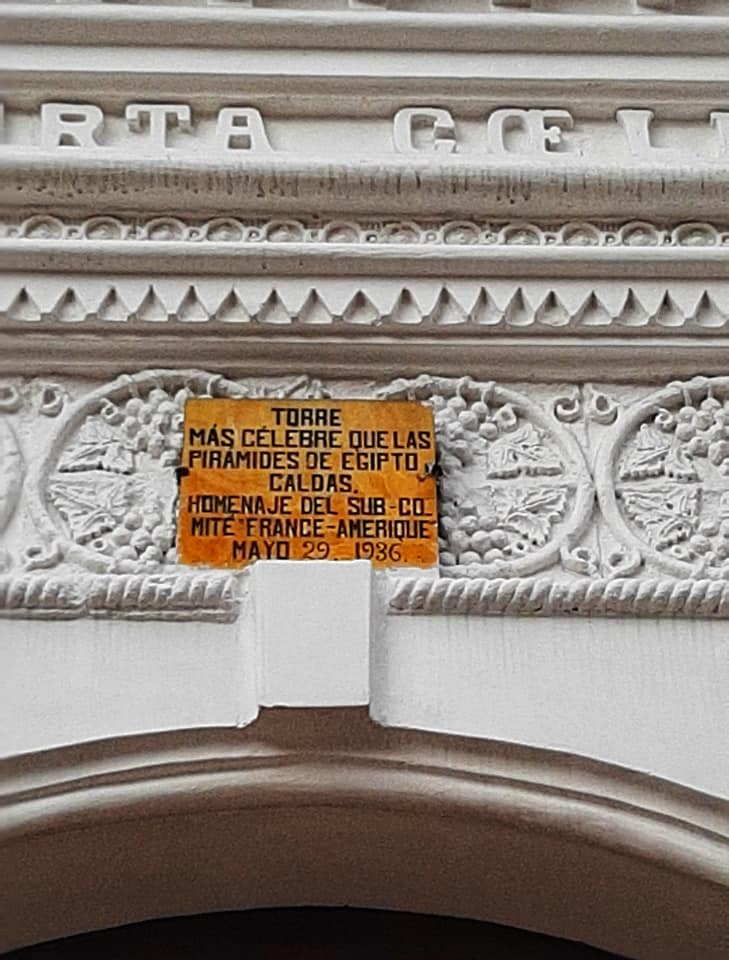
This marble plaque over the south door of the cathedral reads ” This tower is more famous than the Eygptian pyramids.”. The old tower was used by the French Geodesic Mission as a key reference point in 1736, which determined the arc of the meridian.
It was the custom of churches in the 16th century to sell graves inside the church, so that important and religious people could be closer to God. This is the cover of the Crypt.
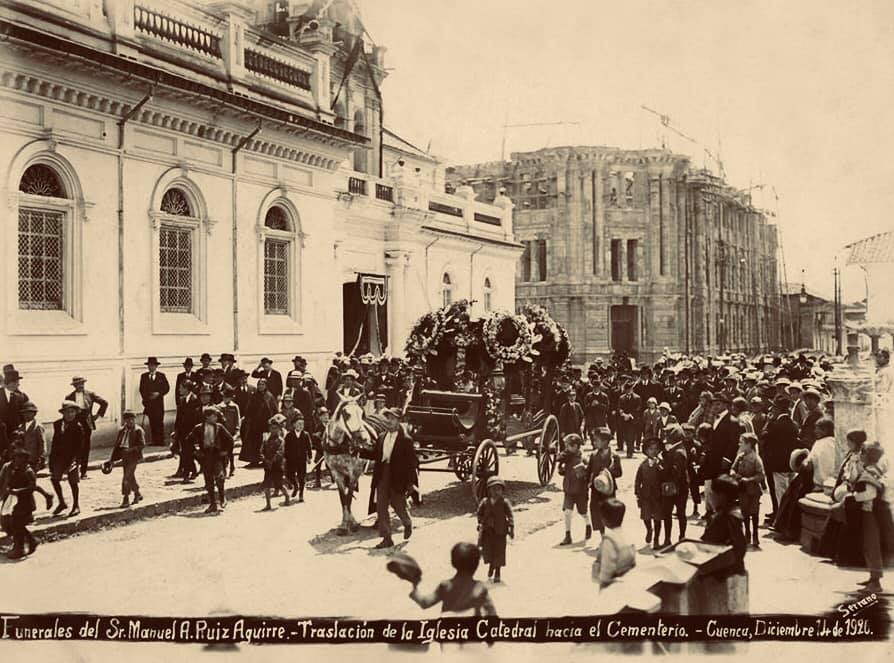
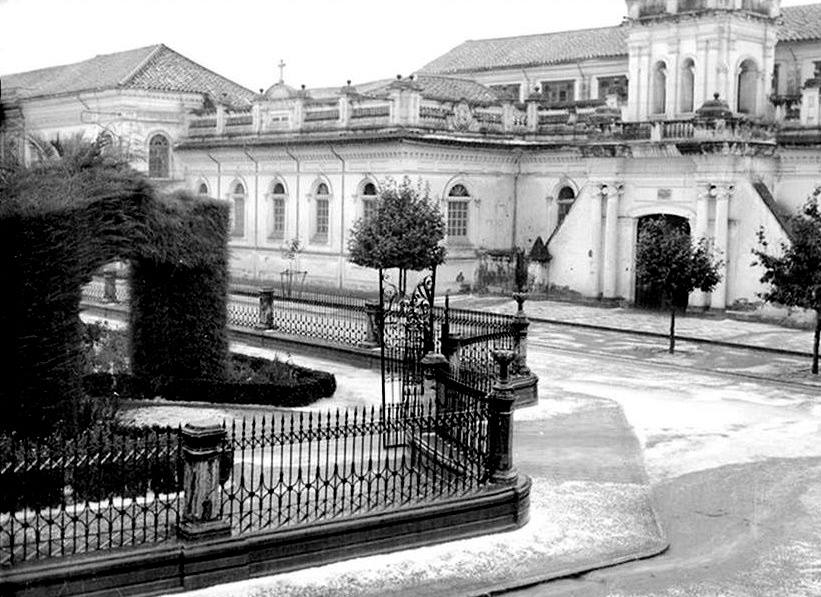
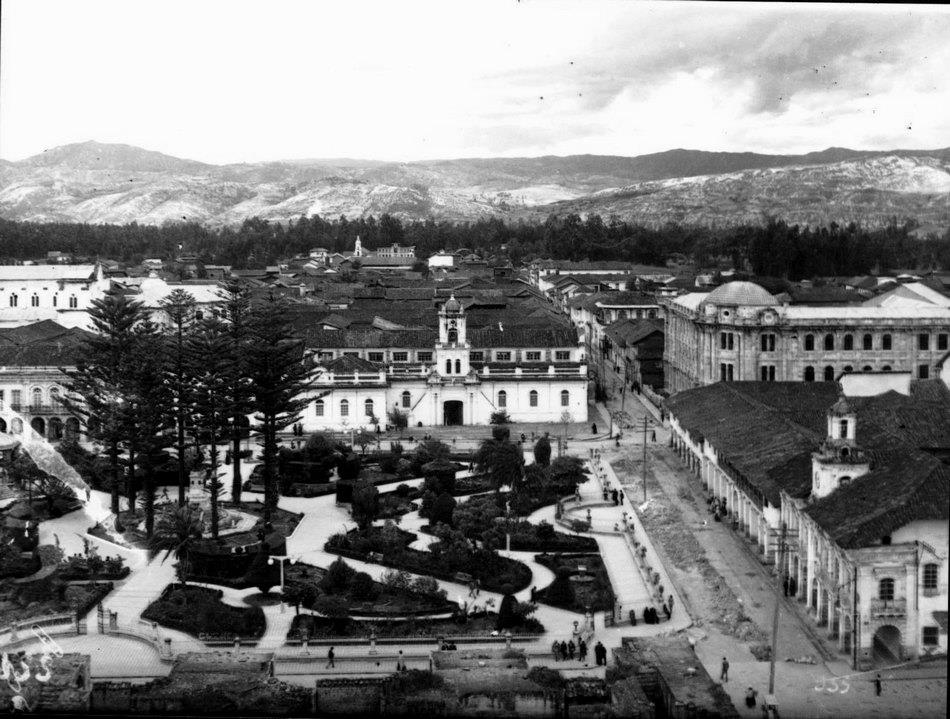
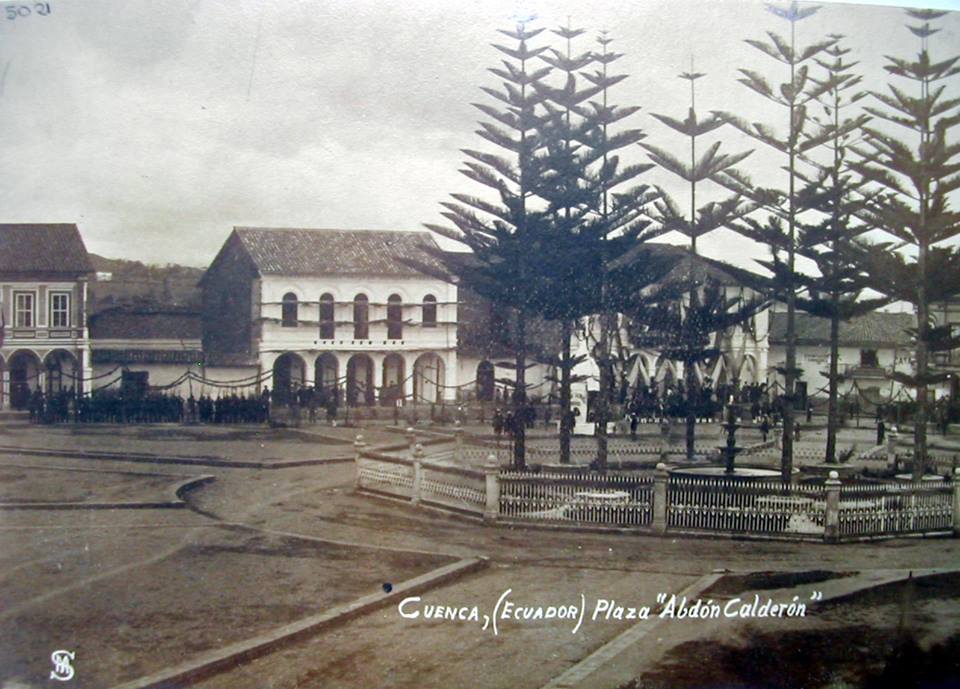
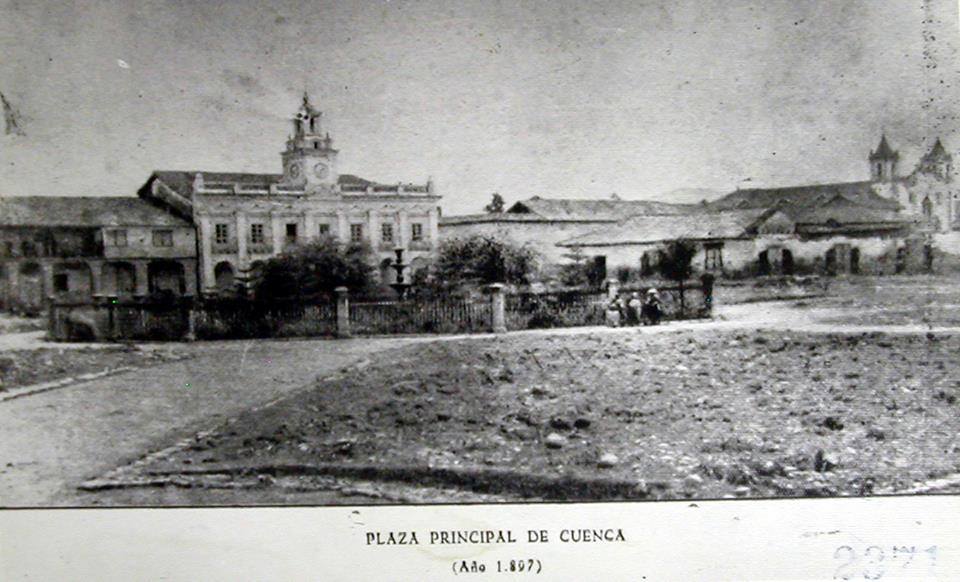
This might be one of the oldest photos of El Centro Cuenca, showing the Old Cathedral on the east side of the Plaza – circa 1870’s.
In 1779 the diocese of Cuenca was created and the local clergy became interested in building a new cathedral. As a result, the church fell into a state of neglect on several occasions as all the available funding was allocated to the new building. After a major renovation that started in 1999 the Old Cathedral serves today as the “Museum for Religious Art” and a venue for concerts and cultural events.
Construction commenced immediately after the Spanish foundation of Cuenca on April 12 1557, when Captain-Governor Gil Ramirez Davalos designated a block of land on the east side of the Main Square (present day Plaza Calderon) for the construction of a shrine. The walls were of adobe with Inca stone foundations extracted from the ruins at Pumapungo.
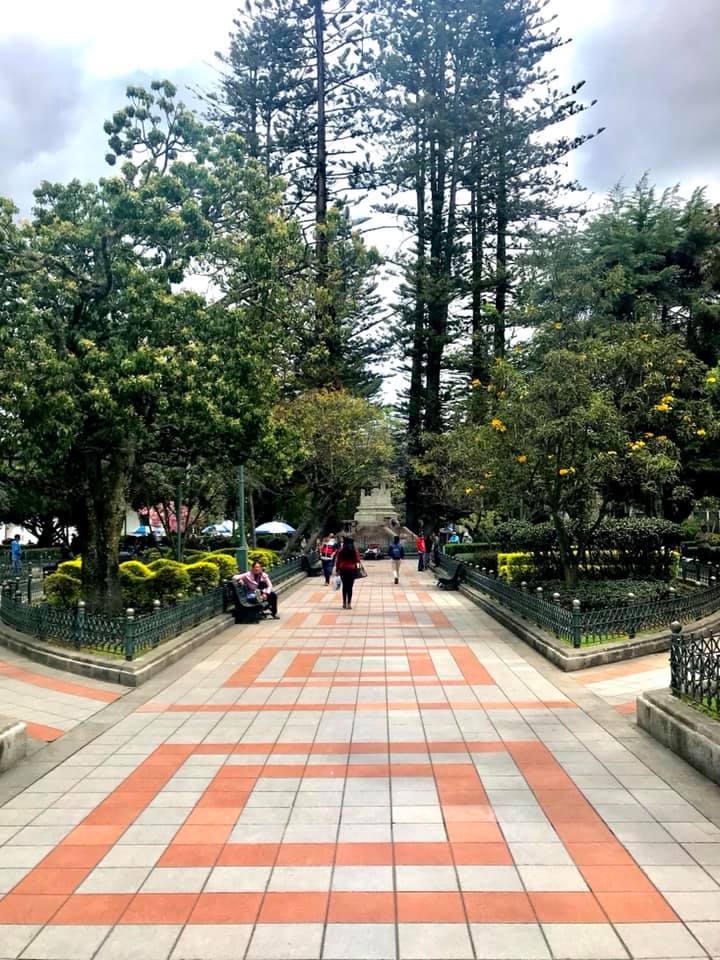
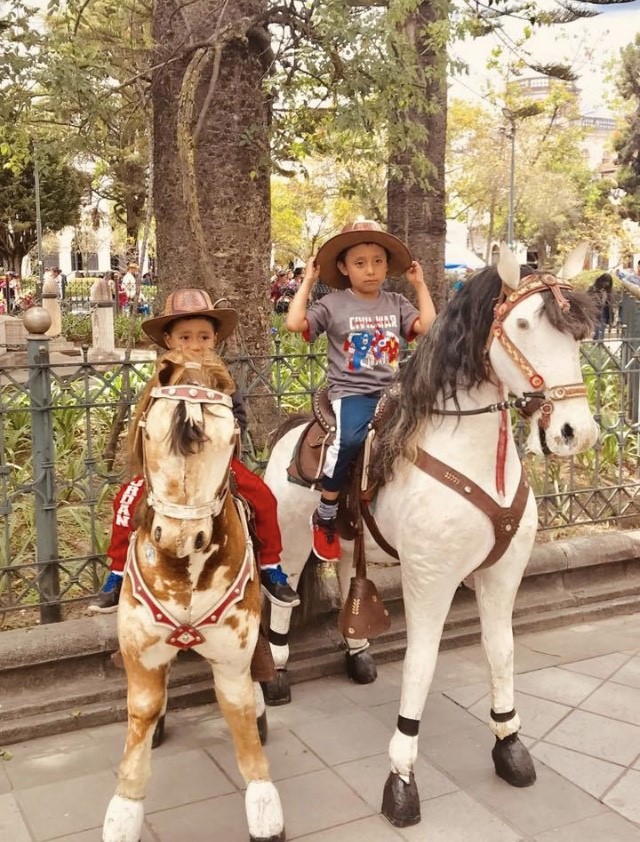
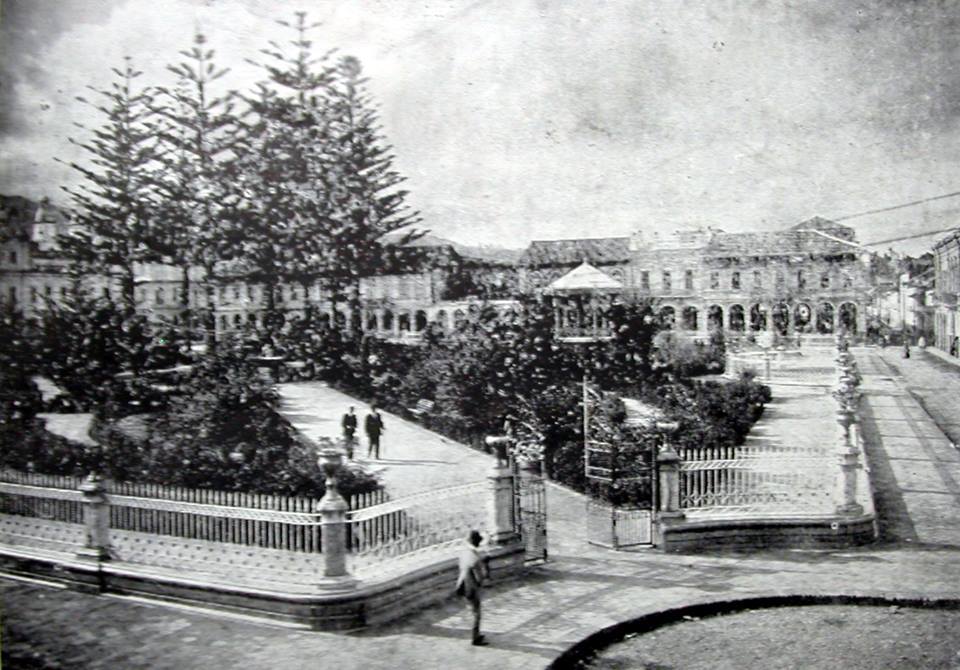
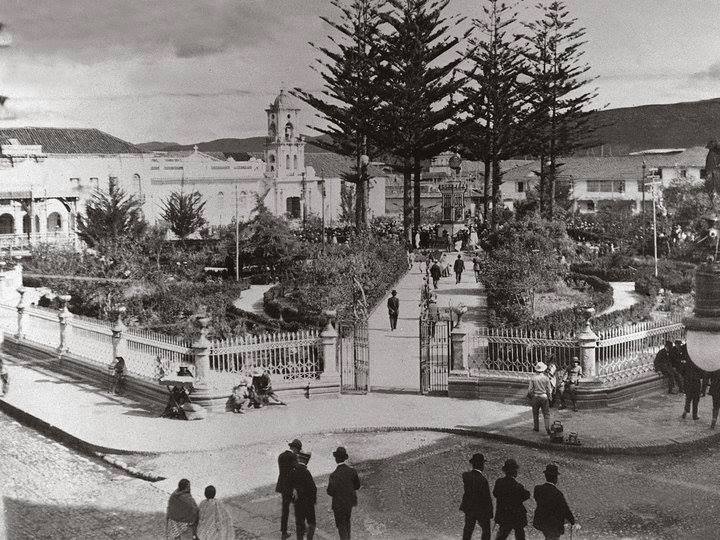
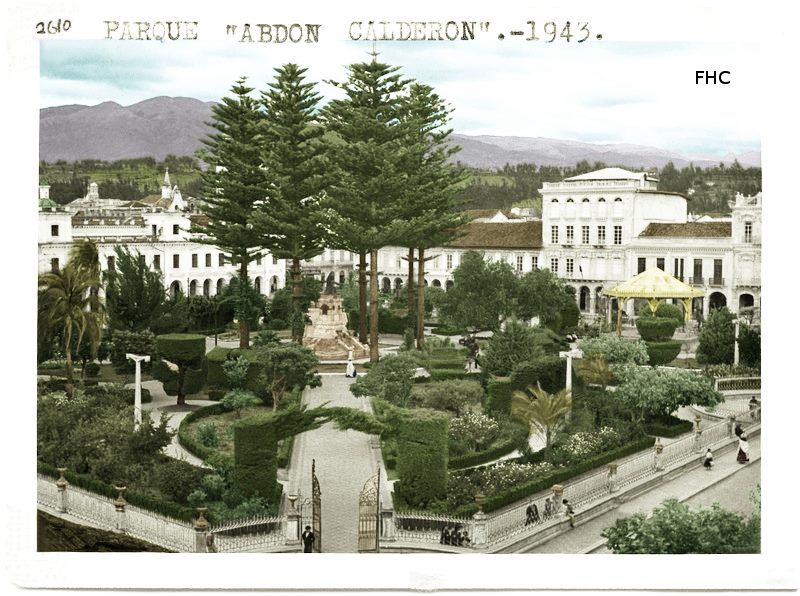
The square serves as the setting for many of the city’s major events, including traditional festivals, and parades. It is also a great spot for people-watching! In 2001 the square was again remodeled including the flower beds, a bandstand, and redesigned lamp posts. The new square reopened in March 2002.
Around 1920 the city commissioned Octavio Cordero Palacios to remodel the square. He was the architect of the present-day geometric patterns.
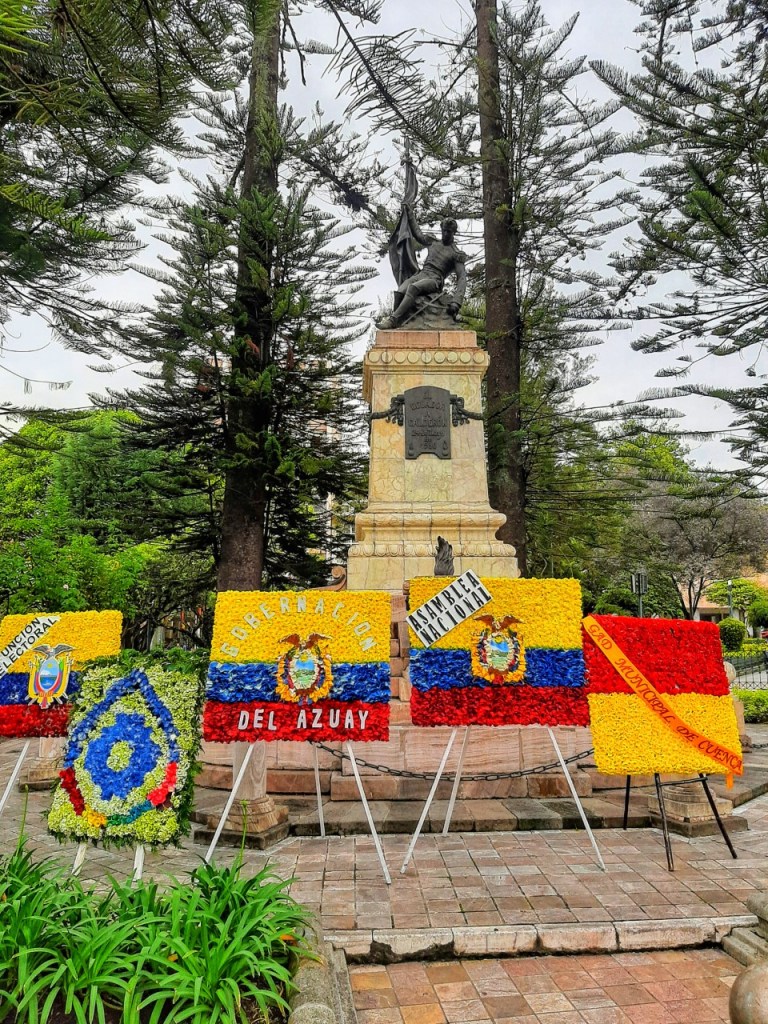
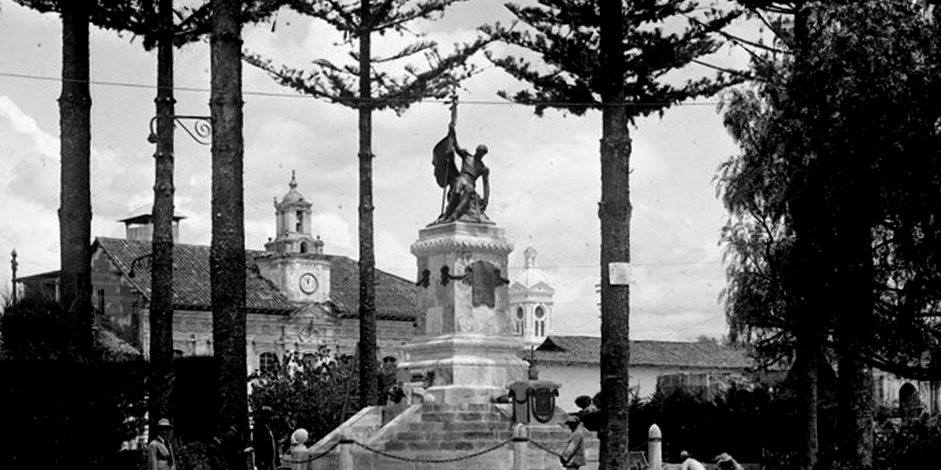
In 1920, to commemorate the centenary of the country’s independence, the square was renamed Abdón Calderón as a tribute to the young hero who fought in the Battle of Pichincha in 1822. Abdón Calderón was born in Cuenca in 1804. Only 18 years old during the Battle of Pichincha, despite having received four bullet wounds, he continued in battle, encouraging his entire battalion, and continuing to carry the flag. He died soon after the battle from his wounds, and is always remembered for his bravery. The statue was erected in 1931, designed and cast by the sculptor Carlos Mayer in Rome.
In 1875 Luis Cordero Crespo who became president of the republic, imported the Chilean pines planted at the center of the park around the monument to Abdón Calderón. These trees adapted so well to the climate that they became the giant specimens they are today.
This property originally belonged to Francisco Nates and Tomasa Crespo, and was probably built at the end of the 17th century. The building eventually passed into the hands of the Muñoz family in the following century. It is the birthplace of the beloved “Hermano Miguel”.
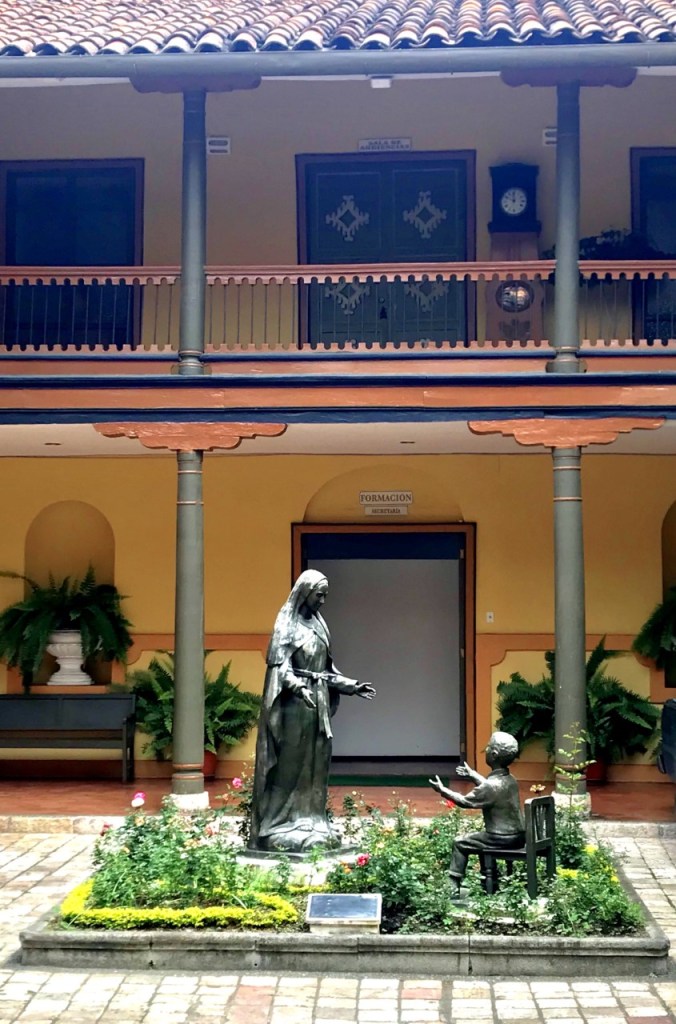
Francisco Febres Cordero was born with an extreme deformity in his foot which rendered him incapable of standing or walking. At the age of five he was playing in this courtyard when he saw a vision of a beautiful woman amidst some rose bushes. “Look how beautiful she is – wearing a white dress and blue cloak!” It was believed he received a vision of the Virgin Mary. From then on he could walk.
Francisco Febres Cordero y Muñoz was born in this house in 1854. Against his family’s wishes he became a member of the Brothers of the Christian Schools, and took the name “Miguel”. He devoted his life to teaching and educating children of all social classes, and was a prolific writer.
Second interior courtyard. In 2000 the architecture of the building was restored under the supervision of the architect Max Cabrera Rojas. In 2003 the building received the Fray José María Vargas award, granted by the City Council to the year’s best architectural restoration in the historic center. The restoration of the building included matching to the original color, and priority was given to the use of traditional construction systems and respect for the original materials such as adobe walls, tiled roofs, and wooden door and window frames.
Hermano Miguel was canonized by Pope John Paul II in 1984. When the Pope visited Ecuador, and Cuenca in 1985, he prayed in the chapel here on the second floor. There is a statue of Saint Hermano Miguel in the second courtyard.
#11 ALCALDIA – CUENCA CITY HALL Corner of Simon Bolivar and Borrero. Built in 1922-1926.
This building was designed by a Quito born architect, Luis Felipe Donoso Barba, who trained in Belgium. It is a good example of the French influence in Cuenca architecture. The building was commissioned to accommodate the headquarters of the Bank of Azuay. Regarded as one of the soundest banks in the country it even had European branches during it’s early years.
The ceilings are made of polychrome brass and were imported from France.
In 1950 the bank extended its premises and added the adjacent building, connected to the existing building on all three levels. Unfortunately as a result of the banking crisis that affected the country in 1999, the bank closed with serious economic consequences for the region.
Since November 2002 the building has accommodated the Cuenca City Hall, and several other local government offices.
#10 Intersection Simon Bolivar and Antonio Borrero.
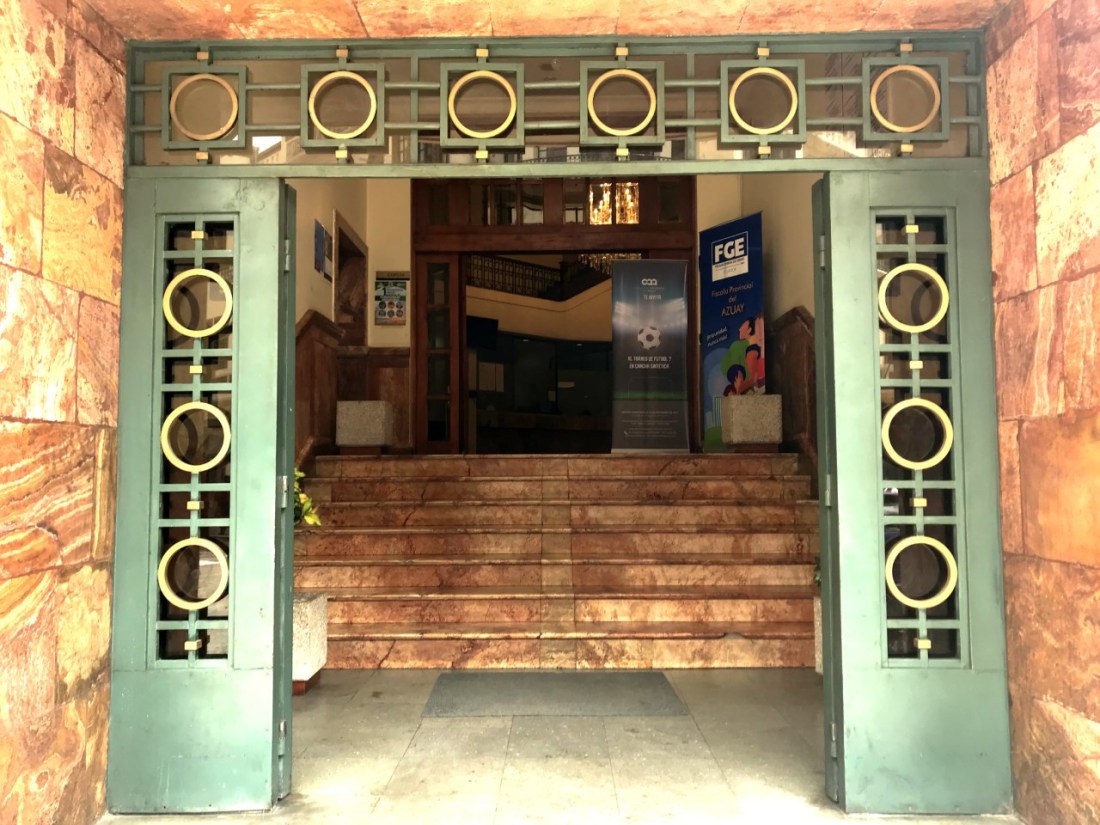
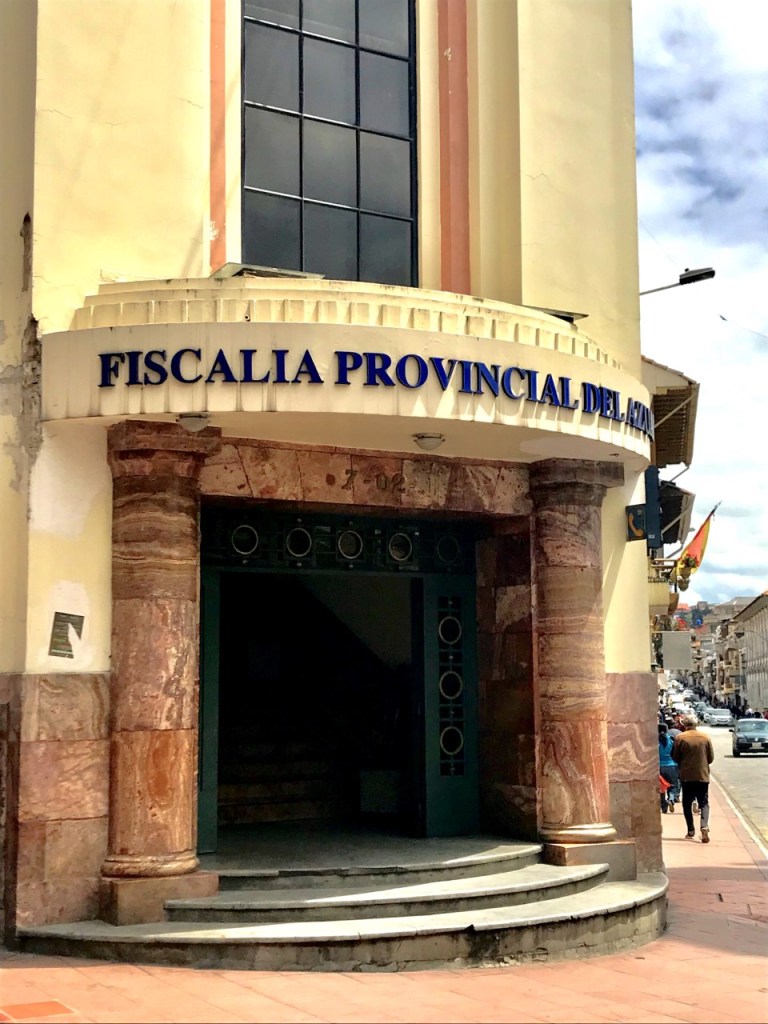
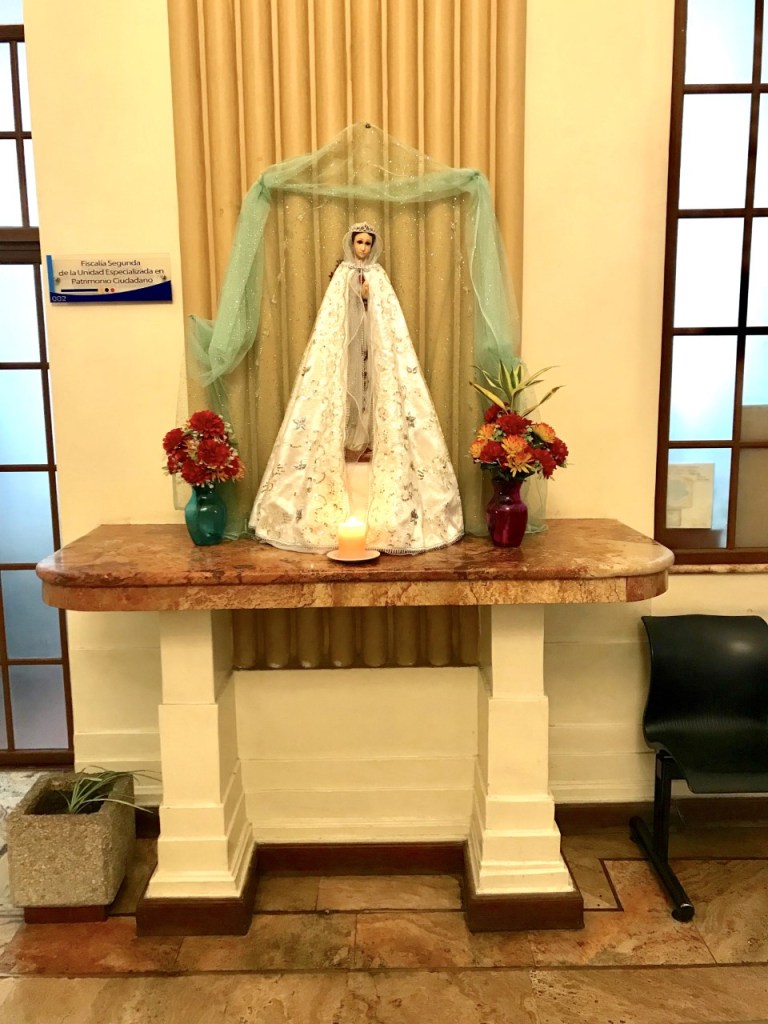
This Art Deco Palace was built in 1939 to house the Central Bank Of Ecuador. The District Attorney’s Office has occupied the building since 2003. It is perhaps the city’s best example of state architecture designed in the Art Deco Style. The long lateral facades are rhythmically defined by pairs of rectangular windows, framed by pilasters adorned with marble geometric motifs.
The main entrance on the corner is reinforced by a flight of steps in the fashion of a podium, and protected by a projecting ledge. Inside there is a large central hallway, double height, which recalls the courtyards of traditional Cuenca houses.
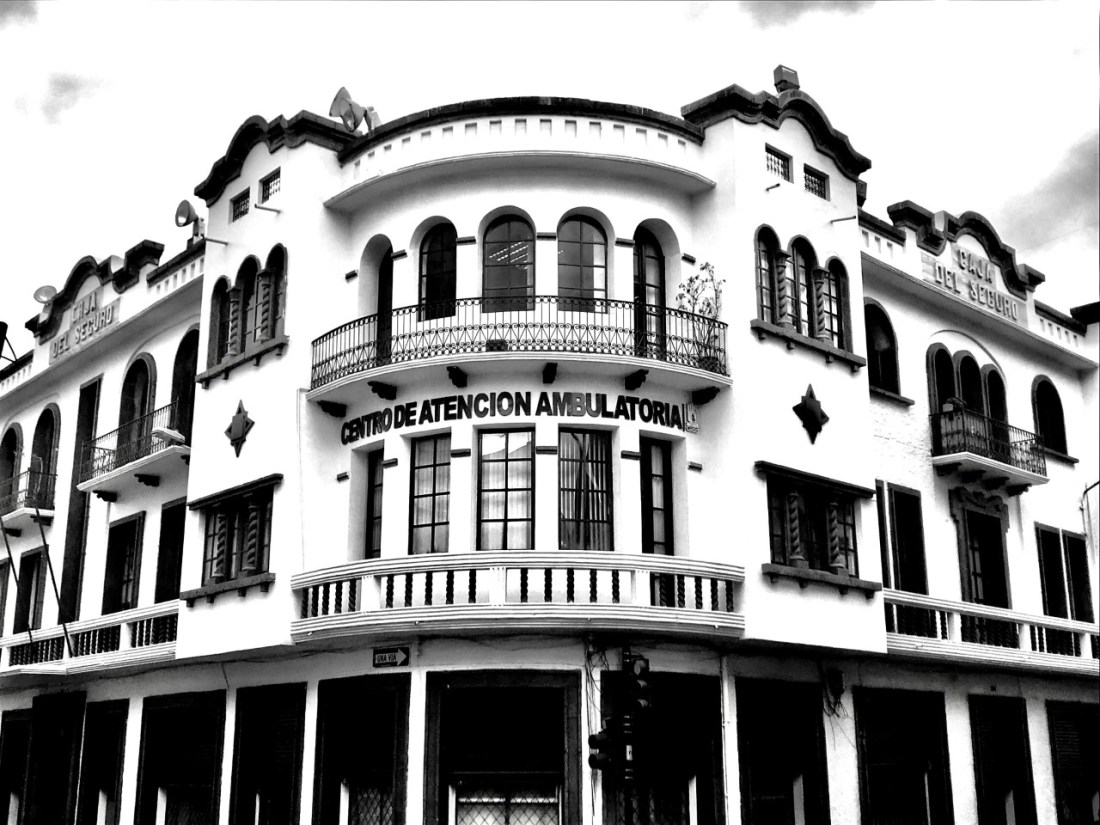
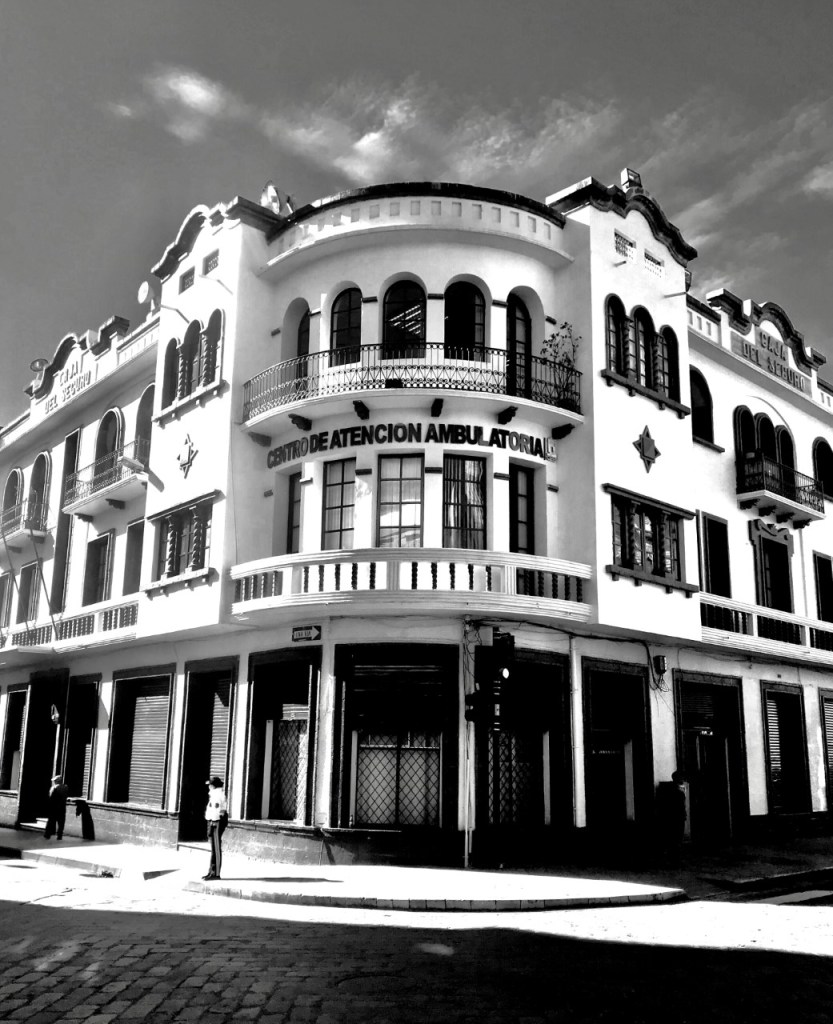
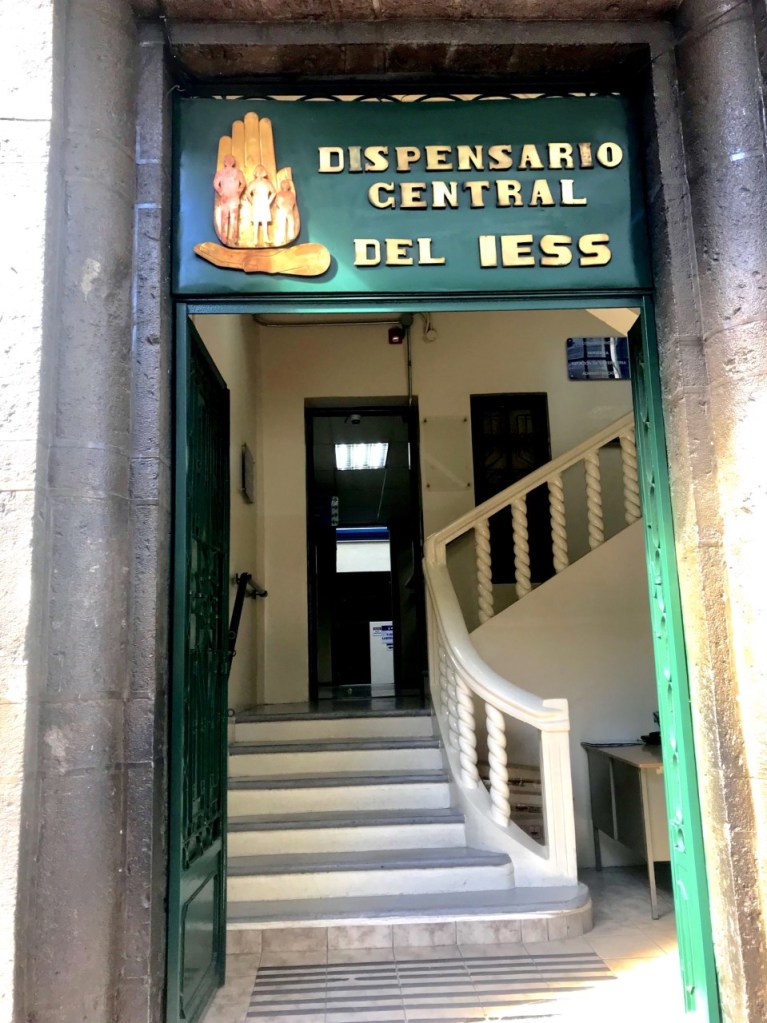
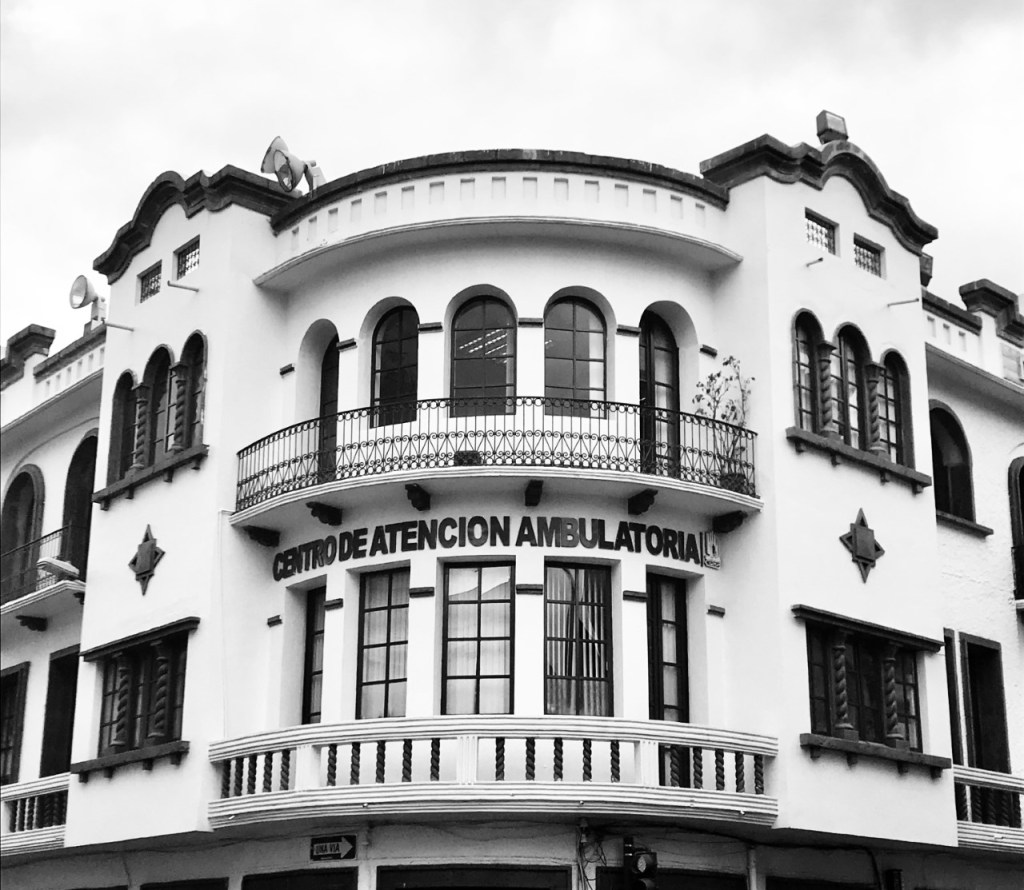
#8 Presently IESS National Health Center. Calles Simon Bolivar Y Borrerro.
This building was constructed by the Social Security Clinic during the 1940’s. A three story building, the style is reminiscent of the Spanish Neo-Colonial architecture that was fashionable in the city during the 1940’s and 1950’s.
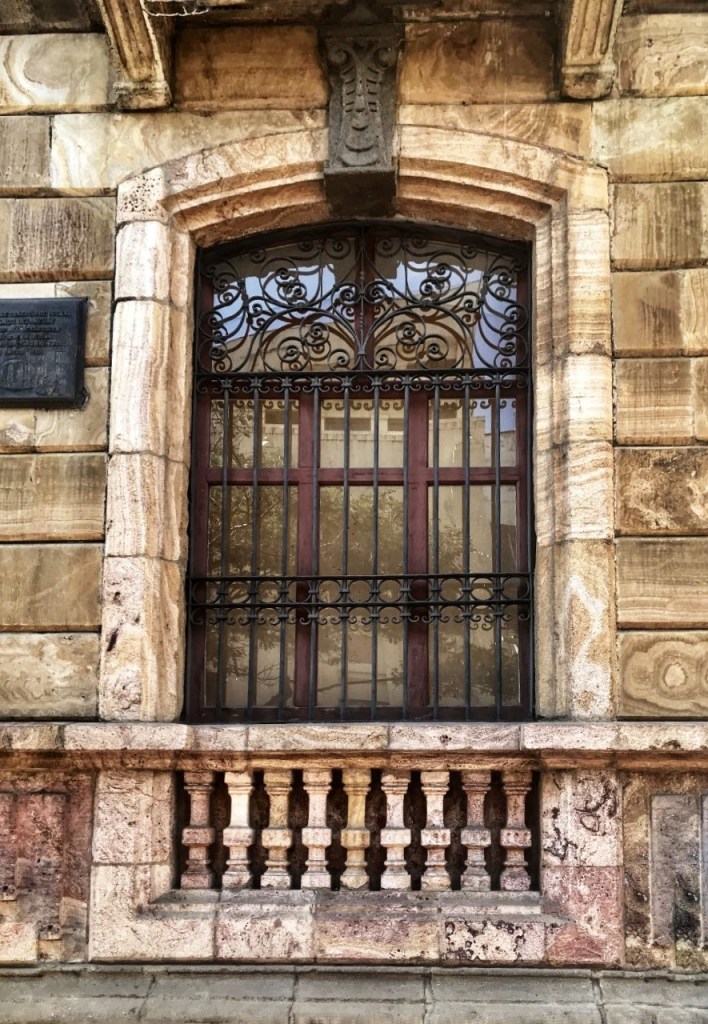
The facade is distinguished by the use of finely carved stone decorative elements. The lintels and window sills are also made of stone, and the mullions repeat the Solomonic colonnette motif. It is not known who designed or built the building, but it was awarded the Adornment Prize by Cuenca City Council as the best building in the city for 1947.
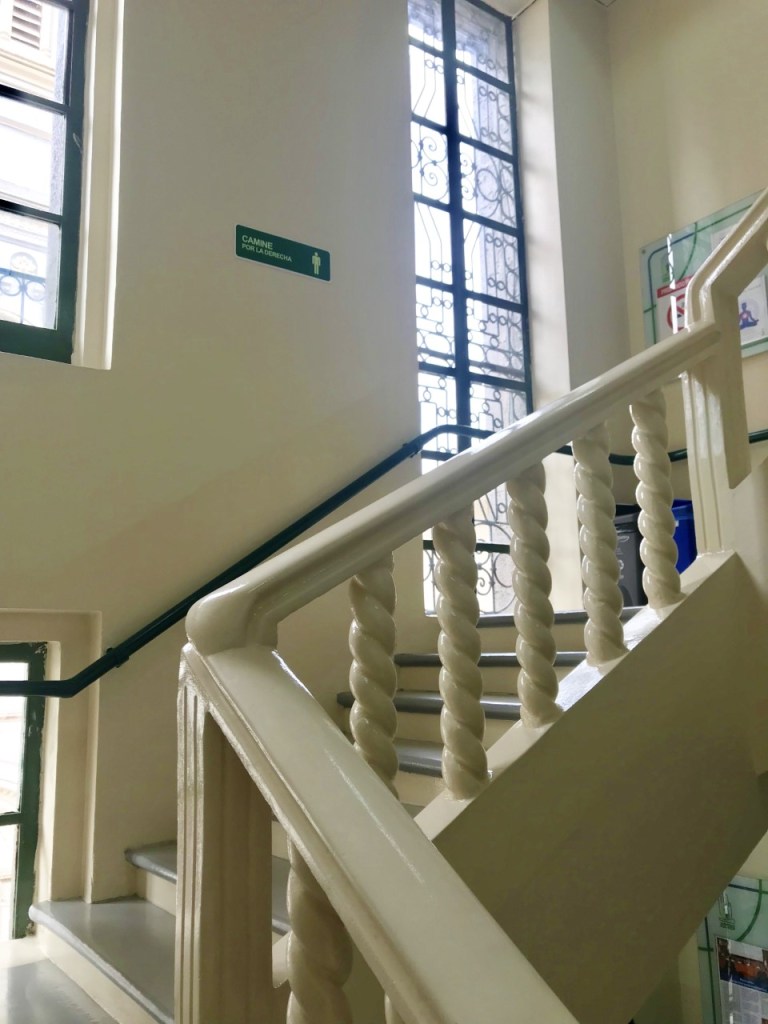
The carved stone balcony and staircase balustrades adopt the form of turned wood Solomonic colonnettes.
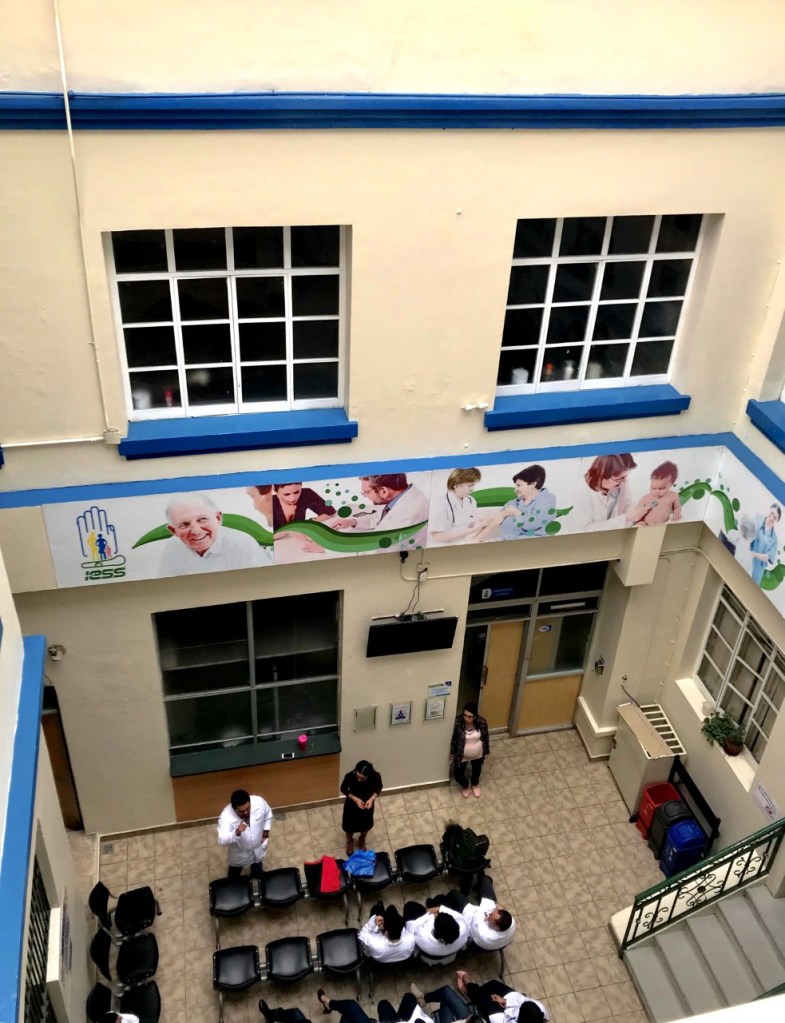
Doctors Offices are on the second and third floor, overlooking the courtyard. The courtyard is used for training sessions. and classes. Stone-carved four-pointed stars in haut-relief can be seen between the second and third floors.



















































 A GUIDE TO CUENCA ARCHITECTURE